






FOR CTOs, CIOs AND HEADS OF IT
Platform engineering you
can put a number on
Self-service for your developers, policy control for your platform team, and a cost figure before anything gets provisioned. Deployed self-hosted, air-gapped or on a sovereign cloud.
In production at the European Commission, CMA CGM, Siemens, Capgemini and NTT DATA
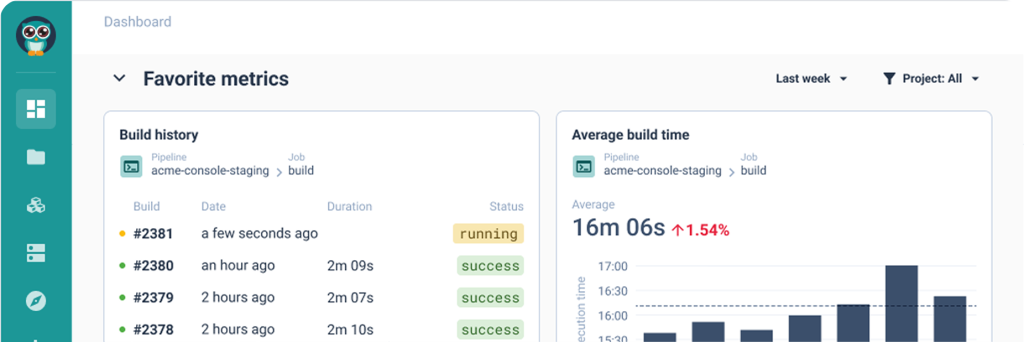
The IT world is accelerating, and the usual ways of working, DevOps on one side and end users on the other, are shifting left. Developers now have to wear many hats and juggling designing, building and deploying while also servicing complex cloud infrastructures, managing tool chains and applications. Instead of speeding up business, it slows it down. There has to be a better way. Meet Cycloid, a self-service engineering platform that improves developer experience and operational efficiency by connecting the end user and cloud infrastructure in a simple, intuitive way. Our self-service module StackForms hides infer complexity behind an easy to use web form that allows end users to service their needs autonomously, regardless of their skill level. Your DevOps team sets up preconfigured environment parameters and stacks and assigns user role access seamlessly in the background so that nothing slows down your software development. Cost estimation will bring developers closer to the business side by letting them calculate deployment costs before they hit run. Fast, secure, transparent and simple, getting the best developer experience couldn't be easier.
You are already paying for a platform.
The question is what it returns.
DORA’s 2025 research put internal developer platform usage at 90% of organisations, with 76% running a dedicated platform team. Knowing what it costs has not kept pace: 29.6% of platform teams do not measure their own success at all.
Three of those costs sit outside the platform budget line, which is why they are hard to defend and harder to reduce.
The engineers who maintain it.
Roadie, which sells managed platform tooling and has every reason to know, puts a self-hosted portal at three or more dedicated engineers, roughly $450,000 a year in salary, and 6–12 months to production. That is the machinery, before one golden path exists.
The delivery time you never get back.
Atlassian surveyed 3,500 developers and engineering managers in 2025. Half lose ten hours a week or more to organisational friction, and developers spend 16% of their time writing code.
The cloud spend nobody approved.
Flexera put wasted cloud spend at 29% in 2026, the first rise in five years, with 85% of organisations naming cloud cost management as their top challenge.
None of the three appears as a line item, which is why they grow.
Platforms rarely fail on technology
We are not enthusiasts for building this yourself, and it is worth being precise about why. Your engineers could build a portal. The failure modes are organisational, and buying does not remove them either. It removes the year you were going to spend on plumbing.
DORA catalogues how internal platforms go wrong: build it and they will come, the ivory tower, ticket-ops where self-service turns back into a queue, the big bang release.
DORA is also honest about the payoff shape. Platform engineering tends to follow a J-curve, with early gains, then a dip as complexity grows, before performance recovers and settles higher once the platform matures. Build it yourself and you fund the dip, then wait out the recovery.
When platform quality is high, the effect of AI adoption on organizational performance becomes strong and positive. Conversely, when platform quality is low, the effect of AI adoption on organizational performance is negligible.
Source: DORA, Platform engineering capability, January 2026
.png)
Build it, or buy it and configure it
In-house
Cycloid
Time to first golden path in production
6 – 12 months (Roadie estimate)
Under four weeks at CloudXcelerate, onboarding to full production
Engineers to keep it running
3 or more (Roadie estimate)
Annual cost of those engineers
~$450,000 (Roadie estimate)
From €29 per user per month, annual. Published pricing
Policy enforcement
Build and maintain the policy engine, RBAC model and audit trail
InfraPolicies check every request at submission. Untagged or non-compliant resources never get created
Cost visibility
Separate integration, separate tool, separate contract
Estimate shown to the developer before deployment; cost and carbon in the same product
Data residency
Yours by construction
Yours by choice: self-hosted with no Cycloid access, air-gapped, or a dedicated account on Scaleway, OVH or Outscale
Exit position
You own it, permanently
Open source foundations, your Terraform and Ansible stay runnable, three of our tools are public
Who carries the pager
Your team
Your team, or ours with an SLA
What changed, and where
CloudXcelerate
a DACH cloud provider backed by a 5,000-person systems integrator, went from onboarding to full production in under four weeks, and now resells platform engineering as a service on a white-labelled Cycloid.
Orange Cloud for Business
estimates its teams move around four times faster, across an estate of more than 120,000 virtual machines, 2,400 DevOps specialists and 70 data centres.
Valiantys
an Atlassian platinum partner, moved new project deployments from several days to a few hours.
The Cycloid platform is easy to use, interoperable with our existing setup, and allows us to centralize all our open source tools because it is agnostic to any provider. There’s no lock-in which allows us to automate the way we want.
Abraham Gaougaou, Head of Managed Services, Valiantys
Alchemy
cut environment creation from more than a day to under an hour: five minutes to configure a Stack, thirty for AWS to provision.
governance and the regulatory calendar
Governance you can evidence,
in a deployment your rules allow
Three things landed on European IT leadership in the past eighteen months. The Digital Operational Resilience Act has applied to financial entities since 17 January 2025. NIS2 transposition is now being enforced: on 8 July 2026 the European Commission referred Ireland, Spain, France and the Netherlands to the Court of Justice for failing to notify transposing measures, with financial sanctions requested. And EU data centre operators above 500 kW report energy and water use to the European database, with first full-year reporting due 15 May 2026. Cycloid does not make those obligations go away. It gives you the mechanisms to evidence what you did about them.
InfraPolicies validate every deployment against your rules at submission, so a non-compliant resource is never created rather than found later. Approvals and quotas where a human decision belongs. Custom RBAC scoped to your organisation, SSO through Okta, Entra ID or SAML 2.0, and MFA.
Full audit trails, event tracking, live asset inventory with cost and carbon attached, and an infrastructure diagram built from actual state rather than maintained by hand.
Compare the different models
Model
What it means
Where your data sits
Self-hosted, on-prem or bare metal
Every module on your infrastructure. Cycloid has no access afterwards
Your network. Air-gapped and classified workloads
Dedicated SaaS
We deploy and run every module in a cloud account you pick
Isolated account on AWS, Azure, GCP, Scaleway, OVH or Outscale
Hybrid
Control plane managed by us, workers in your environment
Workloads stay local
SaaS
Fully managed, quickest route to a working platform
EU-hosted available
Cloud cost decisions before the spend,
not in the monthly review
Empower your peopleMost cost control happens after the money is gone
A developer provisions an environment, the bill lands five weeks later, and someone reconciles it against a budget nobody consulted at the point of decision.
Cycloid moves the decision forward. A developer filling in a StackForm sees the estimated monthly cost of what they are about to provision, before they run it. Quotas and approval thresholds stop the requests you would not have signed off. Cost and carbon are attributed per organisation, project, provider and team, so the conversation with a business unit is about their consumption rather than an aggregate.
If you already run a FinOps platform, Cycloid covers the common cases and plugs into what you have.
_0.png)
Frequently Asked Questions
How do I justify this internally?
Start with the comparison above: engineers required, months to production, annual run cost, who carries the pager. Bring your own numbers for the first two. Published pricing means you can build the model without waiting for a quote.
We have already started building our own. Is this rip-and-replace?
No. Infra Import brings existing infrastructure under management rather than recreating it, and Cycloid works with the Terraform, Ansible, Helm and ArgoCD your team already uses.
What does it cost?
29€ per user per month for Starter, 59€ for Advanced, both billed annually with 20% off monthly. Enterprise is quoted and adds dedicated SaaS or self-hosted deployment, custom plug-ins, white labelling, volume discount and 24/7 support with an SLA. Available through AWS, GCP, Azure and Arrow marketplaces.
Can it run somewhere you cannot reach?
Yes. Self-hosted means you or we deploy every module onto your infrastructure and Cycloid has no access afterwards, on instances or Kubernetes, air-gapped included.
How long before something works?
CloudXcelerate went from onboarding to full production in under four weeks. Your timeline depends on how many golden paths you want on day one and how much infrastructure you import.
What happens if we stop using it?
Your Terraform and Ansible stay yours and stay runnable. The platform stays agnostic to your providers, and TerraCognita, InfraMap and TerraCost are open source.
How large is Cycloid, and will you be here in three years?
European, remote-first, over 150 organisations on the platform, €5M Series A led by Reflexion Capital in February 2025, Certified B Corporation with a score of 95.
Bring something your teams actually request. You will see the form they would fill in, the policy that would block a non-compliant version of it, and the cost they would see before running it. If it does not fit your estate, you will know inside the twenty minutes.