Cycloids MCP server lets teams talk to their platform and infrastructure to provision, govern, and observe inside strict guardrails (RBAC, policy-as-code, audit), to deliver “sober AI” productivity without GenAI sprawl, loss of control, or spiralling cloud costs. MCP servers: The protocol that matters (and why) An MCP server is a standard bridge from LLMs … Read more
API portals are developer-facing interfaces that expose APIs with documentation, authentication, access controls, and usage tracking – enabling developers to discover and consume APIs without platform team involvement. They fall into two categories: external API portals (exposing product APIs to third-party developers – Kong, Apigee, Stoplight) and internal API portals (exposing IaC automation APIs to … Read more
1. Features & Customization Q: Can I tailor Cycloid to our specific workflows? A: Absolutely. Cycloid offers StackForms, customizable service catalog forms, plus Components, which allow modular configuration of individual infrastructure components.This means you can mix, match, and organize components per environment via GitOps workflows. And our customizable pipeline allows for a powerful integration with … Read more
Day 2 operations are the ongoing post-deployment tasks required to keep infrastructure running reliably: monitoring, patching, scaling, incident response, and configuration drift management. In the day 0/1/2 model – standard across platform engineering and Kubernetes operations – day 0 is infrastructure design, day 1 is initial deployment, and day 2 is sustained operations. Platform engineering … Read more
TL;DR MSPs often struggle with scattered cloud access, inconsistent provisioning, and lack of client isolation. A Cloud Management Portal (CMP) tailored for MSPs helps centralize infra control, enable team-specific access, and automate resource provisioning. Cycloid offers a multi-tenant CMP built for MSP workflows, where each client is isolated into a “Project” with dedicated environments. With … Read more
Cloud Management Platforms (CMPs) abstract the underlying complexity of provisioning, managing, and securing infrastructure across cloud providers. A CMP can expose a unified Terraform catalog that provisions infrastructure in any combination of public and private clouds, such as AWS, Azure and VMware. For DevOps and platform engineering teams juggling multiple accounts, tools, and policies, CMPs … Read more
“What is productivity in development? I mean, even with metrics like lead time, it might work against taking the time to do good things.” Julien ‘Seraf’ Syx, CTO & Product Lead, Cycloid Invisible processes sap energy and resources – not just from people, but also complex systems. Imagine the hidden waste that exists in cloud … Read more
Every engineering team has seen it: a developer needs to spin up a new Kubernetes namespace to test a service in isolation. Or maybe deploy a temporary PostgreSQL database to debug a staging issue. Instead of provisioning it themselves, they raise a ticket with the DevOps team. Then they wait. Sometimes for hours. Sometimes for … Read more
Let’s say you are a Senior Site Reliability Engineer at a startup. You manage multiple infrastructure teams overseeing environments deployed across major cloud platforms, including AWS, Google Cloud Platform (GCP), Azure, IBM Cloud, Oracle Cloud (OCI), and a few private on-premises environments. Your finance team urgently needs a consolidated infrastructure cost report covering all these environments. What’s your immediate approach? Would you manually log in to each cloud provider’s console or use their respective command-line interfaces (CLIs) to individually extract resource lists and cost reports? In reality, manual logins or CLI scripts become impractical very quickly. Imagine a developer spinning up a test database instance on GCP but forgetting about it, an unused Azure load balancer left running for weeks, or an AWS S3 bucket mistakenly left publicly accessible. Perhaps an IAM role in Oracle Cloud or IBM Cloud still has permissions months after an employee has departed. These aren’t hypothetical scenarios – they occur regularly in complex, multi-cloud environments.
What is Asset Inventory Management in the Cloud?
To understand asset inventory management in the cloud, first ask yourself: What is asset inventory? Traditionally, an inventory asset referred to physical items like servers, storage devices, or networking equipment in data centers. These assets had fixed locations, purchase dates, and clearly defined lifecycles. But cloud asset inventory changes this entirely. Today, inventory is considered an asset only if you have complete visibility into it. Resources are ephemeral—virtual machines, containers, databases, and networks can appear and vanish within minutes. Without proper asset inventory management, tracking these dynamic resources becomes nearly impossible. Here’s a simplified overview of how inventory management typically works, especially relevant for cloud environments: As shown, effective asset inventory management involves a clear, repeatable cycle:
Identify Assets: Discover all existing cloud resources across multiple providers.
Record Asset Details: Capture essential details such as resource type, location, ownership, and billing information.
Track Asset Lifecycle: Monitor assets from provisioning through active usage to eventual retirement or deletion.
Monitor Usage & Status: Regularly track resource utilization to avoid unnecessary costs or downtime.
Perform Regular Audits: Periodically verify resources, ensuring accurate inventory and compliance.
Update Records: Adjust inventory records based on audit results or infrastructure changes.
Generate Reports & Insights: Provide actionable data on resource allocation, cost, and compliance.
Optimize Inventory: Continuously refine resource allocation and lifecycle management for improved efficiency.
Cloud providers like AWS, Azure, and GCP each have their own APIs, naming conventions, and billing structures, scattering asset data across multiple tools. For example, your AWS resources may be logged by AWS Config, Google resources tracked by GCP Asset Inventory, and Azure resources queried through Azure Resource Graph. Without robust asset inventory management software, consolidating these insights into a cohesive view becomes challenging. This fragmented approach to cloud asset inventory isn’t just inefficient—it’s costly and risky. Effective asset inventory management ensures every cloud resource is accounted for, optimizes spending, and significantly reduces security vulnerabilities. A dedicated asset inventory manager or automated software solution can centralize and streamline this complex task, bringing clarity and governance back to hybrid and multi-cloud operations.
What are the Challenges within Multi-Cloud Inventory?
Now in multi-cloud environments, things get even more complicated. Each provider has its own way of handling inventory, permissions, and tracking. Without a well-defined strategy, visibility becomes fragmented, and operational overhead increases. Let’s take a look at some of the challenges that teams face when trying to track assets across multiple cloud providers.
Different APIs & Data Formats
AWS, GCP, Azure, and other cloud providers like Outscale and IONOS each have their own APIs and services for structuring and accessing cloud resources. While resource data is generally formatted in widely used standards like JSON or CSV, the methods for retrieving it – via CLI tools, SDKs, or direct API calls – vary significantly across providers. For example, AWS provides resource visibility through AWS Config, GCP offers its Asset Inventory service, and Azure relies on Resource Graph for querying cloud resources. Similarly, European cloud providers like Outscale and IONOS have their own APIs and tools for resource management. Despite achieving similar goals, differences in APIs, authentication mechanisms, and command-line syntax mean organizations often require custom integrations or separate scripts to consolidate inventory data across multiple clouds. This adds complexity and overhead when creating a unified, centralized asset inventory view.
Access & Permissions
IAM management is already complex within a single cloud provider, but managing roles, service accounts, and permissions across multiple clouds is an entirely different challenge. A role with overly permissive access in one cloud could create a security risk, while an untracked service account in another could become an attack vector. Ensuring consistent access policies across platforms is one of the hardest parts of multi-cloud asset management.
Lack of a Single Source of Truth
In most organizations, asset data is scattered. Some teams rely on AWS Config, others use GCP Asset Inventory, and a few still maintain spreadsheets to track critical resources. When data is fragmented across multiple tools and platforms, no single dashboard provides a complete picture of what exists in the cloud, making audits and compliance checks a nightmare.
Scaling Inventory Processes
What works for a small environment with 50 resources quickly falls apart when you’re managing 5,000+ resources across multiple accounts and regions. Manual tracking isn’t scalable, and without automation for tagging, reporting, and asset discovery, the process becomes unmanageable. Without proper guardrails, resources get lost, permissions drift, and costs spiral out of control. To overcome these challenges, teams need a more structured, automated approach to tracking cloud assets – one that works across providers and scales with infrastructure growth.
What Are the Core Approaches to Track Asset Inventory Across Clouds?
Now, let’s go through some key methods that organizations use to maintain a reliable and up-to-date asset inventory.
Native Cloud Services
Each cloud provider offers built-in tools for asset tracking. While they don’t work across platforms, they provide a great visibility into resources within their own ecosystem.
AWS Config – Tracks AWS resource changes automatically and records configurations over time.
AWS Resource Explorer – Helps search for AWS resources across accounts and regions, making it easier to find orphaned or untagged assets.
AWS Systems Manager (SSM) Inventory – Collects metadata about EC2 instances and applications, providing insight into running workloads.
GCP Asset Inventory – Provides a real-time view of all GCP resources, including IAM roles and permissions.
Azure Resource Graph – Allows for large-scale queries across Azure subscriptions to track deployed resources.
These tools are important for visibility within individual cloud environments, but they don’t provide a unified, cross-cloud view. That’s where Infrastructure as Code (IaC) comes in.
IaC State Files
Infrastructure as Code (IaC) offers a provider-agnostic way to manage cloud infrastructure, making it one of the most effective strategies for multi-cloud asset tracking.
Terraform State: Terraform maintains an internal state file (terraform.tfstate) that acts as an authoritative inventory of all provisioned cloud resources. Every time Terraform provisions or modifies infrastructure, this state file is updated. You can directly query Terraform state to list all managed resources by running commands such as terraform state list.
Pulumi State – Similar to Terraform, Pulumi stores infrastructure state in a backend that records all provisioned resources across multiple clouds. This state file acts as Pulumi’s inventory source. You can query your infrastructure inventory with pulumi stack export command. This command exports state as JSON, allowing you to extract resource inventory information clearly.
Using IaC as an inventory mechanism ensures consistency across cloud resources and helps prevent configuration drift. However, state files alone are not enough – you still need a way to centralize and analyze asset data. By combining native cloud tools and IaC state files, organizations can maintain an accurate and scalable cloud asset inventory. But tracking assets isn’t enough – teams also need automation to enforce tagging, detect changes, and ensure compliance.
Hands-On: Automating Asset Inventory with Terraform & AWS
Now, instead of relying on engineers to track cloud assets manually, we’ll automate asset inventory management using AWS Config. AWS Config serves as a built-in inventory management solution for AWS by continuously recording and maintaining a detailed list of all resources in your account. Each resource created, modified, or deleted is logged in real-time, providing a comprehensive, historical inventory stored securely in an S3 bucket. Let’s go through each step one by one.
Step 1: Set Up AWS Config to Track All Resources
AWS Config is a service that keeps track of every AWS resource and logs any changes. It stores these records in S3, so you can go back and see what was created, deleted, or modified at any time. First, we need an S3 bucket to store AWS Config logs. Since every S3 bucket name must be unique, Terraform adds a random suffix to ensure no naming conflicts.
provider “aws” { region = “us-east-1” } resource “random_pet” “s3_suffix” { length = 2 separator = “-” } resource “aws_s3_bucket” “config_logs” { bucket = “cyc-infra-bucket-${random_pet.s3_suffix.id}-prod” force_destroy = true } Next, we create an IAM role that allows AWS Config to write logs to this S3 bucket. resource “aws_iam_role” “config_role” { name = “config-role-prod” assume_role_policy = jsonencode({ Version = “2012-10-17” Statement = [{ Effect = “Allow” Principal = { Service = “config.amazonaws.com” } Action = “sts:AssumeRole” }] }) } resource “aws_iam_role_policy_attachment” “config_s3_attach” { policy_arn = “arn:aws:iam::aws:policy/service-role/AWS_ConfigRole” role = aws_iam_role.config_role.name } Now, we enable AWS Config and tell it to track all AWS resources. resource “aws_config_configuration_recorder” “config_recorder” { name = “config-recorder-prod” role_arn = aws_iam_role.config_role.arn } resource “aws_config_delivery_channel” “config_delivery” { name = “config-channel-prod” s3_bucket_name = aws_s3_bucket.config_logs.id } resource “aws_config_configuration_recorder_status” “config_recorder_status” { name = aws_config_configuration_recorder.config_recorder.name is_enabled = true depends_on = [aws_config_delivery_channel.config_delivery] }
Once we run terraform apply, AWS Config will start tracking all AWS resources and logging every change. To check if it’s working:
If AWS Config is set up correctly, the output will confirm that it’s tracking resources.
Step 2: Enable AWS Resource Explorer
When you’re managing multiple AWS accounts, finding resources is a pain. AWS Resource Explorer makes it easier by allowing you to search for instances, databases, and other resources across all AWS accounts and regions. We enable AWS Resource Explorer using Terraform by creating an aggregated index that gathers data from all AWS accounts.
resource “aws_resourceexplorer2_index” “resource_explorer_index” { name = “resource-index-prod” type = “AGGREGATOR” } resource “aws_resourceexplorer2_view” “resource_explorer_view” { name = “resource-view-prod” scope = “ALL” }
After applying this, you can search for AWS resources across accounts and regions in seconds. To verify:
aws resource-explorer-2 list-views
If set up correctly, this will show the available views.
Step 3: Automate Tag Enforcement with AWS Lambda & EventBridge
Many teams struggle with inconsistent resource tagging. Some engineers follow tagging rules, others forget, and some resources end up with no tags at all. Missing tags make it hard to track costs, enforce security, and find resources. To fix this, we create a Lambda function that automatically tags resources when they are created.
But how do we make sure this Lambda function runs every time a new resource is created? We use AWS EventBridge to detect new resource creation events and trigger the Lambda function.
resource “aws_cloudwatch_event_rule” “resource_creation_rule” { name = “resource-creation-prod” description = “Triggers on new resource creation” event_pattern = jsonencode({ source = [“aws.ec2”, “aws.s3”, “aws.lambda”] detail-type = [“AWS API Call via CloudTrail”] detail = { eventSource = [“ec2.amazonaws.com”, “s3.amazonaws.com”, “lambda.amazonaws.com”] eventName = [“RunInstances”, “CreateBucket”, “CreateFunction”] } }) }
Now, whenever a new EC2 instance, S3 bucket, or Lambda function is created, the tag enforcer will automatically apply mandatory tags. To verify:
aws lambda list-functions | grep “tag-enforcer”
If the function exists, it means the tagging enforcement is set up.
Step 4: Use AWS Organizations for Multi-Account Management
If you’re managing multiple AWS accounts, keeping track of resources across accounts is a nightmare. AWS Organizations makes this easier by bringing all accounts under one umbrella, ensuring that they follow the same security and tagging rules. Terraform enables AWS Organizations to enforce account-wide policies.
Now, AWS Organizations will ensure that all accounts use the same inventory and compliance rules. To verify:
aws organizations describe-organization
If set up correctly, this will show the organization structure.
Step 5: Querying AWS Config for Tracked Resources
Now that AWS Config is actively tracking all resources in your AWS environment, the next step is to retrieve asset inventory reports. This helps teams understand what resources exist, their configuration history, and who owns them. To fetch all tracked AWS resources, use:
This confirms AWS Config is tracking EC2 instances, S3 buckets, and IAM roles, along with their unique resource IDs and creation timestamps.
Step 6: Retrieve AWS Resource Configuration History
Now, tracking inventory changes over time is important for troubleshooting, security audits, and compliance tracking. To check the configuration history of an EC2 instance:
Once you run this command, you’ll be able see an output like this: With this setup in place, cloud asset tracking becomes a simple process. AWS Config continuously monitors resources, recording changes and storing logs in S3 for auditing, significantly simplifying Terraform-driven compliance audits and governance efforts. AWS Resource Explorer centralizes search across multiple AWS accounts and regions, making it easy to locate specific resources. AWS Lambda, triggered by EventBridge, enforces tagging policies the moment a new resource is created, ensuring consistency. AWS Organizations unifies resource management, applying governance rules across multiple accounts. Every resource is automatically recorded, searchable, and governed. Any changes are logged, ensuring compliance and security. Infrastructure scales without losing visibility, and costs stay under control by preventing unused resources from lingering. Asset management is no longer an operational burden – it runs as an integrated part of the cloud environment, keeping everything structured and predictable. Now that we’ve covered how to track and automate cloud asset inventory, there’s still one major problem – visibility across multiple clouds. Even with AWS Config, GCP Asset Inventory, and Terraform state files, asset tracking remains scattered. There’s no single place where teams can see all their cloud resources across AWS, GCP, and Azure. Searching for a resource still means jumping between multiple dashboards, and ensuring compliance and governance requires manual intervention.
How Cycloid Handles Cloud Asset Management Across Multiple Clouds
This is where Cycloid steps in. Cycloid provides a unified asset inventory that integrates easily across multiple cloud providers. Instead of managing infrastructure separately for each cloud, Cycloid brings everything into one place, making it easier to track, standardize, and govern cloud assets. Teams managing infrastructure across multiple clouds often struggle with fragmented visibility. A resource might exist in AWS but have dependencies in GCP, and a networking component might reside in Azure. Without a single source of truth, DevOps teams end up switching between different consoles just to track their infrastructure. Cycloid eliminates this complexity by offering a centralized dashboard that consolidates all cloud assets in one place. From the dashboard, teams can:
Access their favorite projects.
Track cloud costs across multiple cloud providers.
Monitor carbon emissions of infrastructure.
Check recent activity logs, consolidating events across AWS, GCP, and Azure.
Inventory Management:
Single, unified view: Provides visibility of all cloud assets, eliminating the need to log in to multiple cloud provider platforms.
Real-time tracking: Offers centralized tracking of resource usage, ownership, and configuration changes.
Cycloid structures cloud management clearly into:
Projects: Top-level units grouping resources across AWS, GCP, and Azure.
Environments: Multiple isolated environments within each project, such as development, staging, or production.
Components: Individual resources or services like virtual machines, Kubernetes clusters, databases, or networking resources deployed within environments.
Inventory Management:
Centralized inventory: Projects and environments automatically maintain accurate resource tracking.
Lifecycle management: Consistently track, audit, and manage infrastructure inventory across multiple clouds.
With this structure, teams don’t need to worry about cloud provider differences. Instead of jumping between AWS, GCP, and Azure dashboards, they can create projects, define environments, and deploy infrastructure – all from one place. The process of setting up infrastructure in Cycloid is pretty simple. A new project can be created and linked to a repository, allowing teams to manage configurations centrally. Ownership and permissions are defined during project creation, ensuring security and accountability. Once a project is set up, an environment is created within it. Each environment acts as an isolated workspace for different infrastructure stages, ensuring that testing and production workloads remain separate. Managing infrastructure manually across multiple clouds is inefficient. Cycloid simplifies this by offering StackForms, which allow teams to deploy cloud components using predefined templates. Instead of writing Terraform or CloudFormation scripts from scratch, teams can select a pre-configured infrastructure stack, customize parameters, and deploy their cloud resources within minutes. StackForms make it easy to deploy networking, compute, storage, and security components across AWS, GCP, and Azure. Teams can define configurations directly from the Cycloid interface without needing to write complex automation scripts. After selecting a component, configurations such as credentials, project settings, network configurations, and cloud-specific parameters are applied. This ensures that infrastructure deployments remain consistent across cloud providers. Beyond infrastructure deployment, governance and compliance are key concerns for cloud teams. Cycloid ensures that resources follow organizational standards by enforcing consistent tagging policies, compliance checks, and security best practices. It allows security and DevOps teams to define global policies that apply across all cloud providers, reducing the risk of misconfigurations. Cloud inventory data isn’t just for viewing – it needs to be actionable. Cycloid provides an API that enables teams to interact with their cloud inventory programmatically. This API can be used to automate reporting, governance enforcement, and integration with other DevOps tools, ensuring that cloud asset data remains an integral part of infrastructure workflows. By the time everything is configured, Cycloid provides a fully unified asset inventory across all cloud providers. Instead of dealing with fragmented tools and scattered logs, organizations get a structured, scalable system for managing cloud assets efficiently. Now, cloud inventory data isn’t just for viewing – it needs to be actionable. A static inventory doesn’t provide much value if teams still need to manually track, verify, and manage cloud resources. This is where APIs come in, allowing teams to interact with cloud asset inventory programmatically, ensuring that resource data is always available for automation, governance enforcement, and integration with DevOps workflows. With the Cycloid API, teams can:
Fetch real-time cloud inventory data across AWS, GCP, and Azure without logging into multiple dashboards.
Automate infrastructure reporting, making sure all cloud assets are properly tagged, allocated, and compliant.
Integrate with existing DevOps pipelines, so cloud resource changes trigger workflows in tools like Terraform, CI/CD platforms, or monitoring solutions.
For example, if an organization wants to validate all deployed resources against compliance rules, the Cycloid API allows them to fetch cloud inventory data, compare it against predefined policies, and trigger remediation workflows if necessary. This API-driven approach ensures that asset inventory data remains an integral part of cloud governance, rather than being a static record. Instead of DevOps teams relying on manual checks, cloud resource data flows directly into monitoring, security, and cost management workflows – ensuring infrastructure remains compliant, efficient, and scalable. For More details on Cycloid’s API, Check out this documenation.
Conclusion
With a structured approach to cloud asset management, tracking resources across hybrid and multi-cloud environments becomes seamless. Automating inventory management ensures visibility, security, and cost control, eliminating manual inefficiencies. By now, you should have a clear understanding of how to manage cloud assets effectively, keeping your infrastructure organized, compliant, and scalable.
Frequently Asked Questions
What is a Hybrid and Multi-cloud Approach??A hybrid cloud combines on-premise infrastructure with public or private cloud services, while a multi-cloud approach uses multiple cloud providers (AWS, Azure, GCP) to avoid vendor lock-in and improve resilience. What is the Role of a Cloud Asset Inventory?A cloud asset inventory provides visibility, tracking, and governance over all cloud resources, helping teams monitor usage, enforce security policies, and optimize costs. What is the Best Way to Record Inventory?Automating asset tracking using cloud-native tools (AWS Config, GCP Asset Inventory), Infrastructure as Code (Terraform state files), and centralized dashboards ensures accuracy and real-time updates.
As organizations like yours scale, platform engineering teams face constant pressure to deliver seamless experiences, reduce complexity, and maintain security. And you face the battle to improve the developer experience and still deliver. At Cycloid, our mission is to promote efficient infrastructure and software delivery alongside digital sustainability, all while lightening the cognitive load on IT teams – so we’re excited to share Components with you today. Components, along with existing projects and environments, gives you a new way to organize and manage your applications more efficiently. With Components, you can now decouple stacks from projects, allowing a single project to contain multiple, distinct components, each linked to a specific environment and stack. This helps teams govern their multi-tenant environments more effectively and streamline resource deployments in a way that matches complex platform engineering and DevOps practices. Managing your Applications production-image With Components, instead of managing separate projects for different parts of your application, you can now create a single project named ‘My Company Website’ that includes: My Company Website Backend for your API and business logic. My Company Website Frontend for the user-facing interface. My Company Website Docs for documentation and resources. With this new architecture you now have a centralized and cohesive view of your entire application, which streamlines workflows by reducing the need to switch between projects. Multi-Tenancy for Better Governance An important part of Cycloid is our commitment to multi-tenancy. Components fine-tunes that functionality to address the evolving needs of smaller teams and large enterprises. You can now govern multiple internal or external users with even more precise Role-Based Access Control (RBAC), which means the right people have the right access at the right time. By centralizing governance, your teams benefit from tighter security, better collaboration, and reduced overhead. The Power of Managed Resource Deployment managed-resource-deployment Next up is our new approach to managed resource deployment. We’ve integrated: StackForms for straightforward setup. Instead of hunting down a dozen different interfaces, you manage everything in a single, streamlined form. GitOps-Powered Pipelines for an automated, traceable workflow that logs every change. Think of it as having an extra set of eyes on your code, so you always know who did what and when. Asset Inventory & Resource Inventory (InfraView) that gives you a bird’s-eye view of your cloud resources. You can pinpoint the exact state of your infrastructure without scanning huge files. Terraform Backend Management that keeps your configurations organized and your team’s sanity intact. Environments that Scale with You components Ever promoted a change in dev and then found out it broke in staging? Testing and deploying across dev, staging, and production should feel straightforward, not daunting. As part of Components, updates to environment configurations will let you govern, clone, and promote environments quickly, while also composing solutions from multiple stacks. Now you can scale up (or down) without juggling countless scripts or manual processes. And when coupled with improved security features like shared variables and centralized cloud account management, your team will be able to innovate with greater confidence. Balancing Flexibility and Security production-frontend At Cycloid, we understand that true innovation happens when teams are freed from complexity. With Components, flexible, high-level governance to maintain consistency across the organization becomes reality. And add in customizable rules for individual or all projects that are part of an application (or many applications), we’re helping you find the balance between autonomy and oversight. Where to Learn More We’ve updated our documentation to reflect the release of Components. If you want to know more about the specifics of this, or managed resource deployment approach, you’ll find everything you need in our online docs. We encourage you to explore and let us know what you think. Ready to Scale, Govern, and Innovate? If you have any questions, don’t hesitate to reach out. We’re always here to help you unlock the full potential of your platform engineering efforts with Cycloid.

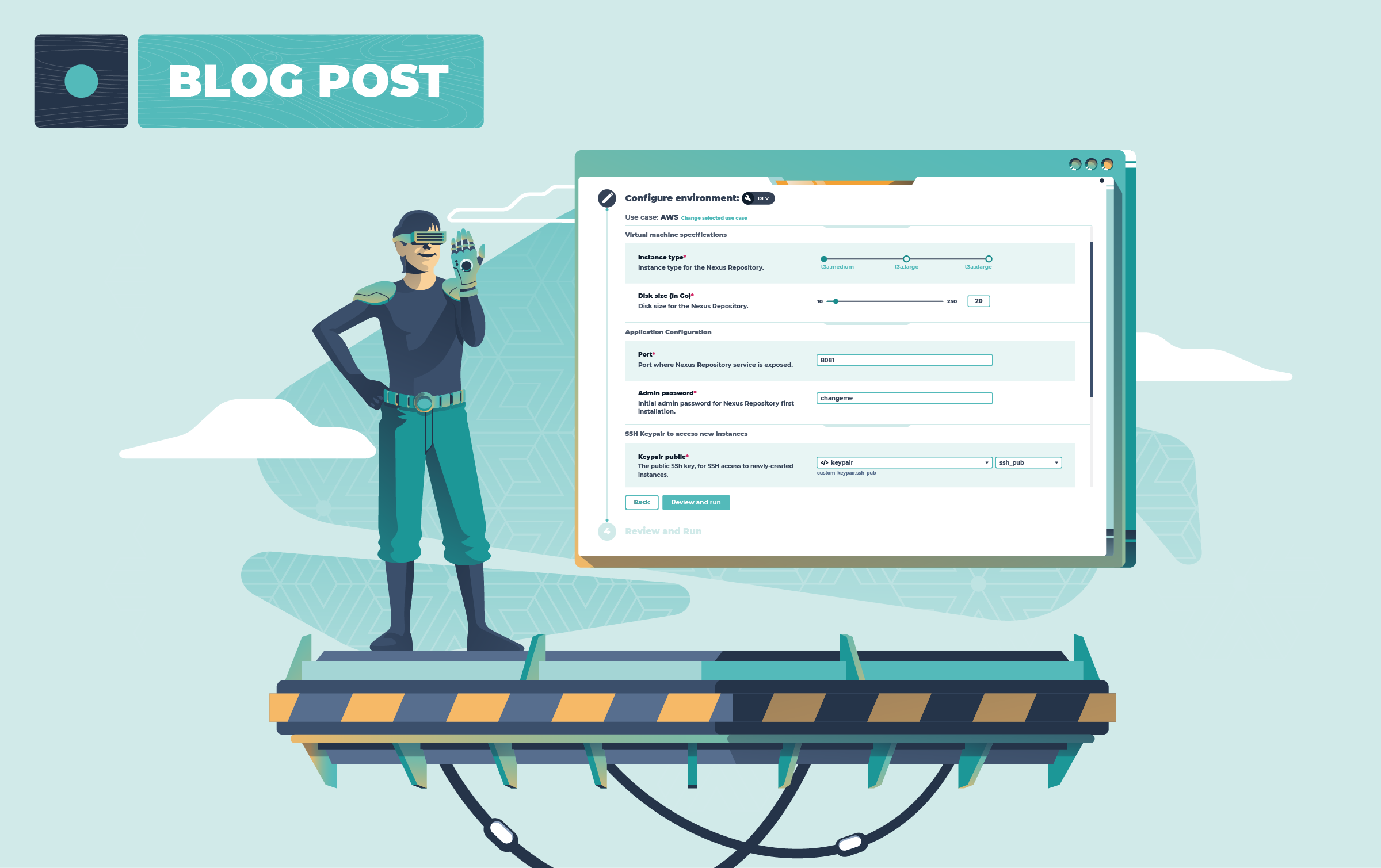







 The process of setting up infrastructure in Cycloid is pretty simple. A new project can be created and linked to a repository, allowing teams to manage configurations centrally. Ownership and permissions are defined during project creation, ensuring security and accountability.
  Once a project is set up, an environment is created within it. Each environment acts as an isolated workspace for different infrastructure stages, ensuring that testing and production workloads remain separate.
  Managing infrastructure manually across multiple clouds is inefficient. Cycloid simplifies this by offering StackForms, which allow teams to deploy cloud components using predefined templates. Instead of writing Terraform or CloudFormation scripts from scratch, teams can select a pre-configured infrastructure stack, customize parameters, and deploy their cloud resources within minutes.
  StackForms make it easy to deploy networking, compute, storage, and security components across AWS, GCP, and Azure. Teams can define configurations directly from the Cycloid interface without needing to write complex automation scripts.
  After selecting a component, configurations such as credentials, project settings, network configurations, and cloud-specific parameters are applied. This ensures that infrastructure deployments remain consistent across cloud providers.
  Beyond infrastructure deployment, governance and compliance are key concerns for cloud teams. Cycloid ensures that resources follow organizational standards by enforcing consistent tagging policies, compliance checks, and security best practices. It allows security and DevOps teams to define global policies that apply across all cloud providers, reducing the risk of misconfigurations. Cloud inventory data isn’t just for viewing – it needs to be actionable. Cycloid provides an API that enables teams to interact with their cloud inventory programmatically. This API can be used to automate reporting, governance enforcement, and integration with other DevOps tools, ensuring that cloud asset data remains an integral part of infrastructure workflows. By the time everything is configured, Cycloid provides a fully unified asset inventory across all cloud providers. Instead of dealing with fragmented tools and scattered logs, organizations get a structured, scalable system for managing cloud assets efficiently. Now, cloud inventory data isn’t just for viewing – it needs to be actionable. A static inventory doesn’t provide much value if teams still need to manually track, verify, and manage cloud resources. This is where APIs come in, allowing teams to interact with cloud asset inventory programmatically, ensuring that resource data is always available for automation, governance enforcement, and integration with DevOps workflows. With the Cycloid API, teams can: