
TL;DR
- Internal Developer Platforms (IDPs) have become the foundation of today’s engineering teams, not just automating deployments but bringing developers, infrastructure, and governance together to turn scattered delivery pipelines into secure and manageable systems.
- IDPs have moved far beyond their earlier form as tools that only standardized environments. They are now full platforms that coordinate the entire software lifecycle, managing provisioning, compliance, cost tracking, and giving developers powerful self-service options through a single, intelligent interface.
- Data sovereignty and governance have emerged as key differentiators for the most successful platforms, offering flexible hosting options: whether SaaS, hybrid, or on-premises, to help organizations stay compliant with regional regulations while maintaining full control over their operations and data.
- The next wave of IDPs is shifting focus from speed to clarity and accountability, combining observability, financial insights, and policy-as-code to give leaders better visibility into how every engineering decision impacts cost, security, and overall performance.
Internal Developer Platforms (IDPs): 2026’s Top 11
The Real Value IDPs Bring to Engineering Teams
TL;DR
- Internal Developer Platforms (IDPs) have become the foundation of today’s engineering teams, not just automating deployments but bringing developers, infrastructure, and governance together to turn scattered delivery pipelines into secure and manageable systems.
- IDPs have moved far beyond their earlier form as tools that only standardized environments. They are now full platforms that coordinate the entire software lifecycle, managing provisioning, compliance, cost tracking, and giving developers powerful self-service options through a single, intelligent interface.
- Data sovereignty and governance have emerged as key differentiators for the most successful platforms, offering flexible hosting options: whether SaaS, hybrid, or on-premises, to help organizations stay compliant with regional regulations while maintaining full control over their operations and data.
- The next wave of IDPs is shifting focus from speed to clarity and accountability, combining observability, financial insights, and policy-as-code to give leaders better visibility into how every engineering decision impacts cost, security, and overall performance.
Internal Developer Platforms (IDPs) have quickly become the nerve center of modern software delivery…
Continue readingRead less
They act as the bridge between developers and infrastructure by automating setup, enforcing governance, and simplifying how teams deliver software at scale. For organizations juggling multiple clouds, security policies, and compliance frameworks, an IDP offers a single, structured way to keep delivery fast while staying in control.
Consider a large engineering team that manages dozens of microservices across different environments. Each developer needs access to test data, consistent infrastructure, and secure pipelines. Without a central platform, this becomes a web of manual scripts, permissions, and duplicated work. An IDP steps in, turning those fragmented steps into a self-service experience where developers can create, deploy, and observe their applications through a common interface, all while compliance rules run silently in the background.
A recent State of Platform Engineering 2024 report noted that over 65% of enterprises have either built or adopted an Internal Developer Platform to improve developer experience and governance. The same study found that companies using IDPs deliver updates up to 40% faster while cutting operational overhead nearly in half. This shift marks a broader industry realization: IDPs are no longer an optional efficiency layer; they are becoming a strategic necessity.
In this article, we’ll explore what defines a modern IDP, the key features that make them stand out, and how leading platforms are helping organizations modernize their software delivery. We’ll also walk through a real Cycloid implementation to show how orchestration, governance, and automation come together in practice.
What is an Internal Developer Platform (IDP)?
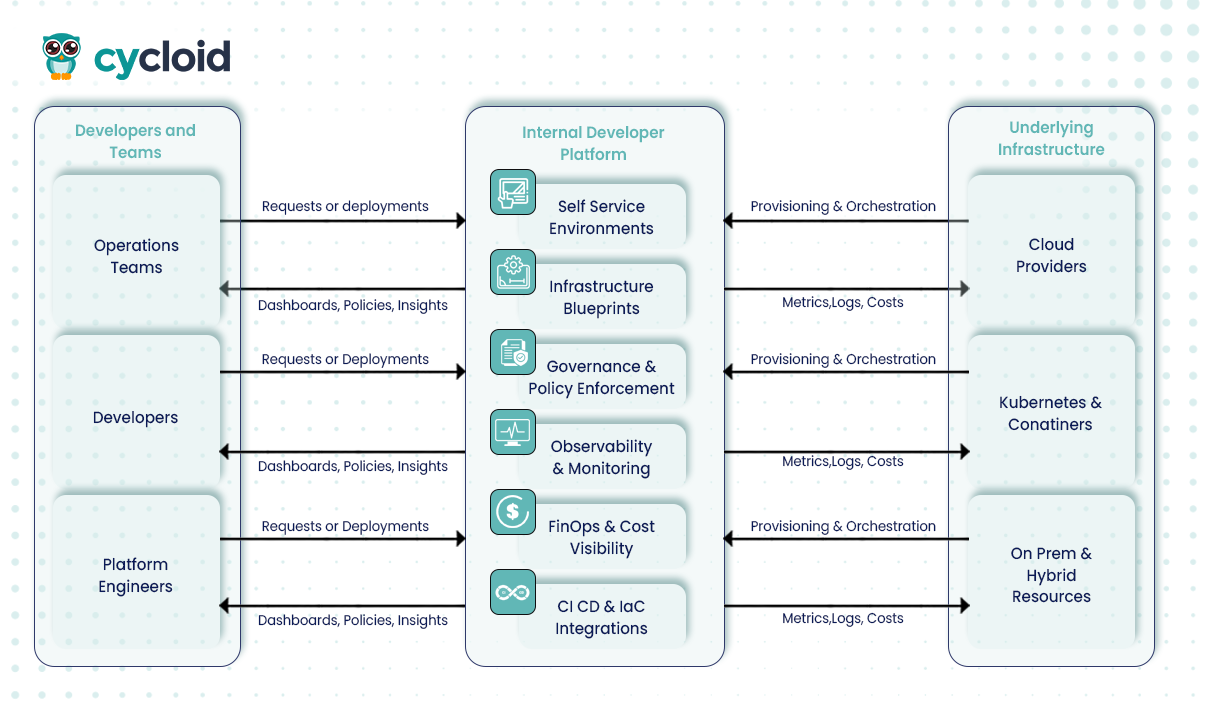
An Internal Developer Platform (IDP) is a unified system that acts as an orchestration layer between developers and infrastructure. It brings together deployment, monitoring, and governance into one workflow, allowing teams to build and ship software faster without worrying about the underlying setup. By replacing manual provisioning and tool sprawl with automation and guardrails, an IDP helps organizations maintain both speed and control.
The main purpose of an IDP is to simplify complex delivery workflows. Developers can create environments, deploy updates, and manage pipelines through self-service portals or APIs without depending on operations teams. Features such as reusable infrastructure blueprints, policy enforcement, and cost visibility make this possible while keeping every action compliant and traceable.
This orchestration layer goes beyond automation by coordinating how infrastructure, pipelines, and policies work together. Every environment created through an IDP is consistent, secure, and ready to observe, reducing errors and ensuring delivery stays reliable across projects and clouds.
In essence, an IDP removes operational friction and gives developers autonomy without losing oversight. It unites DevOps, security, and governance under one platform, creating a smoother, safer, and more predictable way to build and deliver software at scale.
Key Features of a Modern IDP
Modern Internal Developer Platforms (IDPs) have developed into orchestration systems that bring structure, automation, and visibility across every stage of software delivery. Current IDPs are not only about faster releases; they ensure compliance, data sovereignty, and consistent infrastructure across cloud and on-premises environments.
Infrastructure Blueprints
Reusable infrastructure blueprints make environment setup predictable and repeatable. They capture the organization’s best practices, such as network layouts, IAM rules, and compliance checks, and apply them uniformly across hybrid or multi-cloud deployments. This standardization prevents drift and helps maintain a consistent security posture.
Self-Service Environments
A defining trait of modern IDPs is developer self-service. Teams can create, deploy, and manage their own environments without relying on operations. Each environment is provisioned with guardrails, and already applied policies, access controls, and configurations are baked in, so developers move faster while governance stays intact.
Governance and Policy Enforcement
Governance is now built directly into the platform rather than handled as an afterthought. Policy-as-code ensures every deployment meets compliance, cost, and security standards automatically. This approach transforms governance from a gatekeeping process into an integrated, continuous safeguard.
Data Sovereignty
For enterprises operating across regions, controlling where data resides is essential. IDPs provide granular control over workload and storage locations, ensuring compliance with laws like GDPR or HIPAA. This ability to align hosting choices with regulatory needs makes IDPs vital in industries such as finance and healthcare.
Flexible Hosting Models
Not every organization fits into one model of deployment. The strongest IDPs support dedicated SaaS, multi-tenant SaaS, and self-hosted on-premises options. Whether a company prioritizes isolation, scalability, or full control, these hosting models let them adapt the platform to their compliance and performance needs.
Infrastructure as Code (IaC) Compatibility
Modern IDPs integrate seamlessly with IaC tools such as Terraform, Pulumi, and ArgoCD. This ensures infrastructure changes remain versioned, reviewable, and consistent with GitOps practices. Teams benefit from automation without losing the traceability or auditability required in enterprise setups.
Flexible Hosting Models
Visibility is the final piece that connects delivery to governance. Through centralized dashboards, teams can monitor system health, deployment metrics, and cost performance in real time. This observability turns platform management into a data-driven discipline, allowing both developers and leaders to act on facts, not assumptions.
The Real Value IDPs Bring to Engineering Teams
An IDP doesn’t just improve upon initial workflows; it reshapes how engineering teams operate. By combining automation, visibility, and governance, IDPs eliminate long wait times, reduce errors, and streamline communication between developers and operations. The result is a faster, calmer, and more reliable delivery cycle that scales with the organization.
Continue readingRead less
The true impact of an IDP is best measured not only by technical performance but also by how it improves the developer experience. Teams gain autonomy without losing control, leaders gain cost and compliance visibility, and organizations gain consistent, predictable delivery. These improvements translate into measurable outcomes across productivity, cost, and satisfaction.
- Sharper Developer Focus: Automating infrastructure and CI/CD workflows cuts context-switching by about 35%, enabling developers to concentrate on innovation rather than repetitive tasks.
- Lower Cloud Costs: Centralized visibility and automated cleanup prevent idle or duplicate resources, saving 20–30% in monthly cloud expenses.
- Higher Developer Satisfaction: Platform engineering surveys show teams using IDPs experience around 40% higher Developer NPS (Net Promoter Score), thanks to smoother workflows and increased autonomy.
- Faster Delivery Cycles: IDPs eliminate waiting for approvals or manual provisioning, enabling teams to release features faster through automated workflows and pre-approved environments.
Comparative Analysis: What Each Platform Does Best
Choosing the right Internal Developer Platform depends on what an organization values most, i.e., speed, governance, extensibility, or cost control. While some tools focus on improving developer experience, others specialize in hybrid cloud automation or enterprise-grade compliance. The table below summarizes how each platform performs across the four most requested evaluation criteria: governance, integrations, extensibility, and cost tracking.
| Platform | Governance | Integrations | Extensibility | Cost Tracking | Ideal For |
|---|---|---|---|---|---|
| Cycloid | Very High | High | High | Very High | Multi-cloud enterprises, MSPs |
| Humanitec | High | High | Medium | Medium | Enterprise DevOps teams |
| Port | Medium | High | High | Low | Platform engineering teams |
| Qovery | Medium | Medium | Medium | Medium | SaaS startups, scale-ups |
| Mia Platform | High | Medium | Medium | Medium | Regulated enterprises |
| OpsLevel | Medium | Medium | Medium | Low | Microservice ownership teams |
| Roadie | Medium | High | Medium | Low | Mid-size engineering orgs |
| Cortex | Medium | Medium | Medium | Low | SRE and platform teams |
| Morpheus Data | Very High | High | Medium | High | Hybrid-cloud enterprises |
| CloudBolt | High | High | Medium | High | Large IT departments |
| Harness | High | High | Medium | Very High | DevOps and CI/CD teams |
Top 11 Internal Developer Platforms in 2025
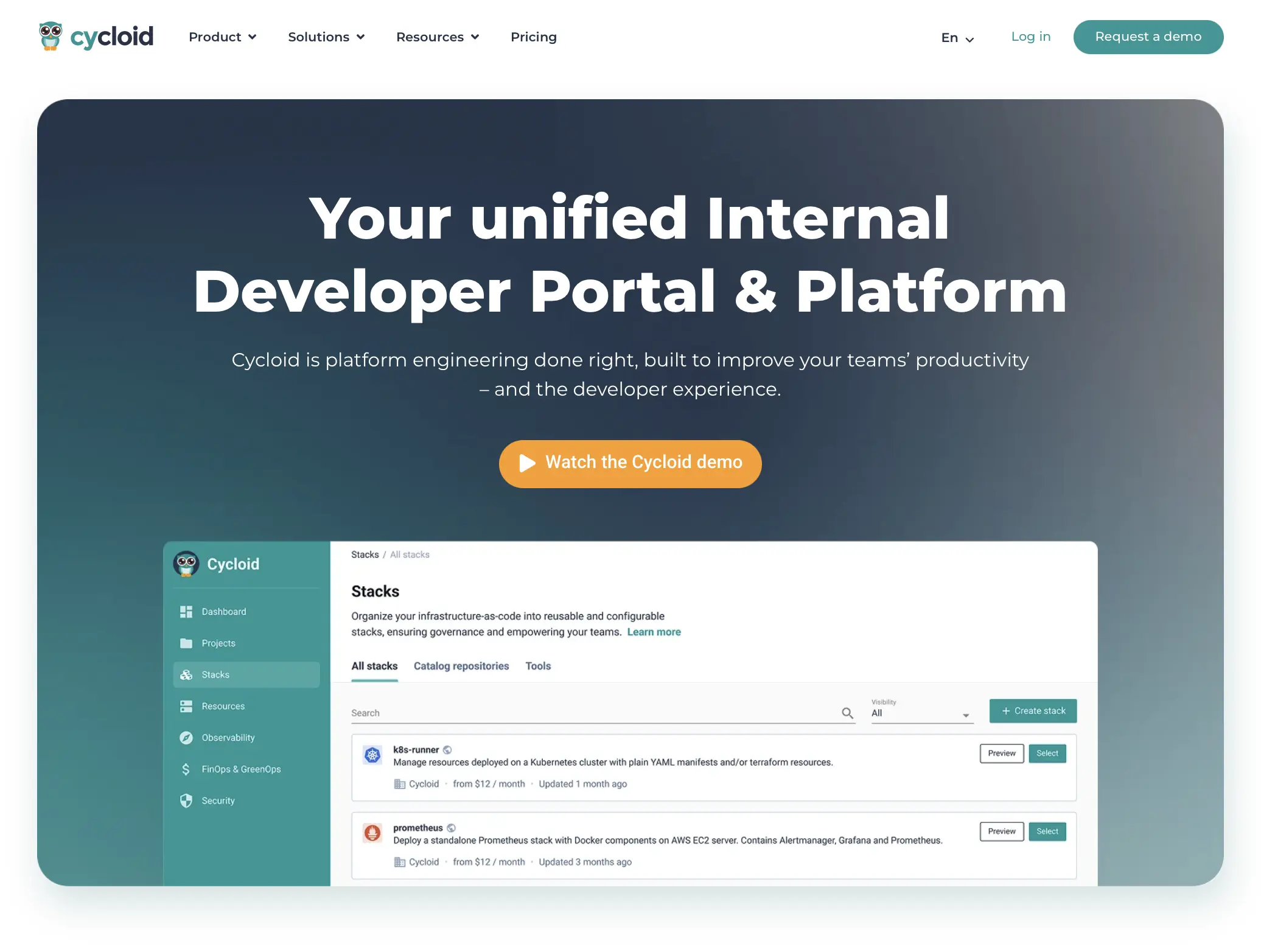
Cycloid is a full-stack Internal Developer Platform (IDP) that combines infrastructure automation, governance, and FinOps & GreenOps visibility under one framework. It enables teams to build, deploy, and manage cloud resources through reusable pipelines and predefined blueprints while ensuring compliance and cost efficiency.
Its modular design allows deployment as dedicated SaaS, multi-tenant SaaS, or self-hosted on-premises, meeting the data sovereignty and security needs of regulated industries. The platform’s built-in dashboards give real-time insights into performance, and cost, helping teams maintain control across hybrid and multi-cloud environments.
Best for: Enterprises that manage large multi-cloud environments and need stronger governance and visibility across teams.
Cycloid has been successfully used by Orange Business Services to centralize toolchains and accelerate delivery, achieving faster provisioning and reduced complexity. It also helped Alchemy migrate workloads to Kubernetes with near one-hour environment setup times, and enabled its client to roll out developer self-service through StackForms without exposing users to Terraform configurations.
Cycloid
Humanitec
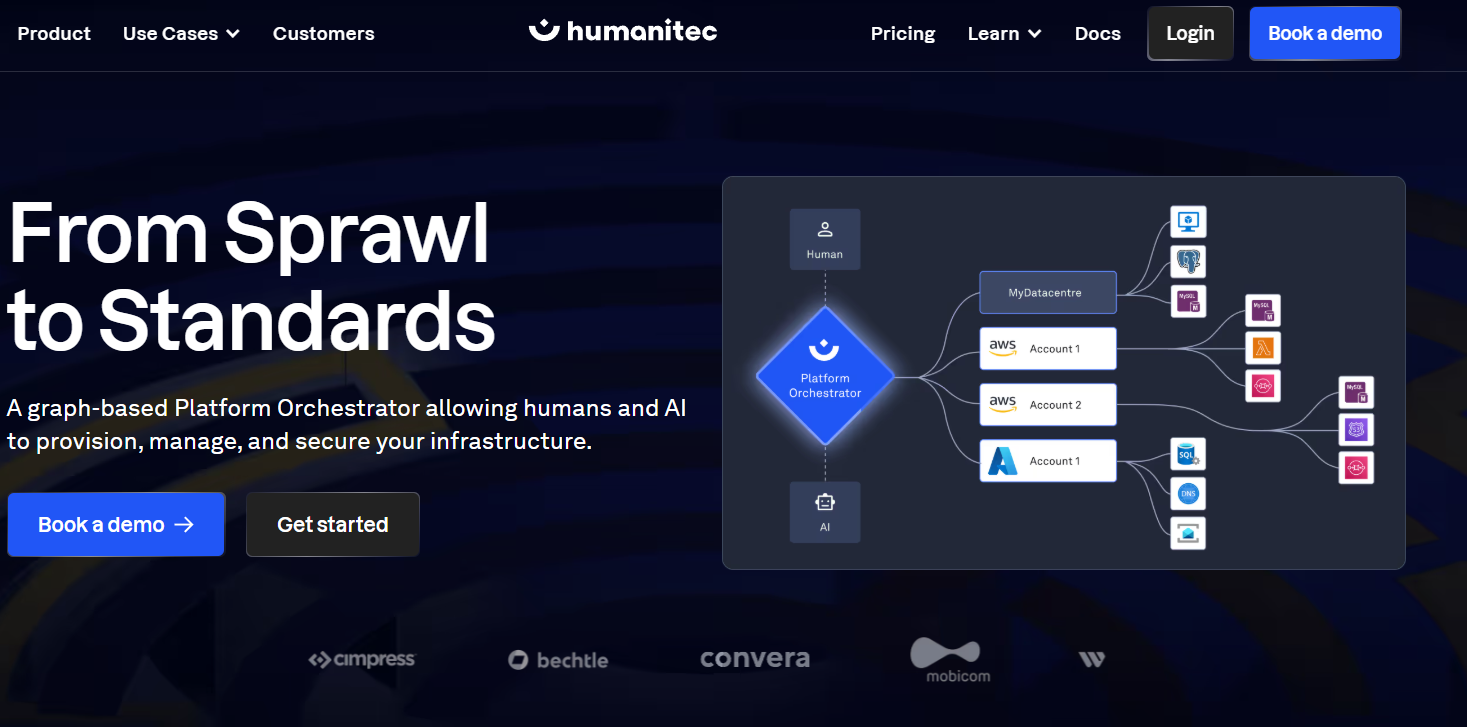
Humanitec is widely recognized for its strong orchestration capabilities and dynamic environment management. It uses configuration-as-code (via Score files) to standardize deployments, allowing teams to define infrastructure and application environments declaratively.
Read MoreLess
Its platform orchestrator sits on top of existing CI/CD and IaC tools, making integration straightforward and non-disruptive. This approach helps teams transition from manual setups to automated, consistent pipelines without rebuilding their existing toolchain.
Best for: Engineering and platform teams seeking to rapidly turn existing infrastructure into a governed, self-service platform.
Qovery goes deep into features that matter for teams building on Kubernetes. It supports ephemeral preview environments with TTLs, automatic shutdown of unused services, cluster autoscaling (including scale-to-zero), and cost monitoring built-in via Kubecost integration.
Read MoreLess
It also offers templates, RBAC, audit logs, and CLI/terraform/API support so platform teams can enforce policy and build golden paths without reinventing the wheel.
Best for: Development-led teams that want to deploy confidently in Kubernetes without deep ops overhead.
Qovery
Port

Port is a flexible developer portal that empowers platform teams to build custom, self-service experiences. It supports blueprints, resource catalogs, dashboards, and workflow automations that centralize how teams interact with infrastructure. Port integrates with Terraform, ArgoCD, Backstage, and many SaaS/APIs, enabling platform engineers to compose developer-centric interfaces without developing them from scratch.
Read MoreLess
While Port is strong in customization and visibility, it is not a full orchestration engine in itself. Platform engineers still need to wire external automation or CI systems for deployments. Also, high customization can introduce complexity: managing too many blueprints, policies, or plugins may require oversight.
Best for: Platform engineering teams wanting to deliver tailored developer experiences with modular controls and self-service workflows.
Mia Platform provides an enterprise-ready IDP built for microservice governance and DevOps automation. It includes an intuitive visual interface to define APIs, monitor pipelines, and manage deployments end-to-end.
Read MoreLess
Its focus on modular architecture and data governance helps large enterprises modernize legacy systems into compliant, cloud-native structures. With integrated CI/CD and service cataloging, teams can control both speed and structure.
Best for: Enterprises shifting legacy systems into modern, governed microservice architectures.
Mia Platform

OpsLevel
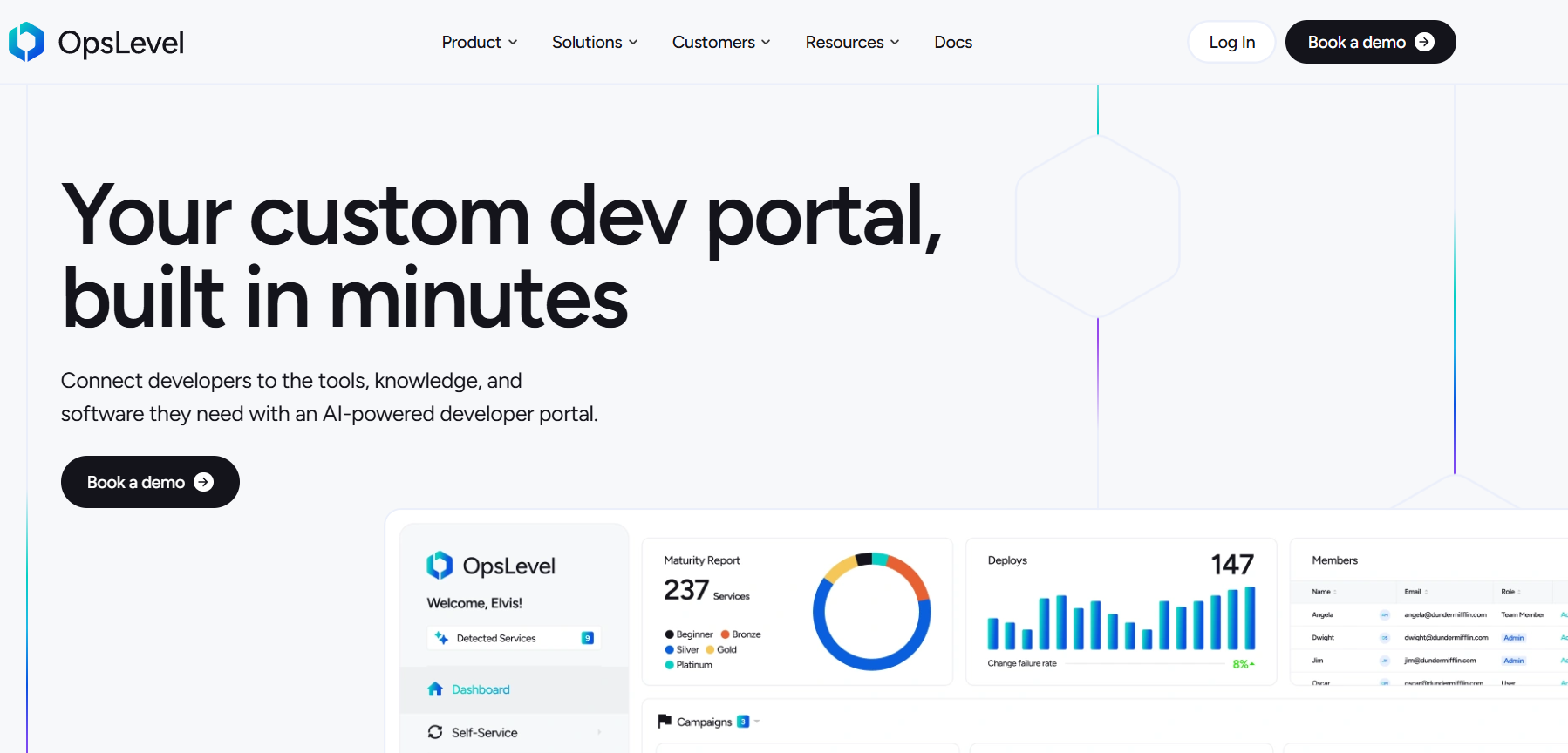
OpsLevel helps organizations maintain service ownership and quality across growing microservice ecosystems. Its catalog provides a clear view of all services, owners, and dependencies, ensuring operational standards stay visible and measurable.
Read MoreLess
Through maturity tracking and automated quality checks, OpsLevel turns service reliability into a team responsibility rather than an afterthought. It’s a key tool for platform leaders enforcing consistency across teams.
Best for: Organizations seeking to elevate reliability and maturity across distributed services.
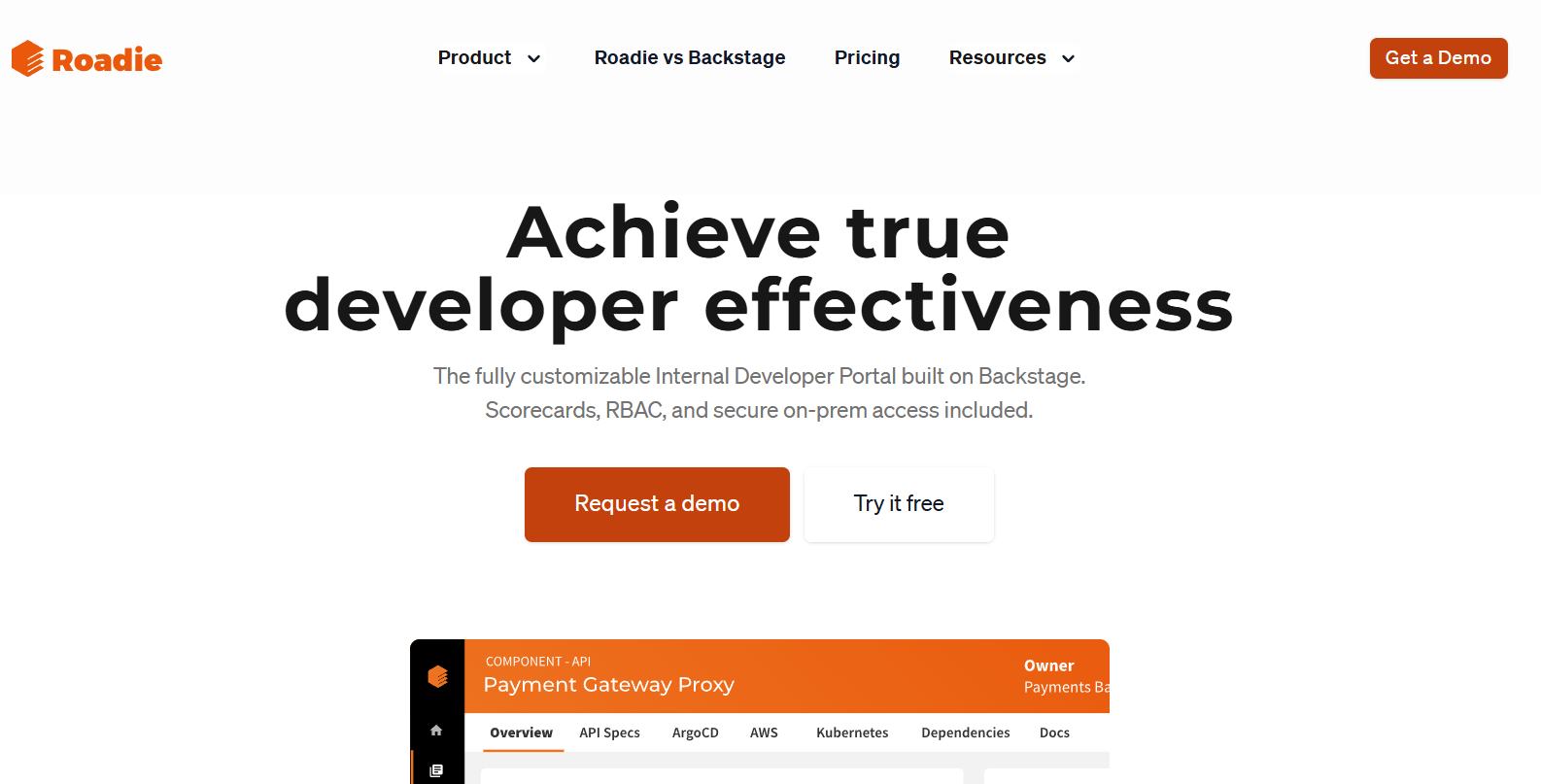
Roadie delivers a managed, production-ready version of Backstage, eliminating the need for self-hosting or maintenance. It comes with prebuilt plugins, integrations, and service catalogs that reduce setup time dramatically.
Read MoreLess
The platform offers a familiar Backstage experience while adding managed updates, security patches, and scalability, making it easier for teams to adopt without the usual operational burden.
Best for: Engineering teams that value quick adoption and reliability over managing infrastructure.
Roadie
Cortex
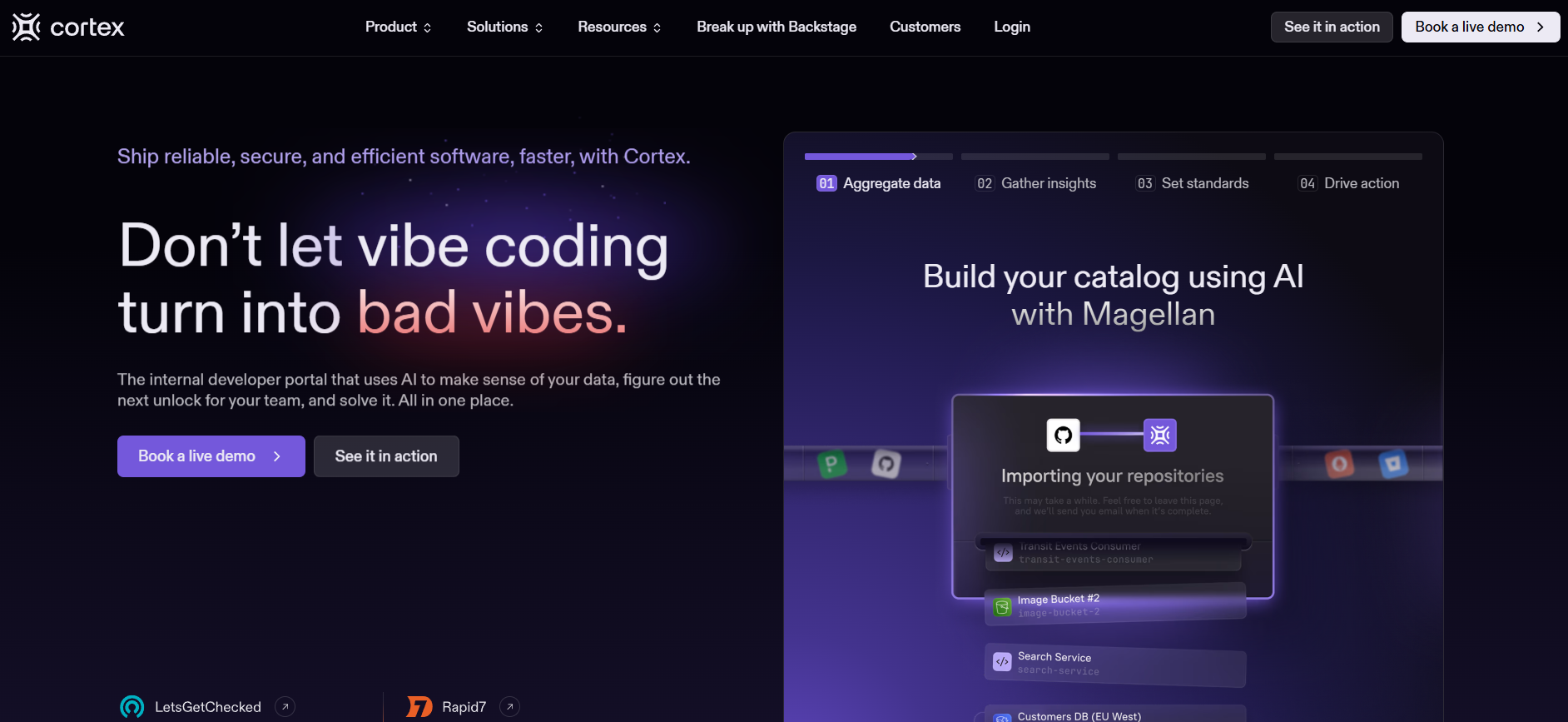
Cortex focuses on improving developer productivity and service reliability through scorecards, dashboards, and ownership tracking. It provides clear visibility into the health and performance of microservices.
Read MoreLess
Its integrations with observability and incident tools allow teams to track uptime, latency, and dependencies, all tied to ownership and service standards. This makes reliability transparent and actionable across the organization.
Best for: SRE and platform teams focused on making reliability, ownership, and operational health transparent and actionable at scale.
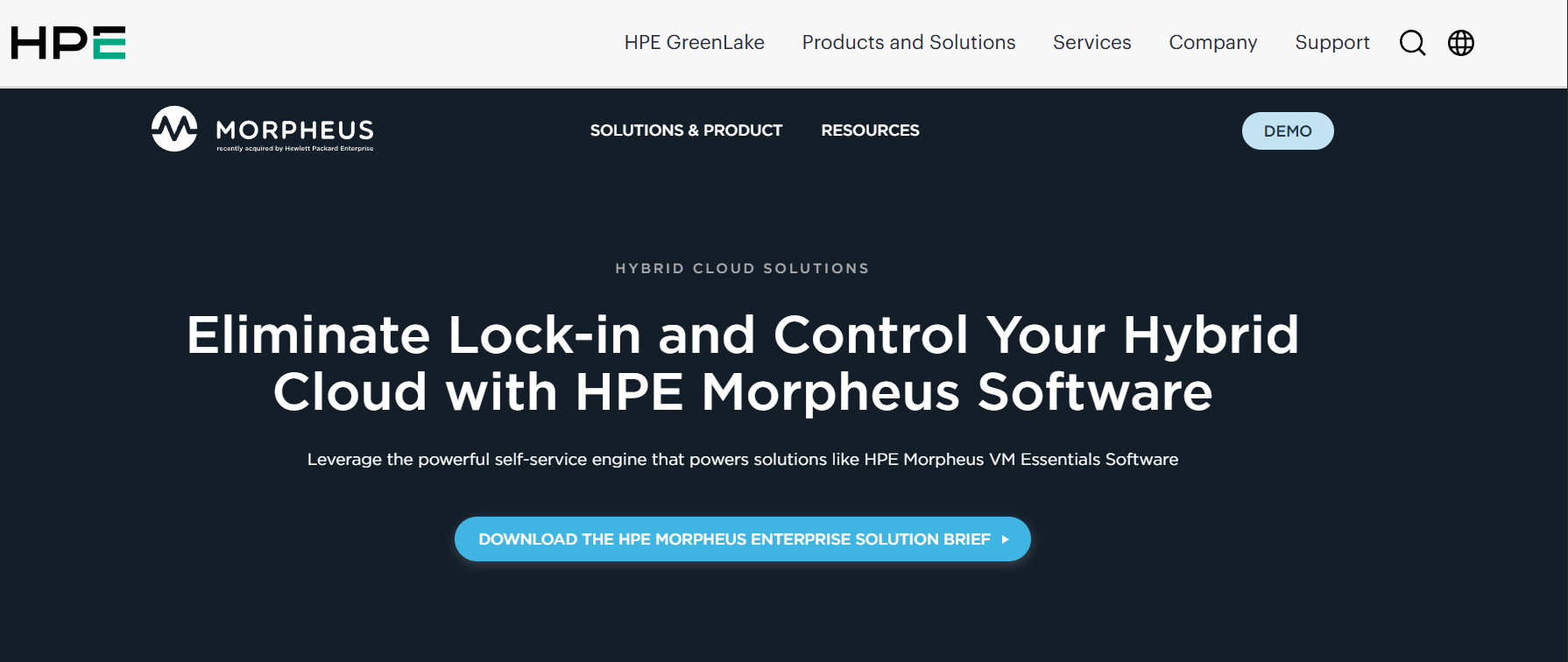
Morpheus Data is an enterprise-grade IDP designed for hybrid and multi-cloud management. It offers self-service provisioning, automation, and governance across platforms like VMware, AWS, Azure, and bare metal.
Read MoreLess
The platform supports both SaaS and on-premises deployment, enabling strict compliance and operational control. Its unified dashboard helps teams monitor costs, performance, and policy adherence across environments.
Best for: Large enterprises managing hybrid or multi-cloud infrastructures who need unified control over provisioning, compliance, and automation.
Morpheus Data
CloudBolt
CloudBolt serves as a cloud management and orchestration platform tailored for multi-cloud enterprises. It integrates deeply into DevOps workflows, providing cost tracking, governance, and automated provisioning from a single pane of glass.
Read MoreLess
With deployment flexibility across SaaS and on-premises, CloudBolt gives IT and platform teams full control over infrastructure and data placement. Its governance-first design helps standardize usage and spending across business units.
Best for: IT and platform teams operating across hybrid or multi-cloud environments, who need a unified platform to enforce governance, automate infrastructure, and optimize cost.
Harness delivers a comprehensive platform for continuous delivery, feature flags, and cloud cost management. It uses AI and ML to verify deployments, reduce rollback frequency, and enhance release confidence.
Read MoreLess
Enterprises use Harness to automate delivery pipelines securely at scale, ensuring that every deployment meets compliance and cost standards before reaching production.
Best for: Enterprises that want intelligent, safe, and repeatable CI/CD pipelines, especially in regulated or high-stakes environments.
Harness

Summary
Smaller teams and startups thrive with platforms where ease of use and fast onboarding matter most. Larger or compliance-heavy organizations lean toward Cycloid, which emphasize governance, scalability, and financial visibility across complex infrastructures.
Read MoreLess
Why These Features even Matter to Platform Engineering Teams
The job of a platform team in 2025 isn’t just writing Terraform config or setting up clusters. It’s about building something that scales – across clouds, across teams, across constant change.
Most modern environments aren’t sitting in one place. They’re multi-cloud, hybrid, container-based, and scattered across dev, staging, prod, and “who spun this up?” zones. Without clear visibility into what’s running where and how much it’s costing, infra sprawl is guaranteed.
At the same time, the old model of submitting a ticket for every new database or microservice doesn’t work anymore. Developers expect self-service. But giving them full access to everything leads to chaos – cost overruns, security gaps, and broken pipelines.
That’s where tools like Cycloid, Port, and Humanitec come in – if they’re chosen correctly.
- IaC and infra import features give platform teams control and visibility.
- Self-service catalogs and onboarding workflows let developers move fast without opening a dozen Jira tickets.
- RBAC and policy enforcement help avoid shadow infra and security holes.
- FinOps and GreenOps tooling make it possible to manage cloud budgets and environmental impact without spreadsheets and guesswork.
Put simply: these aren’t just nice-to-have features. They’re the baseline for keeping platforms stable, efficient, and developer-friendly at the same time.
What Platform Teams Should Look for in a Tool
So now that you’ve seen what each tool offers, the real question is: what should your platform team prioritize?
Every org is different, but some evaluation criteria apply almost everywhere – especially if you’re dealing with fast-growing infra, multiple cloud environments, and a dev team that expects speed without compromise.
First, make sure the tool plays well with your existing workflows. Native support for tools like Terraform and Ansible isn’t optional – it’s the foundation. You also want to be able to visualize live infrastructure across environments, ideally with drift detection baked in.
Next, think about your developers. Can they deploy what they need without pinging the platform team for every change? A solid self-service portal – not just a form builder – should abstract away complexity while enforcing standards. That’s what makes developer autonomy safe and scalable.
Security and governance can’t be bolted on later. You’ll want flexible RBAC, support for org-level policy enforcement, and integration with existing security tools (SSO, audit logs, compliance scanners).
For automation, check if the tool offers strong API and CLI support, plus native CI/CD integrations. If your automation has to go through 12 different wrappers, you’ll end up back in ticket ops.
And finally, look for real FinOps and GreenOps support. It’s not enough to have a cost dashboard. You need actionable insights – pre-deploy estimations, budget limits per team, and usage-based optimization. Bonus if it tracks carbon impact too.
A good platform tool should mold to your infra, not the other way around. Prioritize extensibility, open standards, and integration over pretty dashboards. Because once you’re in production, flexibility matters more than flair.
Conclusion – Which Tool Fits Which Team?
All three tools-Cycloid, Port, and Humanitec-are trying to solve the same core problem: how to help platform teams scale infrastructure and enable developers without losing control. But the way they solve it (and who they’re best for) is very different.
Cycloid is the strongest fit for infrastructure-heavy teams that need control, flexibility, and visibility. If your platform team is responsible for Terraform management, self-service enablement, cost optimization, and running across hybrid or regulated environments, Cycloid checks all the boxes. From native IaC support to FinOps and GreenOps tooling, it’s built for platform teams who actually touch infrastructure and need to do more than just wrap workflows.
Port works well when the focus is on developer experience and service maturity. If your team is building an internal developer portal for a microservices-heavy org, and you care deeply about onboarding flows, scorecards, and app-level abstraction, Port brings a lot to the table. But it falls short on infra control, cost tracking, and extensibility.
Humanitec, despite its positioning, is better suited for teams looking to orchestrate app delivery in very opinionated cloud-native setups. It’s a solid tool for automating environment provisioning and CI/CD glue logic-but it’s not built for infrastructure ops. If your team owns the cloud, the Terraform, the budgets, and the compliance, Humanitec just won’t go deep enough.
If you’re looking for an all-in-one platform engineering tool that meets real-world infra needs-without compromising on automation, governance, or cost visibility – Cycloid is the clear winner. Book your demo now.
Check our Comparisons: Cycloid vs Backstage / Cycloid vs Compass / Cycloid vs Port / Cycloid vs ServiceNow / Cycloid vs Port vs Backstage