CLOUD MANAGEMENT PLATFORM
Unify Governance, Cost, and Provisioning Across All Your Clouds
A cloud management platform (CMP) is a unified control plane for governing, provisioning, and monitoring infrastructure across AWS, Azure, and GCP from one interface. Unlike native tools such as AWS Control Tower or Azure Arc – which manage only their own cloud – a CMP consolidates multi-cloud governance, cost visibility, and IaC automation. Cycloid adds vendor-agnostic governance, built-in FinOps, a self-service catalog, and MSP multi-tenancy.

The cloud management platform market reached $3.55 billion in 2025 and is projected to grow to $7.66 billion by 2031 (Research and Markets, 2026) - driven by the operational complexity of multi-cloud management estates and tightening compliance requirements in regulated industries.
A cloud management platform is an integrated software layer that sits above individual cloud providers - AWS, Azure, GCP, or private cloud - and gives engineering teams a single interface to govern, provision, and monitor infrastructure across all of them.
The problem it solves is straightforward. Each cloud provider ships its own console, its own billing system, and its own governance model. When your organization runs workloads across two or three providers - as 70% of enterprises now do (Flexera, 2025) - managing each provider independently creates policy drift, cost blind spots, and duplicated operational effort.
A cloud management platform eliminates that fragmentation. It consolidates five core capabilities into one control plane: multi-cloud visibility (one dashboard for all environments), governance and policy enforcement (consistent security rules applied everywhere), infrastructure-as-code automation (Terraform, OpenTofu, or Pulumi provisioning across providers), cost management (aggregated spend tracking and pre-deployment estimation), and identity and access control (unified RBAC across cloud accounts).
Not every organization needs a dedicated CMP. But if your team manages workloads across more than one cloud provider, the comparison table below breaks down how the leading platforms differ.
Cloud Management Platform vs Cloud Service Provider
What's the Difference?
A cloud service provider (CSP) – AWS, Azure, or GCP – sells infrastructure: compute, storage, networking, and managed services. A cloud management platform (CMP) sits on top of those providers and manages what happens across them.
The distinction matters because CSPs build management tools for their own ecosystem only. AWS Control Tower governs AWS accounts. Azure Arc extends Azure policies to other environments but routes everything through Azure Resource Manager. Neither gives you a provider-neutral view of your entire infrastructure.
A CMP is provider-neutral by design. It connects to every cloud account your organization uses and applies governance, cost tracking, and provisioning workflows uniformly – regardless of which provider runs the workload. For engineering managers evaluating tooling, the question is not CSP or CMP. You already have CSPs. The question is whether you need an abstraction layer to manage them consistently.
Organizations running 60% or more of workloads across multiple providers typically reach the threshold where a dedicated cloud management platform pays for itself in reduced operational overhead and tighter cost control (Flexera, 2025).
The Multi-cloud Management Challenge
Fragmented Cloud Visibility
Managing AWS, Azure, GCP, VMware, or sovereign clouds like Outscale, Scaleway or Ionos means juggling multiple dashboards, APIs, and management consoles. No single source of truth for your cloud estate.
Cost Sprawl & Waste
Organizations are adopting multi-cloud strategies for resilience and best-of-breed services, but managing disparate cloud environments creates operational complexity, security risks, and unpredictable costs.
Governance Gaps
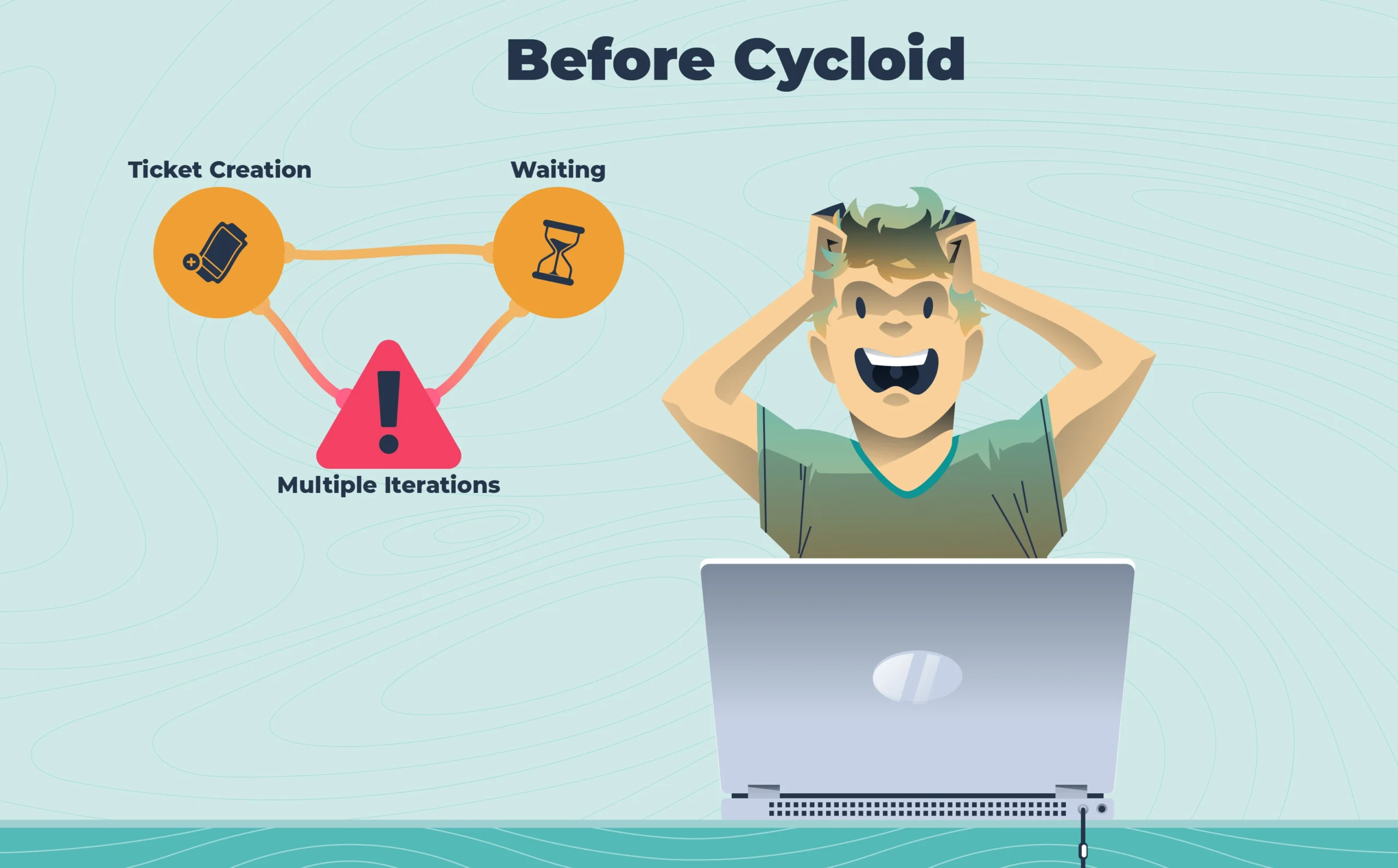
Inconsistent security policies, manual approval processes, and compliance blind spots create risk. Too much control slows teams; too little creates chaos.
Why Cycloid's Cloud Management Platform?
Traditional CMPs focus on infrastructure abstraction. Cycloid goes further, combining CMP capabilities with an Internal Developer Platform to deliver self-service, automation, and developer experience alongside enterprise-grade cloud governance.
Unified Portal & Platform
Not just cloud management, combine CMP capabilities with developer self-service and platform engineering best practices in one solution.
GitOps-First Approach
All infrastructure as code, version-controlled, and auditable. Your automation is yours.
FinOps & GreenOps Built-In
Cost estimation before deployment, cloud cost management across providers, and carbon footprint tracking. Sustainability meets financial responsibility.
No Vendor Lock-In
Cloud-agnostic and tool-agnostic. Choose your clouds and integrate your tools. Freedom to do what’s best for your business.
Rapid Implementation
Up and running in weeks, not years. Get 80% of best practices out of the box, customize the final 20% to your needs.
Policy As Code
Automated governance with Infra Policies. Enforce compliance, security, and cost controls without manual reviews or bottlenecks.
Essential CMP Capabilities
Platform Engineering Benefits
Multi-Cloud & Hybrid Cloud Management
- Unified control across AWS, Azure, GCP, VMware, and on-premises infrastructure
- Single pane of glass for all cloud resources and environments
- Asset Inventory for real-time visibility across all providers
- No vendor lock-in, freedom to choose and change providers
Automated Provisioning & Orchestration
- Self-service portal (StackForms) for infrastructure provisioning via simple web forms
- Pre-configured Stacks for standardized, repeatable deployments
- CI/CD pipeline orchestration
- Infrastructure as Code with Terraform, OpenTofu, Ansible, Pulumi support
FinOps & Cost Management
- Cloud Cost Estimation before deployment, see costs before you spend
- Cloud Cost Management with graphical representation across all providers
- Budget controls and cost allocation
- Chargeback and showback reporting for internal accountability
Governance, Security & Compliance
- Policy as Code (Infra Policies) for automated governance enforcement
- RBAC with granular role-based access control
- Approval workflows for critical changes
- Automated compliance reporting
Resources Lifecycle Management
- Complete visibility from provisioning to decommissioning
- Auto-generated infrastructure diagrams (InfraView) from live state
- Monitoring dashboards, logs, and observability
- Lifecycle automation for patching, backups, and termination
Service Catalog & Self-service
- Developer self-service portal with intuitive interface
- Service catalog with pre-approved infrastructure templates
- Reduced Ops tickets by up to 70%
- Empower non-experts to provision infrastructure safely
See how Cycloid compares to Traditional CMPs
CRITERIA

CYCLOID
VMware Aria (vRealize)
Azure Arc
AWS Control Tower
Multi-cloud unified view
Vendor-agnostic. Single dashboard across AWS, Azure, GCP, private cloud
Partial – multi-cloud via Aria Graph but now bundled into VMware Cloud Foundation (Broadcom)
Partial – extends Azure governance but routes through Azure Resource Manager
AWS-only. No support for Azure or GCP
IaC automation (Terraform/OpenTofu)
Native Terraform and OpenTofu. GitOps-first with Stacks and StackForms
Partial – supports Terraform but VMware-ecosystem-focused. No OpenTofu
Partial – ARM templates primary. Terraform via third-party. No OpenTofu
CloudFormation and Service Catalog only
FinOps cost visibility
Pre-deployment estimation (TerraCost), real-time multi-cloud tracking
Aria Cost multi-cloud analytics. Strong on-prem cost modeling
Partial – Azure Cost Management native. AWS/GCP requires manual setup
Partial – AWS Cost Explorer only. No cross-provider aggregation
Multi-tenant RBAC
Hierarchical child orgs with policy-based RBAC across any cloud
Partial – complex configuration. Broadcom licensing changes disrupted setups
Partial – Azure Lighthouse for MSPs within Azure. Limited cross-cloud
Partial – AWS Organizations/SCPs for AWS only
Vendor lock-in
Low – open source core. SaaS or self-hosted. No proprietary lock-in
High – Broadcom consolidated Aria into Cloud Foundation bundles
Medium – management tied to Azure. Requires Azure subscription
High – AWS-only tooling. No non-AWS management
MSP / multi-client support
Native multi-tenant with child orgs, per-client isolation, white-label
Limited – designed for enterprise internal use
Partial – Azure Lighthouse for Azure MSP delegation only
No MSP multi-tenant capabilities
1.
Define & Catalog
Platform teams create reusable Stacks (infrastructure templates), define Infra Policies, and set up governance guardrails. Build your service catalog once.
2.
Self-Service Provisioning
Developers and end-users access StackForms – a self-service portal with pre-approved options. No Terraform knowledge required. Estimate costs before deployment.
3.
Automated Orchestration
GitOps workflows kick off. Cycloid provisions infrastructure via Terraform/IaC, runs CI/CD pipelines, and enforces policies automatically. Everything is version-controlled.
4.
Monitor & Optimize
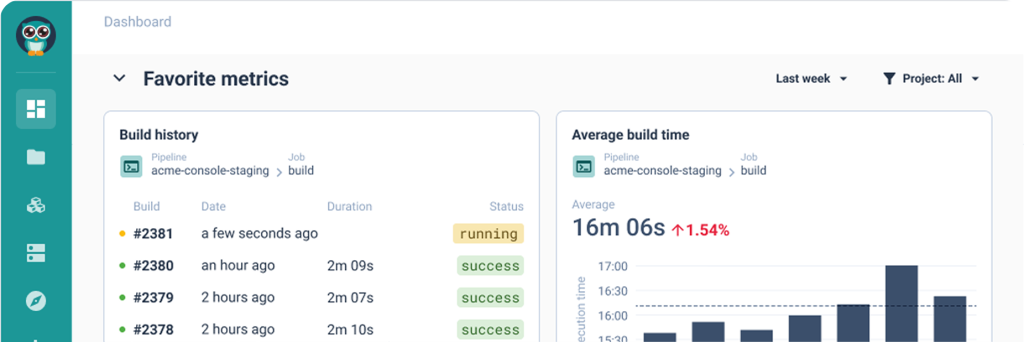
Asset Inventory tracks all resources in real-time. Cloud Cost Management reveals spending. InfraView diagrams show infrastructure topology. Observability and FinOps in one place.
Cloud Management Platform Feature Checklist
8 Must-Have Capabilities
Use this checklist when evaluating cloud management platforms for your organization. Each capability addresses a specific operational gap that grows as your multi-cloud estate scales.
1. Unified multi-cloud dashboard
A single pane of glass across AWS, Azure, GCP, and private cloud. You should see every environment, resource, and cost metric without switching consoles.
2. Policy-as-code governance
Security, compliance, and tagging rules defined in code and enforced automatically at deployment. No manual reviews, no policy drift between providers.
Cloud Management Platform Feature Checklist
8 Must-Have Capabilities
Use this checklist when evaluating cloud management platforms for your organization. Each capability addresses a specific operational gap that grows as your multi-cloud estate scales.
3. IaC automation (Terraform, OpenTofu, Pulumi)
Infrastructure provisioned through code – not click-ops – with reusable templates that work across any cloud provider.
4. Pre-deployment cost estimation
Cost visibility before resources go live. Engineers should know what a stack will cost before they deploy it. Cycloid’s FinOps capabilities include pre-deployment estimation via the open-source TerraCost engine.
Cloud Management Platform Feature Checklist
8 Must-Have Capabilities
Use this checklist when evaluating cloud management platforms for your organization. Each capability addresses a specific operational gap that grows as your multi-cloud estate scales.
5. Real-time cost tracking
Aggregated spend data across all cloud accounts, broken down by team, project, and environment. Updated continuously, not monthly.
6. RBAC at org level
Role-based access control that spans your entire cloud estate – not configured separately per provider. One policy set, applied everywhere.
Cloud Management Platform Feature Checklist
8 Must-Have Capabilities
Use this checklist when evaluating cloud management platforms for your organization. Each capability addresses a specific operational gap that grows as your multi-cloud estate scales.
7. Multi-tenant support (MSP)
If you manage infrastructure for multiple clients or business units, the platform must isolate tenants by default with per-client visibility and reporting.
8. GreenOps / carbon tracking
Carbon footprint measurement alongside cost data. With tightening EU sustainability regulations (CSRD, EU Taxonomy), this is moving from optional to required. Cycloid’s GreenOps module tracks cloud carbon footprint directly in the cost management dashboard.
Outcomes you can expect
Self-service provisioning means developers get infrastructure in minutes, not days. Accelerate software delivery.
Cost estimation before deployment and centralized cost management help teams make informed decisions. Reduce cloud waste through visibility and governance.
Policy as Code enforces security, compliance, and best practices automatically. Developers stay productive; platform teams maintain control.
Frequently Asked Questions
What is a cloud management platform?
A cloud management platform (CMP) is software that provides a unified control plane for managing infrastructure across multiple cloud providers – typically AWS, Azure, and GCP – from a single interface. It consolidates governance, cost visibility, identity management, and infrastructure-as-code automation so engineering teams can apply consistent policies and workflows across their entire cloud estate instead of managing each provider separately.
What is the best cloud management platform in 2026?
The best cloud management platform depends on your environment and requirements. VMware Aria suits VMware-heavy on-prem estates but is now bundled into Broadcom’s VMware Cloud Foundation. Azure Arc works well for Microsoft-centric organizations extending Azure governance. For vendor-agnostic multi-cloud management with native FinOps, IaC automation, and MSP multi-tenancy, Cycloid provides an open-source-based platform that runs across AWS, Azure, GCP, and private cloud without provider lock-in.
What is the difference between a cloud management platform and a cloud service provider?
A cloud service provider (CSP) like AWS, Azure, or GCP sells infrastructure – compute, storage, networking, and managed services. A cloud management platform sits on top of those providers and manages what happens across them: governance, cost tracking, provisioning, and access control. CSPs build management tools for their own ecosystem. A CMP gives you a provider-neutral layer to manage all your clouds consistently from one interface.
What features should a cloud management platform include?
An enterprise-ready cloud management platform should include: a unified multi-cloud dashboard, policy-as-code governance, infrastructure-as-code automation (Terraform, OpenTofu), pre-deployment cost estimation, real-time cost tracking across providers, organization-level RBAC, multi-tenant support for MSPs or multi-business-unit environments, and GreenOps carbon tracking. The platform should also support self-service provisioning so developers can deploy approved infrastructure without filing tickets.
How does Cycloid compare to VMware and Azure Arc as a cloud management platform?
Cycloid differs from VMware Aria and Azure Arc in three ways. First, Cycloid is vendor-agnostic – it treats every cloud provider equally rather than favoring one ecosystem. Second, Cycloid includes native FinOps with pre-deployment cost estimation (via open-source TerraCost) and real-time multi-cloud spend tracking built in. Third, Cycloid’s multi-tenant architecture with child organizations is purpose-built for MSPs and service providers – a use case that VMware and Azure Arc address only partially through complex configuration.
Ready to transform your
cloud management?
Join enterprises and scale-ups managing multi-cloud infrastructure with Cycloid.
Get started in weeks, not months. No vendor lock-in. Self-hosted, dedicated SaaS, or SaaS.