DEVOPS PLATFORM
Definition, Types, and the Best Options for 2026
Quick answer. A DevOps platform is software that unifies the tools and processes required to build, test, deploy, and operate software – from CI/CD to IaC to self-service infrastructure. The category has four types: (1) CI/CD-first platforms (GitLab, GitHub) focused on code and pipelines, (2) IaC-first platforms (Terraform Cloud, Pulumi Cloud) focused on infrastructure provisioning, (3) IDP-first platforms (Cycloid, Backstage, Port) focused on self-service and governance, and (4) observability-first platforms (Datadog, Dynatrace) focused on monitoring. Most enterprise organisations combine layers from several of them.
The DevOps platform market is crowded with vendors who define the category to flatter their own product. If you are a VP Engineering being asked to consolidate the engineering toolchain, the first job is to cut through the labels and decide which type your organisation actually needs. Gartner forecasts that 80% of large software engineering organisations will run platform teams by 2026, up from 45% in 2022 - which is the demand pressure most of these platforms are responding to. The four-type taxonomy below is the one most enterprise teams end up using once they have evaluated three or four options.
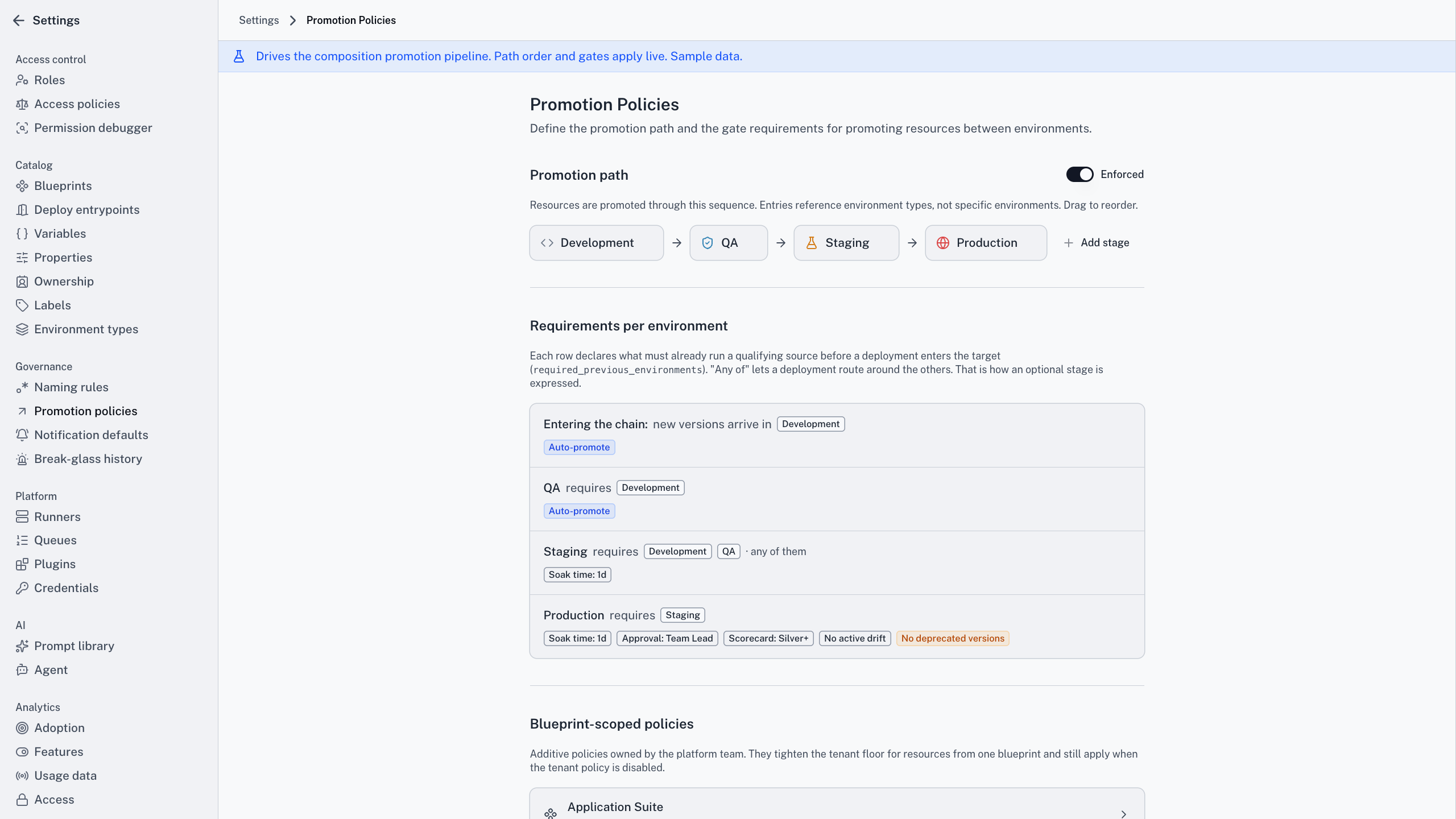
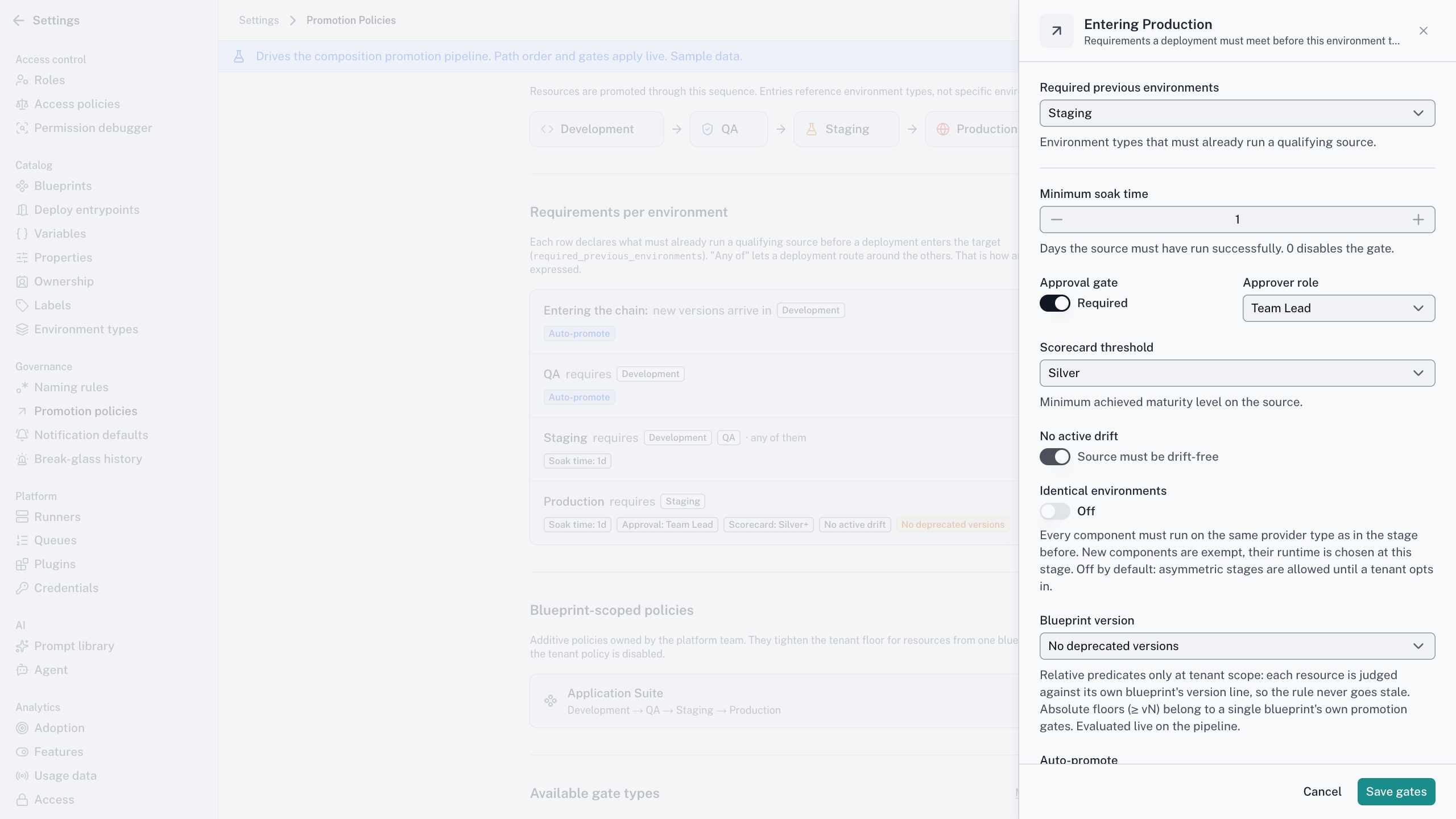
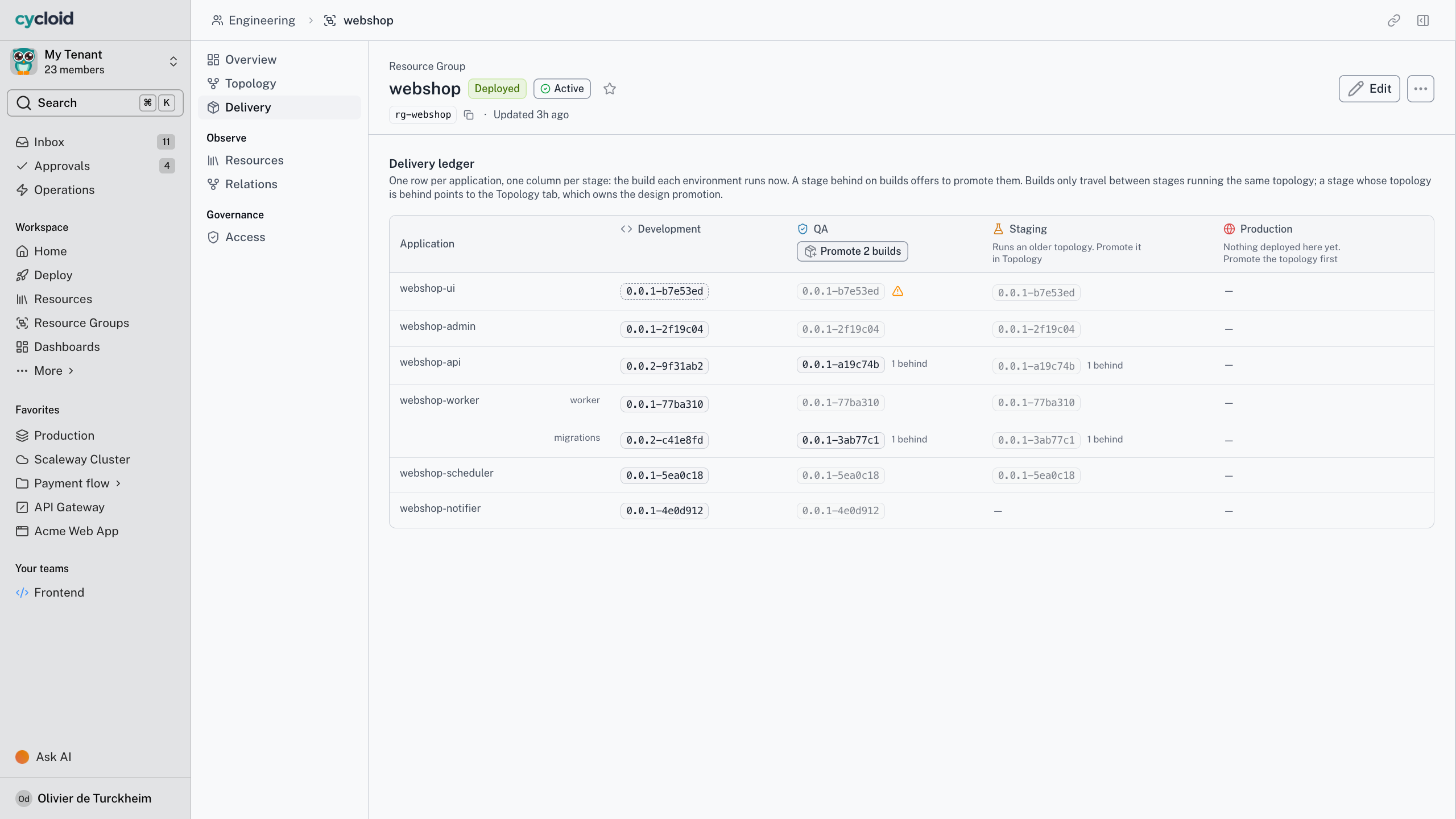
With Cycloid's customizable end to end solution, you'll see the potential of platform engineering for your organization in weeks, not years. Start by managing your service catalog directly from your Git repository. Cycloid takes a full GitOps approach with your git the source of truth. Create IAC from your existing infrastructure or create a stack from a predefined blueprint. Push this stack to your Git catalog repository. Customize your user experience with our stack forms editor. Use drop down menus to select a cloud account to auto complete widgets that fetch options from APIs. Drop down options adapt based on previous selections. Conditionally display advanced fields to streamline user interactions with Cycloid asset inventory widget. Multi tenancy capabilities let service catalogs be shared with multiple orgs, enforce multi factor authentication to meet security rules, configure Terraform back end, maintain brand consistency, implement RBAC for governance. It's easy for end users to deploy infra and apps. Select a stack from your service catalog. Optionally, select your preferred cloud provider. Configure your deployment as needed according to the guardrails as defined by your platform team. Use the cycloid asset inventory widget to integrate cloud resources with each other. Estimate infrastructure costs before deployment for budget compliance. End user configurations are securely saved back to your gift. Here, Cycloid serves as an internal developer portal and platform. Cycloid's asset inventory maintains visibility into deployed infra resources. The FinOps module provides cost analysis and opportunities for optimization. Cycloid helps you monitor and reduce carbon emissions, reinforcing your sustainability goals. Cycloid, it's platform engineering done right.
What Is a DevOps Platform?
A DevOps platform is software that unifies the tools, processes, and infrastructure needed to build, test, deploy, and operate software. In its broadest form it covers source control, CI/CD, infrastructure as code, a service catalog, observability, and governance, all reachable through a single interface or set of integrated interfaces.
The term has drifted over the last five years. GitLab popularised “DevOps platform” in 2019 to describe a single application covering the full SDLC. GitHub adopted similar language with Copilot and Actions. Atlassian uses it to describe Jira plus Bitbucket plus Compass. More recently, platform engineering vendors – Backstage, Port, Cycloid – use the phrase to describe internal developer platforms built on top of those CI/CD tools. The platform engineering community uses “internal developer platform” for this last category, which keeps the distinction clearer.
The reason the label varies so much: no single product covers every layer well. Code, pipelines, infra, observability, and governance are different engineering problems with different tooling histories. A useful working definition: a DevOps platform is whatever piece of software your engineering organisation uses as the primary interface between developers and the operational substrate they ship onto. That interface might be a Git host, an IDP, a Kubernetes control plane, or a portal that sits across all three.
The 4 Types of DevOps Platform
Most enterprise organisations end up running layers from more than one of these categories. The taxonomy matters because evaluating a CI/CD-first platform against an IDP-first one as if they were direct substitutes will produce a confused decision.
1. CI/CD-first platforms
GitLab, GitHub, Azure DevOps, Bitbucket. The defining workload is source control plus pipelines. These platforms started as code repositories and grew outward into build automation, package registries, security scanning, and increasingly project management. Pick this layer when the primary problem is fragmented version control or pipeline tooling. It is rarely sufficient on its own at enterprise scale because it does not solve self-service infrastructure provisioning or multi-cloud governance.
2. IaC-first platforms
Terraform Cloud (HCP Terraform), Pulumi Cloud, Spacelift, env0. The defining workload is infrastructure provisioning through code, with state management, policy checks, and run orchestration on top. Pick this layer when the primary problem is uncontrolled Terraform sprawl – shared state files, drift, no policy enforcement. These platforms rarely include a developer-facing self-service portal, so engineering still owns the infrastructure interface.
3. IDP-first platforms
Cycloid, Backstage, Port, Cortex. The defining workload is developer self-service plus governance. The platform sits on top of existing CI/CD and IaC tools and exposes them through golden paths – pre-approved templates that developers consume without ticket queues. Pick this layer when the primary problem is cognitive load on developers, ticket bottlenecks, or inconsistent provisioning across teams. The CNCF Annual Survey found that most cloud-native teams now run three or more parallel observability stacks alone, with the broader toolchain spread across CI/CD, IaC, secrets, and security tools – which is the cognitive-load problem an IDP layer is built to solve. Cycloid extends the category by including FinOps and multi-cloud governance natively, rather than treating them as plugins.
4. Observability-first platforms
Datadog, Dynatrace, New Relic, Grafana Cloud. The defining workload is monitoring, logging, and tracing across infrastructure and applications. Increasingly bundled with incident management and synthetic testing. Pick this layer when the primary problem is Day 2 visibility – mean time to detect, root cause analysis, SLO management. Observability is rarely the right entry point for a DevOps platform consolidation programme, but it is almost always one of the layers in the final stack.
What to Look for in an
Enterprise DevOps Platform
Most evaluation matrices end up looking similar. The criteria below are the ones that matter when the buyer is a VP Engineering rather than a tools admin. Score each platform on whether it solves the problem natively, through a plugin, or not at all.
CI/CD integration
Works with your existing Git host and pipeline tool – does not force a migration.
IaC support
Terraform, OpenTofu, Ansible, Helm. State managed without proprietary lock-in.
Self-service portal
Developers provision infrastructure through forms or templated paths, not tickets.
Governance and RBAC
Policy as Code, fine-grained roles, audit trails. Applied at deployment time.
Multi-cloud
AWS, Azure, GCP, and on-prem treated as first-class. See the cloud management platform view.
FinOps
Pre-deployment cost estimation, post-deployment attribution, alerts. See FinOps solutions built into daily workflows.
Multi-tenancy
Child organisations, scoped permissions, cost separation. Critical for MSPs and federated enterprises.
Deployment model
SaaS or self-hosted. Sovereignty and data residency requirements rule out US-only SaaS for some buyers.
See how Cycloid fits with your stack
Cycloid is an IDP-first DevOps platform, recognised by IDC as a European leader bridging generalist software delivery and best-of-breed IDP specialists (Nov 2025). The job it does is to sit on top of the CI/CD, IaC, and cloud tooling already in your engineering organisation and expose them as governed self-service – while adding FinOps and multi-cloud cost and carbon tracking that pure portal players leave to plugins. In a typical Cycloid deployment, the layers look like this:
Layer
Tools
Cycloid’s Role
Source control + CI/CD
GitLab, GitHub, Bitbucket, Azure DevOps
Integrates with your existing Git host. Cycloid pipelines (Concourse-based) orchestrate Terraform, Ansible, and Helm runs.
Infrastructure as code
Terraform, OpenTofu, Ansible, Helm
Wraps your IaC in reusable Stacks. StackForms exposes variables as web forms.
Cloud providers
AWS, Azure, GCP, OVHcloud, on-prem
Multi-cloud asset inventory, policy enforcement, and cost tracking from one control plane.
Self-service + governance
Cycloid IDP
The portal developers actually use. Golden paths, RBAC, InfraPolicies, audit trails.
FinOps + GreenOps
Cycloid native
Pre-deploy cost estimation (TerraCost), post-deploy cost attribution, carbon footprint.
Cycloid does not replace GitLab or Terraform. It adds the IDP layer that most engineering organisations have not yet built – the layer that decides whether the rest of the stack feels like a platform or a collection of tools.
Frequently Asked Questions
What is a DevOps platform?
A DevOps platform is software that unifies the tools and processes required to build, test, deploy, and operate software. The category covers CI/CD, infrastructure as code, self-service portals, governance, and observability – though no single product covers every layer well. Most enterprise organisations combine two or three platforms, typically a CI/CD-first tool, an IaC-first tool, and an IDP-first layer that sits across them and exposes self-service to developers.
What are the main types of DevOps platform?
Four types. CI/CD-first platforms (GitLab, GitHub) focus on code and pipelines. IaC-first platforms (Terraform Cloud, Pulumi Cloud) focus on infrastructure provisioning. IDP-first platforms (Cycloid, Backstage, Port) focus on self-service and governance. Observability-first platforms (Datadog, Dynatrace) focus on monitoring and incident response. Enterprise organisations rarely pick one – they layer them, with an IDP usually acting as the developer-facing interface.
What is the best DevOps platform in 2026?
There is no single answer because the best platform depends on the layer you are buying. For source control and pipelines, GitLab and GitHub dominate. For IaC, Terraform Cloud and Pulumi Cloud lead. For developer self-service and governance, Cycloid, Backstage, and Port are the main options. For observability, Datadog and Dynatrace. The bigger question is which layer your engineering organisation is missing – usually the self-service and governance one.
What is the difference between a DevOps platform and an IDP?
An IDP (internal developer platform) is one type of DevOps platform – specifically the IDP-first type focused on developer self-service and governance. The term “DevOps platform” is broader and covers all four types. In practice, when a vendor calls itself an IDP it means the product sits on top of your CI/CD and IaC tools as a developer-facing portal. When a vendor calls itself a DevOps platform without specifying which type, ask which of the four layers they actually own.
Outcomes with Cycloid

One interface for engineering
Developers stop context-switching between consoles, ticket queues, and CLIs. Self-service through templated paths.

Governance without friction
Policy as Code, RBAC, and audit trails applied at deployment time, not after the fact.

Cost and carbon under control
FinOps and GreenOps as part of daily deployment workflow, not a quarterly cleanup exercise.
Cycloid is the IDP-first DevOps platform built for enterprise teams who want self-service, governance, FinOps, and multi-cloud orchestration in one place – while keeping the CI/CD and IaC tools they already use. Open source foundations, SaaS or self-hosted, European sovereignty by default.