No more frantic hiring – let the DevOps team you have become the DevOps team you need.
HYBRID CLOUD MANAGEMENT
Unified Governance for On-Prem and Public Cloud
All the benefits of hybrid cloud, none of the complexities.

What Is Hybrid Cloud Management?
Most enterprise infrastructure does not live in one place. Teams inherit a mix of on-premises servers, private cloud, and one or more public cloud providers – often AWS, Azure, or GCP. This happens organically: a legacy data centre stays in production while new workloads spin up in the cloud. Before long, each environment has its own provisioning workflow, cost dashboard, identity model, and compliance process.
Read MoreLess
Hybrid cloud management is the discipline of bringing these fragmented environments under a single operational layer. A hybrid cloud management platform provides unified visibility into resources across on-prem and cloud, standardised provisioning through infrastructure-as-code, consistent policy enforcement regardless of where workloads run, and consolidated cost tracking across every provider.
The need is growing. According to Flexera’s 2025 State of the Cloud Report, 78% of large enterprises (5,000+ employees) now operate a hybrid cloud model (Flexera, 2025). Gartner projects that 90% of organisations will adopt hybrid cloud through 2027 (Gartner, 2024). Yet most organisations still manage each environment with separate native tools – creating governance gaps, duplicated effort, and blind spots in cost and security.
A hybrid cloud management solution closes these gaps by abstracting the management layer above individual cloud providers. Instead of switching between the AWS Console, Azure Portal, and an on-prem vSphere dashboard, platform and operations teams work from a single interface with one set of policies, one cost view, and one provisioning workflow.
The hybrid cloud management software market reflects this growing need. The hybrid cloud management platform market was valued at USD 15.5 billion in 2026 and is projected to reach USD 38.7 billion by 2033, growing at a 12.6% CAGR (OpenPR, 2026). For engineering leaders evaluating hybrid cloud management tools, the decision is no longer whether to unify management – it is which platform can do it without adding another layer of vendor lock-in.
What are the challenges?
Let’s be honest – the fast-paced, ever-changing world of hybrid cloud is a daunting prospect for many. Cloud ecosystems are complex and multi-faceted; there’s always a question of governance and security.
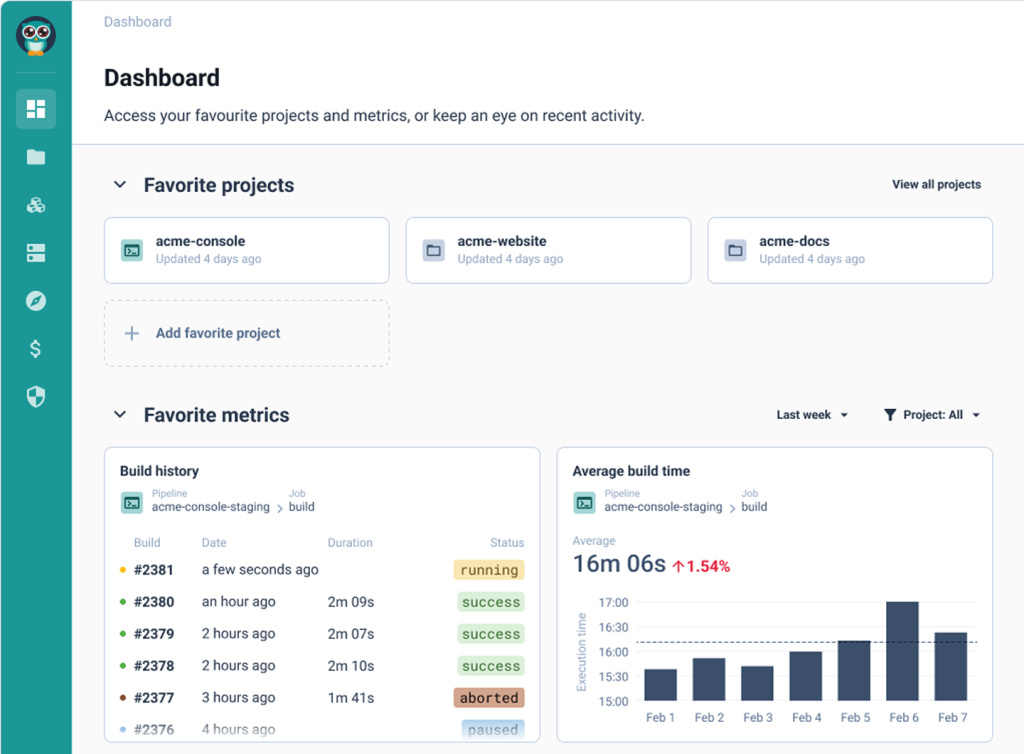
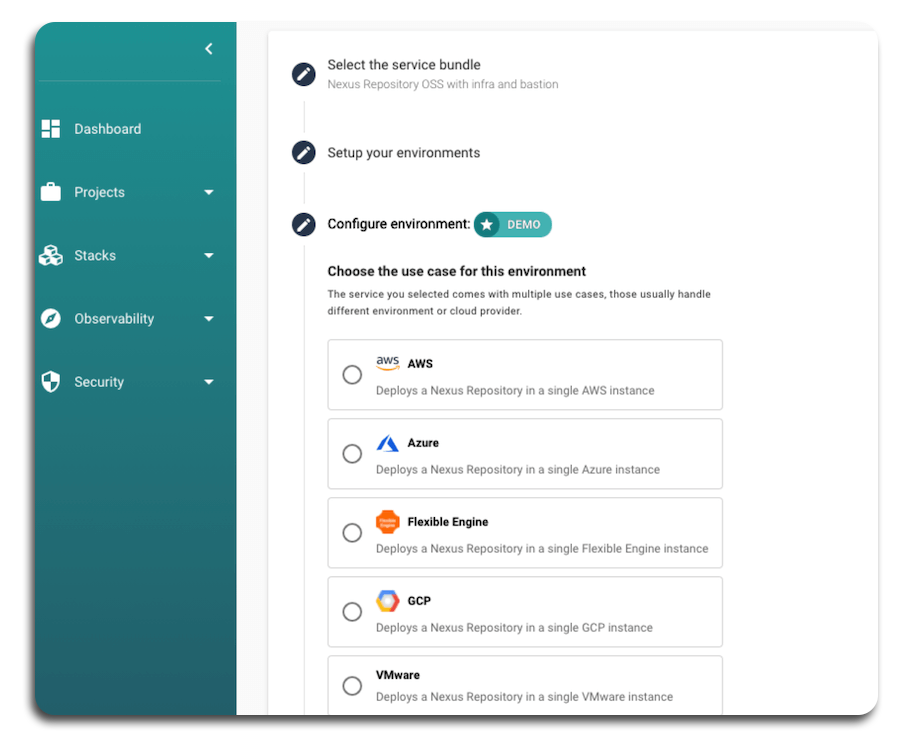
The only way to effectively manage a big shift like that is to centralize all tools, cloud information, and automation in one place. By providing visibility over the state of your clouds to the right people at the right time, you can empower your non-cloud experts to access the cloud infrastructure through a self-service portal independently.
This will allow your cloud experts to focus on what matters and improve efficiency, the developer experience, and time-to-market.
How does Cycloid achieve all this? Read on…
0
%
of organizations that follow a hybrid cloud strategy, struggle to govern effectively & improve efficiency.
Source: Statista Research
Hybrid Cloud vs Multi-Cloud
What's the Difference?
These terms are often used interchangeably, but they describe different architectures. Hybrid cloud refers to infrastructure that combines on-premises environments with one or more public cloud providers. The defining characteristic is the on-prem component – physical or virtualised infrastructure that stays under direct organisational control, connected to cloud resources.
Multi-cloud means using multiple public cloud providers – for example, running compute on AWS and data services on GCP – without any on-premises infrastructure in the mix.
In practice, most large organisations operate both. A company might maintain on-prem servers for regulated workloads (hybrid) while distributing cloud-native services across AWS and Azure (multi-cloud). The management challenge multiplies: you need governance that spans both the on-prem/cloud boundary and the cross-cloud boundary.
This is why hybrid cloud management tools and multi-cloud management platforms increasingly converge. The governance principles – unified visibility, consistent policy, standardised provisioning, and cost control – apply to both architectures. The difference is scope: hybrid cloud management must also account for on-premises infrastructure constraints like network latency, hardware lifecycle, and physical security requirements that do not exist in public cloud.
Why Cycloid?
Governance and transparency
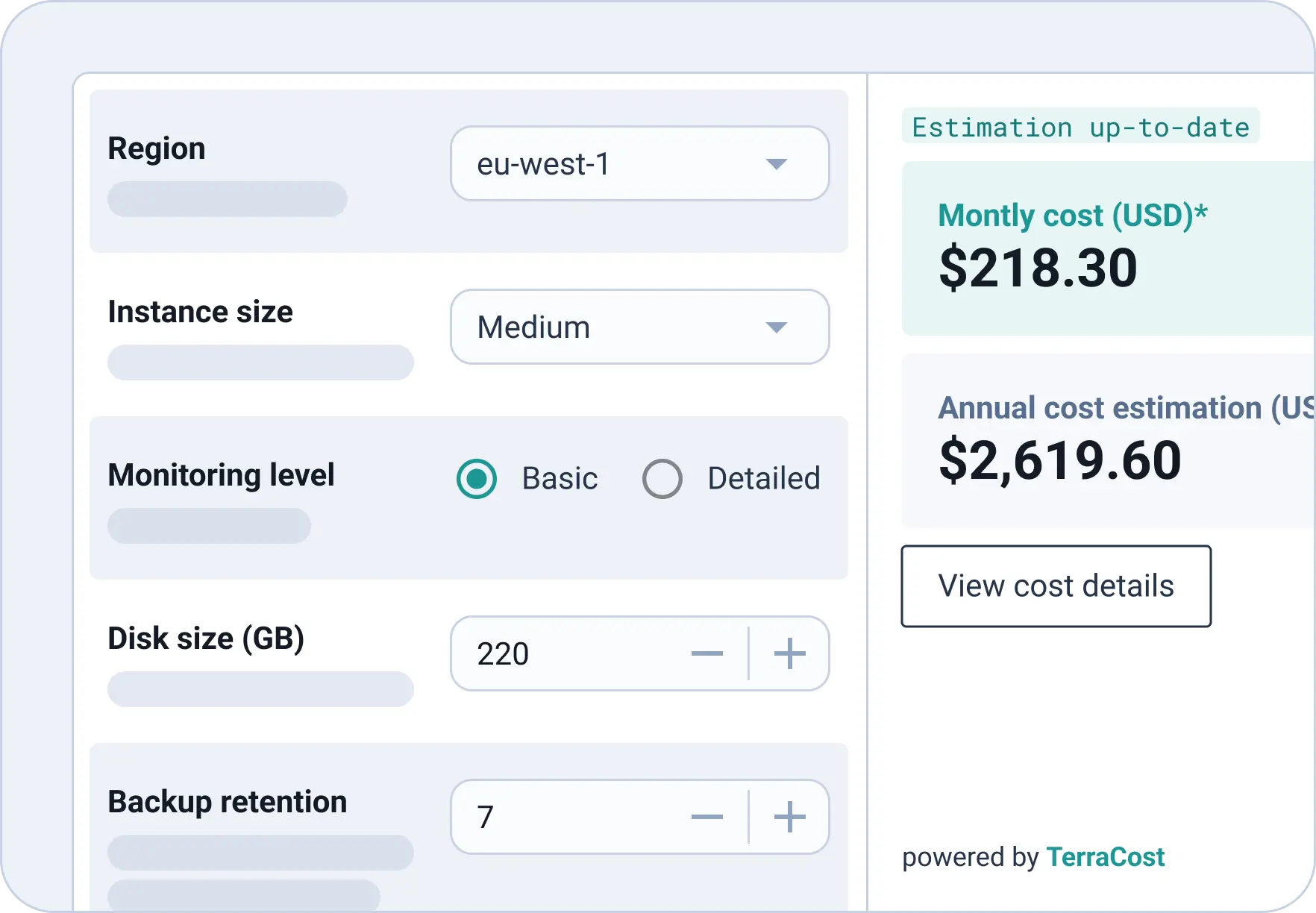
Governance is key to managing cloud effectively, but it doesn’t have to come from the top down. With Cycloid’s Cost Estimation and Cost Explorer modules, your devs can get a clear understanding of costs before and after deployment, while InfraPolicies and Custom Roles let team leads have a holistic overview of projects, costs, stages of deployment, and internal processes. Let your team share responsibility and promote transparency for better collaboration.

Complete cloud flexibility
Quality over quantity when it comes to your toolstack? Cycloid’s got you. Pick and choose your public and private cloud providers, easily integrate your tools into your workflow, and swap them out any time. Or use our pre-configured Stacks to keep your hybrid cloud management as simple as possible. No more unnecessary complexity or tech clutter – use only the tools you need and set your own custom rules. Zero lock-in, tool and cloud agnosticism guaranteed.
Unlock the DevOps mindset
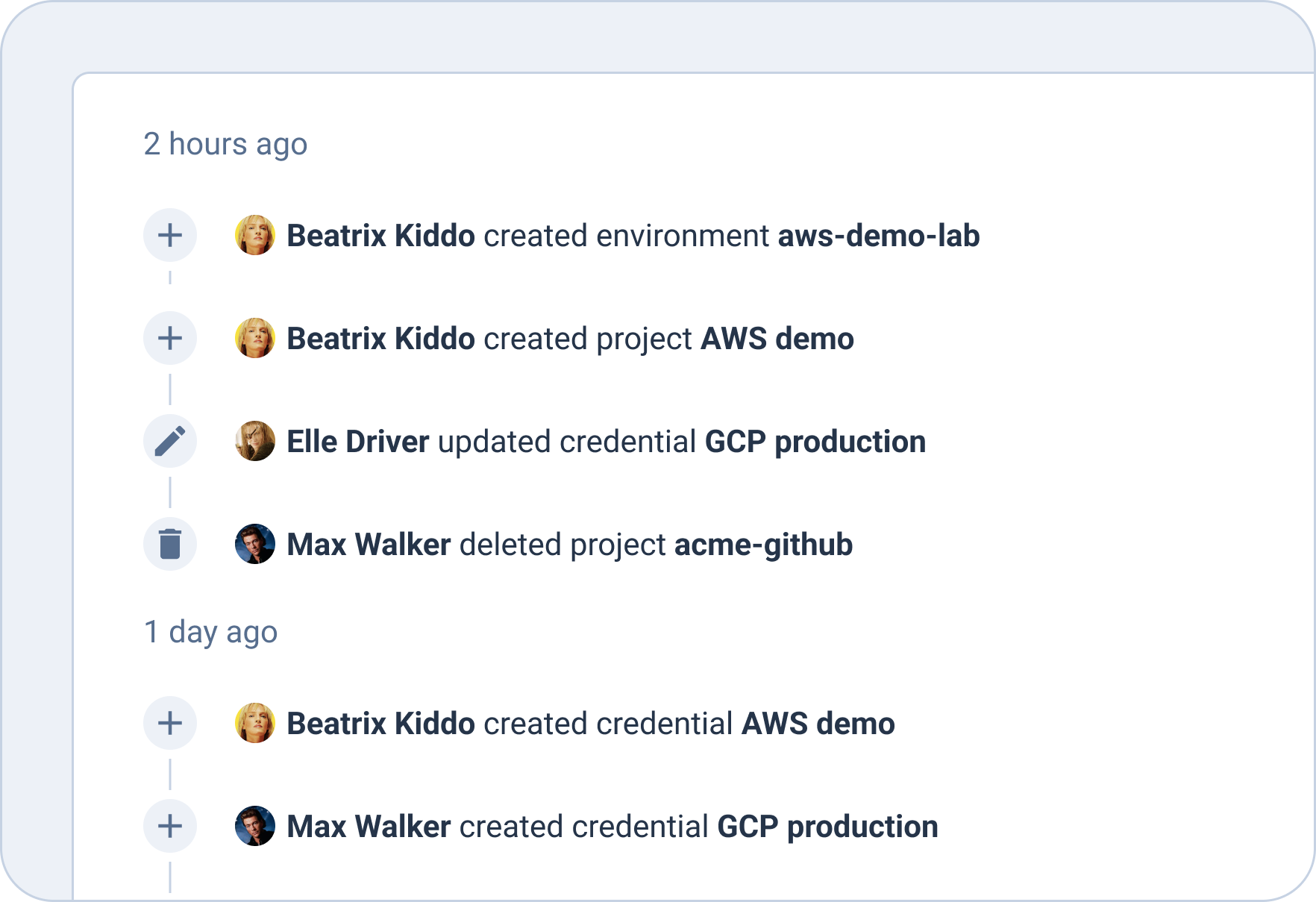
The real change starts with people, not tools. We’ve said this time and time again – digital transformation is driven by cultural change. Adopt your DevOps mindset first, and the right tools will follow. Where Cycloid helps is in creating an environment in which your developers feel empowered to collaborate freely, say goodbye to silos, and share responsibility. It’s a tangible change built in with powerful software.
See how Cycloid compares to other CMPs
CRITERIA

CYCLOID
VMware Aria (vRealize)
Azure Arc
AWS Control Tower
Multi-cloud unified view
Vendor-agnostic. Single dashboard across AWS, Azure, GCP, private cloud
Partial – multi-cloud via Aria Graph but now bundled into VMware Cloud Foundation (Broadcom)
Partial – extends Azure governance but routes through Azure Resource Manager
AWS-only. No support for Azure or GCP
IaC automation (Terraform/OpenTofu)
Native Terraform and OpenTofu. GitOps-first with Stacks and StackForms
Partial – supports Terraform but VMware-ecosystem-focused. No OpenTofu
Partial – ARM templates primary. Terraform via third-party. No OpenTofu
CloudFormation and Service Catalog only
FinOps cost visibility
Pre-deployment estimation (TerraCost), real-time multi-cloud tracking
Aria Cost multi-cloud analytics. Strong on-prem cost modeling
Partial – Azure Cost Management native. AWS/GCP requires manual setup
Partial – AWS Cost Explorer only. No cross-provider aggregation
Multi-tenant RBAC
Hierarchical child orgs with policy-based RBAC across any cloud
Partial – complex configuration. Broadcom licensing changes disrupted setups
Partial – Azure Lighthouse for MSPs within Azure. Limited cross-cloud
Partial – AWS Organizations/SCPs for AWS only
Vendor lock-in
Low – open source core. SaaS or self-hosted. No proprietary lock-in
High – Broadcom consolidated Aria into Cloud Foundation bundles
Medium – management tied to Azure. Requires Azure subscription
High – AWS-only tooling. No non-AWS management
MSP / multi-client support
Native multi-tenant with child orgs, per-client isolation, white-label
Limited – designed for enterprise internal use
Partial – Azure Lighthouse for Azure MSP delegation only
No MSP multi-tenant capabilities
Adopting hybrid cloud isn’t about getting shiny new tools - it’s about shifting your attitude to a new digital reality.
Outcomes with Cycloid
Full cloud control
Take full charge over your hybrid cloud – tools, deployments, security, and costs in one interface.
DevOps cultural shift
Foster an environment that supports change management and an agile DevOps-first mindset.
Improved DevX and empowered teams
Frequently Asked Questions
What is hybrid cloud management?
Hybrid cloud management is the practice of governing, provisioning, and monitoring infrastructure that spans both on-premises environments and public cloud providers from a unified platform. It addresses the operational complexity that arises when organisations run workloads across data centres and clouds like AWS, Azure, and GCP. A hybrid cloud management platform consolidates visibility, cost tracking, policy enforcement, and IaC automation into a single control plane – replacing the fragmented, per-environment approach that most teams inherit as their infrastructure grows.
What is the best hybrid cloud management platform in 2026?
The best hybrid cloud management platform depends on your existing infrastructure and operational model. VMware Aria (now part of VCF under Broadcom) suits organisations heavily invested in VMware-virtualised on-prem environments. Azure Arc works well for teams already committed to the Microsoft ecosystem. Cycloid is a vendor-agnostic option built for platform engineering teams that need Terraform/OpenTofu-native provisioning, multi-tenant RBAC for MSP operations, and built-in FinOps – without locking into a single hypervisor or cloud provider.
What is the difference between hybrid cloud and multi-cloud management?
Hybrid cloud management governs infrastructure that spans on-premises data centres and public cloud providers. The defining element is the on-prem component. Multi-cloud management governs workloads distributed across multiple public cloud providers without on-prem infrastructure. Many enterprises operate both – maintaining on-prem servers for regulated workloads while distributing cloud-native services across providers. The management challenge is the same in both cases: unified visibility, consistent policy, and standardised provisioning regardless of where workloads run.
What is managed hybrid cloud hosting?
Managed hybrid cloud hosting is a service model where a third party operates and maintains the hybrid cloud management layer on behalf of an organisation. Instead of building internal expertise across on-prem, AWS, Azure, and GCP management, teams rely on a managed hybrid cloud services provider to handle provisioning, monitoring, patching, and governance. This approach suits organisations that need hybrid infrastructure but lack the platform engineering headcount to manage it. Cycloid supports this model through its MSP multi-tenancy architecture, enabling managed services providers to operate hybrid environments for multiple clients from one platform.
How does Cycloid compare to Azure Arc for hybrid cloud management?
Azure Arc extends Azure’s governance model to on-prem and non-Azure resources – strongest when Azure is your primary cloud. Cycloid takes a different approach: vendor-agnostic from the start, with native Terraform/OpenTofu support, a self-service developer portal (StackForms), and built-in FinOps covering AWS, Azure, and GCP equally. Where Arc requires Azure AD and Lighthouse for multi-tenant MSP operations, Cycloid provides native child organisations with per-client isolation. For teams that need hybrid cloud management without committing to a single cloud vendor’s governance framework, Cycloid offers more architectural flexibility.
See how easy Hybrid cloud Management can be with Cycloid