Platform Engineering: 8 KPIs for 2025

“What is productivity in development? I mean, even with metrics like lead time, it might work against taking the time to do good things.”  Julien ‘Seraf’ Syx, CTO & Product Lead, Cycloid  Invisible processes sap energy and resources – not just from people, but also complex systems. Imagine the hidden waste that exists in cloud … Read more

Components: Keep Calm and Innovate On with Cycloid

As organizations like yours scale, platform engineering teams face constant pressure to deliver seamless experiences, reduce complexity, and maintain security. And you face the battle to improve the developer experience and still deliver. At Cycloid, our mission is to promote efficient infrastructure and software delivery alongside digital sustainability, all while lightening the cognitive load on IT teams – so we’re excited to share Components with you today. Components, along with existing projects and environments, gives you a new way to organize and manage your applications more efficiently. With Components, you can now decouple stacks from projects, allowing a single project to contain multiple, distinct components, each linked to a specific environment and stack. This helps teams govern their multi-tenant environments more effectively and streamline resource deployments in a way that matches complex platform engineering and DevOps practices. Managing your Applications production-image With Components, instead of managing separate projects for different parts of your application, you can now create a single project named ‘My Company Website’ that includes: My Company Website Backend for your API and business logic. My Company Website Frontend for the user-facing interface. My Company Website Docs for documentation and resources. With this new architecture you now have a centralized and cohesive view of your entire application, which streamlines workflows by reducing the need to switch between projects. Multi-Tenancy for Better Governance An important part of Cycloid is our commitment to multi-tenancy. Components fine-tunes that functionality to address the evolving needs of smaller teams and large enterprises. You can now govern multiple internal or external users with even more precise Role-Based Access Control (RBAC), which means the right people have the right access at the right time. By centralizing governance, your teams benefit from tighter security, better collaboration, and reduced overhead. The Power of Managed Resource Deployment managed-resource-deployment Next up is our new approach to managed resource deployment. We’ve integrated: StackForms for straightforward setup. Instead of hunting down a dozen different interfaces, you manage everything in a single, streamlined form. GitOps-Powered Pipelines for an automated, traceable workflow that logs every change. Think of it as having an extra set of eyes on your code, so you always know who did what and when. Asset Inventory & Resource Inventory (InfraView) that gives you a bird’s-eye view of your cloud resources. You can pinpoint the exact state of your infrastructure without scanning huge files. Terraform Backend Management that keeps your configurations organized and your team’s sanity intact. Environments that Scale with You components Ever promoted a change in dev and then found out it broke in staging? Testing and deploying across dev, staging, and production should feel straightforward, not daunting. As part of Components, updates to environment configurations will let you govern, clone, and promote environments quickly, while also composing solutions from multiple stacks. Now you can scale up (or down) without juggling countless scripts or manual processes. And when coupled with improved security features like shared variables and centralized cloud account management, your team will be able to innovate with greater confidence. Balancing Flexibility and Security production-frontend At Cycloid, we understand that true innovation happens when teams are freed from complexity. With Components, flexible, high-level governance to maintain consistency across the organization becomes reality. And add in customizable rules for individual or all projects that are part of an application (or many applications), we’re helping you find the balance between autonomy and oversight. Where to Learn More We’ve updated our documentation to reflect the release of Components. If you want to know more about the specifics of this, or managed resource deployment approach, you’ll find everything you need in our online docs. We encourage you to explore and let us know what you think. Ready to Scale, Govern, and Innovate? If you have any questions, don’t hesitate to reach out. We’re always here to help you unlock the full potential of your platform engineering efforts with Cycloid.

When should you adopt Platform Engineering?

If you’ve not been living under a rock for the last year and a half, chances are you’ve heard of Platform Engineering. The latest industry trend promises to do everything DevOps tried to do and failed, yet again: lighten your devs’ workload, improve DevX, skyrocket operational efficiency, and turn your projects into rivers of gold.

In truth, Platform Engineering continues the process DevOps started. With PE, leaders have an actionable plan to build toolchains and workflows that empower developers of any skill level with self-service capabilities. It’s an all-round solution that not only improves devs’ autonomy and collaboration, but also enhances resource management, and provides ecosystem and plug-in integration.

You see why it’s an extremely attractive proposition for IT departments – and a very daunting undertaking. After all, it takes nearly 3 years and 20 dedicated specialists to start seeing tangible results. And yet, Gartner predicts that by 2026, 80% of IT departments will adopt internal platform engineering teams. 

Obviously, you don’t want to be left behind, but does this mean you should join the race now? When should you adopt Platform Engineering?

Let’s look at the factors that mean your organization needs to consider platform engineering seriously.

Read more

7 ICP du Platform Engineering à ne pas perdre de vue

Le Platform Engineering constitue une approche de plus en plus attractive dans le domaine de la livraison de logiciels, car elle présente des avantages tels qu’une mise en marché plus rapide, une satisfaction accrue chez les développeurs, et une augmentation de la synergie entre les équipes. Nous avons déjà écrit au sujet du Platform Engineering, en expliquant qu’il ne s’agit en fait pas d’une pratique inédite, et que le DevOps n’est pas devenu obsolète. Cependant, compte tenu du nombre d’entreprises qui ont eu du mal à générer de la valeur commerciale grâce au DevOps, ces dernières considèrent peut-être que la construction de plateformes numériques internes pour favoriser la livraison de logiciels est une stratégie qui permet de bénéficier de tous les bienfaits du DevOps.

Mais comment ne pas tomber dans le piège qui a empêché 80% des entreprises d’adopter le DevOps?

Notre conseil est le suivant : traitez votre plateforme comme vous traiteriez un produit interne, et les utilisateurs de votre plateforme comme vos clients. En l’occurrence, vos indicateurs de réussite, riches d’une touche de Platform Engineering, devraient être similaires à ceux employés pour vos clients.

Les objectifs fondamentaux du Platform Engineering

Lorsque vous établissez vos indicateurs de réussite, assurez-vous de ne pas perdre de vue les buts de votre stratégie de Platform Engineering. Nous vous présentons les principaux objectifs des entreprises pour leurs équipes sur les plateformes, selon le rapport de 2023 sur l’état du DevOps.

L’éducation et l’émancipation des équipes de développeurs et de conception sont des priorités capitales pour les équipes de plateforme, et elles sont complétées par la vitesse d’itération et la sécurité des processus. Cette approche centrée sur le personnel doit se retrouver dans vos indicateurs de réussite. La réinvention des outils ne représente que la moitié de la tâche : vous devez également vous assurer que vos équipes ont bien maîtrisé l’utilisation des nouveaux systèmes. Les processus de rationalisation et d’automatisation inspirés par les meilleures pratiques de DevX favorisent la productivité générale de l’entreprise ainsi que sa démarcation sur le marché.

Les ICP du Platform Engineering

Selon le report mentionné plus haut sur l’état du Devops, la majorité des entreprises qui ont adopté le Platform Engineering ont constaté des améliorations aux niveaux suivants : fiabilité du système (60%), productivité et efficacité (59%), flux de travaux (57%), auxquelles s’ajoutent une amélioration du temps de développement pour 42% de ces sociétés.

La productivité

Compter le nombre de lignes de code produites par les développeurs sur une période de temps donnée est un indicateur dépassé, qui n’intéresse aujourd’hui que des profils comme Elon Musk. La productivité des développeurs est un sujet sensible, et bien que le Platform Engineering garantit l’accélération de la mise au point de logiciels, celle-ci ne s’opère pas en augmentant les rendus des développeurs.

L’idée, c’est plutôt de leur offrir les meilleures conditions de travail possibles. Pensez à tous les obstacles et contretemps que vos équipes doivent affronter au quotidien et à leur dépendance vis-à-vis des experts pour travailler correctement. Les déploiements d’infrastructures complexes, la création de nouveaux environnements et de fonctionnalités de livraison, sont quelques exemples qui nécessitent une intervention DevOps, ce qui ralentit inévitablement les processus. Les ICP centrés sur la rationalisation et la simplification du processus de livraison de logiciels devraient être votre priorité.

  • Délai de production

Il s’agit d’une mesure qui calcule le temps entre la mise en place du récit utilisateur et sa livraison. Ce temps comprend les discussions sur le récit utilisateur, l’attente dûe aux retards, et la durée entre la sélection du récit et sa distribution finale.

Si votre délai de production est trop long, c’est le signe d’un obstacle au niveau des processus, qui conduit à l’éternisation des retards. Automatiser tout ce qui peut l’être limitera votre délai de production, car il s’agit d’une preuve de la proactivité de vos équipes pour atteindre leurs objectifs et s’adapter aux retours.

Read more

Developer Self-Service: Key to Platform Engineering

Wider teams are resisting adopting an internal developer platform, and platform engineers are pulling their hair trying to understand why, according to the State of DevOps 2023 Report. Is it too complex? Does it not do the job? Is the UI not sleek enough? Possibly all of the above, but the real culprit is under-education and under-communication about the possibilities of an internal developer platform to your wider team.

Developer self-service is an integral part of platform engineering, and one that has the most number of users across an organization. If you can get your team to adopt developer self-service, your platform engineering strategy is in the bag. But for this to happen, it should satisfy the needs of all – both end-users (devs, solution architects, IT teams) and Ops.

So, building developer self-service, which is more than simply designing a fancy UI (though it is very important and overlooked by many!) – it’s about building a functional tool with a user in mind. It’s not just making it user-friendly – make it user-oriented!

Treating the platform as a product that answers your customers’ (wider teams’) needs is what will help you build a platform that’s going to be easy to adopt.

How can you make developer self-service more user-friendly?

Address the user’s needs

Just like any relationship, it’s all about communication. In an ideal world, end-users communicate their needs, and the platform team responds to them as best they can. The platform team’s role is to put their end-users in the best position to handle tools, processes, and infrastructure, but how exactly that’s done depends on individual members.

Treat your colleagues as if they were your customers, and the platform as a product, then the roadmap becomes so much simpler and clearer.

If your team can’t articulate their wants and needs clearly, take the next best thing – an out-of-the-box industry standard solution. We’ve written loads on the benefits of buying vs building, but the gist is this – why spend hours of your precious time perfecting what’s already been perfected by experts? There’s nothing your team is going to gain from reinventing the wheel, so you’ll be safer with market-tested solutions.

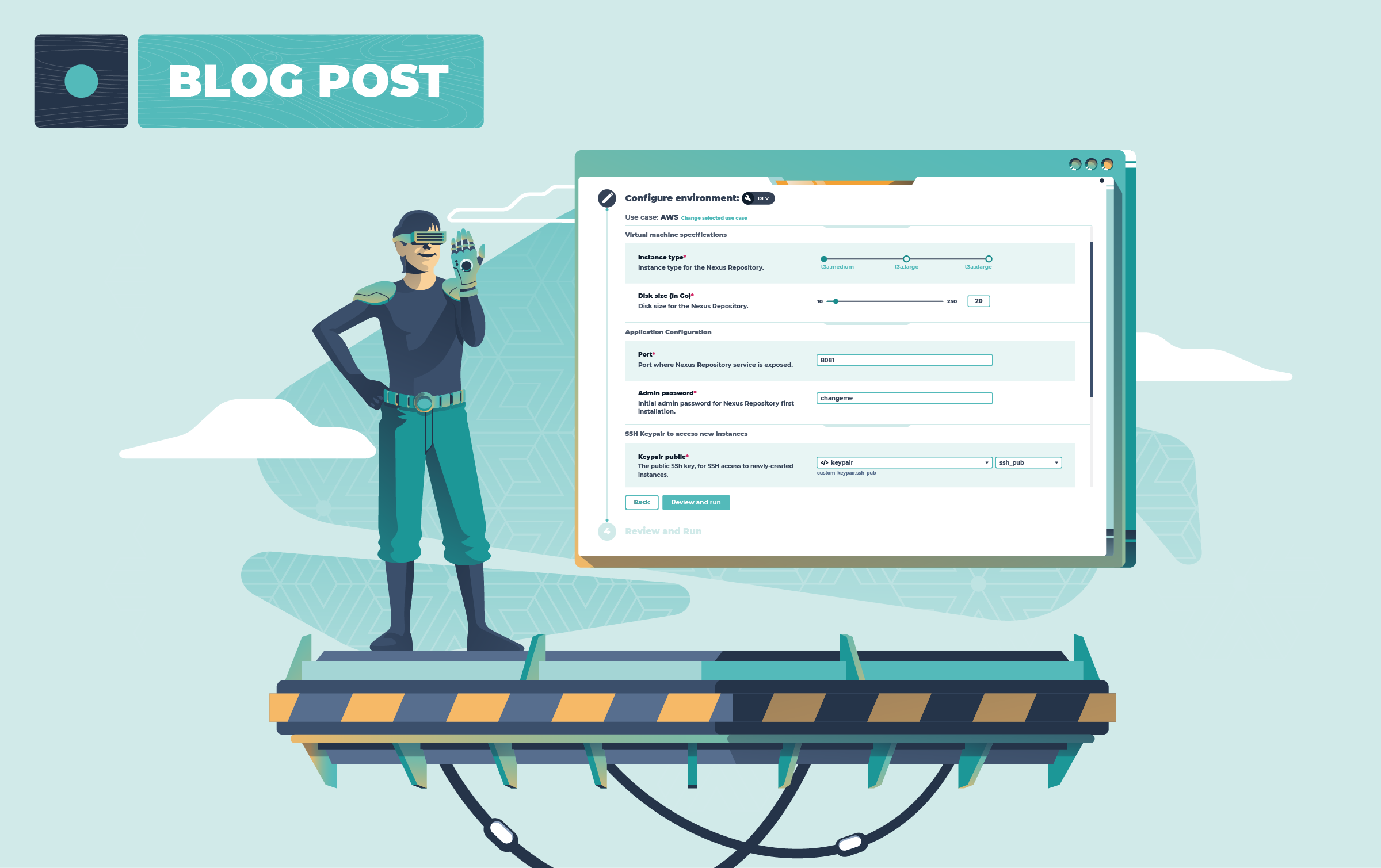
StackformsCycloid’s own self-service portal StackForms prioritizes end-user experience to make configuring new environments as seamless and autonomous as possible. We aim for flexibility, simplicity, and control when it comes to self-service, concealing complex tech behind a user-friendly interface (so hopefully we know what we’re talking about!)

Autonomy and security

Read more