







TL;DR
- Data sovereignty is an infrastructure constraint and not just a compliance label. It determines which cloud regions you can provision into, which key management systems are legally permissible, and whether your chosen CSP’s legal entity exposes your data to extraterritorial government requests.
- The US CLOUD Act applies based on who controls the data, not where it sits. A US-incorporated cloud provider with Frankfurt servers can still receive and comply with a US government order for data stored in the EU.
- IDC’s February 2026 report maps ten sovereign deployment archetypes, from global public cloud through to air-gapped environments. Selecting the right archetype requires scoring each workload across five dimensions: legal entity, data center infrastructure, data sovereignty controls, technical sovereignty controls, and operational sovereignty controls.
- Most organizations will land across multiple archetype bands. A finance team, a DevOps tooling team, and a machine learning team inside the same organization will each score differently.
- Embedding sovereignty controls into the IDP layer through region-bound stacks, policy-as-code, mandatory classification fields, and GitOps state binding keeps developers moving without requiring manual gatekeepers at every deployment.
Why Data Sovereignty Has Become an Infrastructure Constraint And Not Just a Legal Checkbox
For years, data sovereignty sat mostly in the legal department. Someone would flag a GDPR requirement, a lawyer would mark a contract clause, and engineers would add a region tag to a Terraform resource and call it done. That arrangement is no longer sufficient.
Worldwide sovereign cloud IaaS spending is forecast to total $80 billion in 2026, a 35.6% increase from 2025, according to Gartner. More telling is where the growth is concentrated: 61% of Western European CIOs and IT leaders said geopolitical factors will increase their reliance on local or regional cloud providers, and Gartner predicts that by 2030, more than 75% of all enterprises outside of the US will have a digital sovereignty strategy supported by a sovereign cloud strategy.
Sovereignty now dictates where a Terraform backend can target, how KMS keys must be scoped, which cloud accounts are even available in a self-service catalog, and what constitutes a compliant audit trail for a regulator. For developers, the practical effect is already visible: a terraform plan that previously completed in seconds now fails with a region rejection they didn’t anticipate, a self-service form that shows two approved regions instead of ten, or a CI pipeline that exits with a policy violation before a single resource is provisioned. None of those constraints belong in a contract review. They belong in the platform, designed deliberately so developers encounter clear guardrails rather than opaque rejections.
This article walks through the regulatory pressures forcing that shift, the ten sovereign deployment archetypes from IDC’s 2026 framework and what each one delivers at the provisioning level, how to enforce sovereignty controls inside an IDP without killing developer throughput, and the architecture patterns for managing multiple archetypes across one platform.
The Regulatory Triggers That Forced Engineering to Own Sovereignty
GDPR is the most familiar pressure, but its mechanism is specific. Articles 44–49 govern cross-border data transfers and require either an adequacy decision, standard contractual clauses, or binding corporate rules before personal data moves outside the European Economic Area. For engineering teams, the obligation shows up as a direct constraint on region selection: certain workloads cannot legally be deployed into US East, regardless of how the data is encrypted or who has key access.
Schrems II, the 2020 Court of Justice of the European Union ruling, invalidated the EU-US Privacy Shield and effectively placed the burden on organizations to verify that US intelligence law wouldn’t override the transfer mechanism. That ruling made legal entity structure, not just data location, a compliance variable.
The EU AI Act (Regulation 2024/1689), which began phasing in from August 2024, adds a further dimension for AI workloads. High-risk AI systems deployed in the EU carry documentation, conformity assessment, and data governance obligations that extend into how training data is sourced, processed, and stored.
IDC’s data from its FutureScape CIO Agenda 2026 Predictions notes that by 2026, 55% of governments are expected to adopt hybrid sovereign cloud stacks blending hyperscaler scale with national control to ensure compliance, security, and strategic autonomy for AI. For platform teams supporting public sector customers, that number describes a near-term procurement reality, not a distant forecast.
How the US Cloud Act Breaks the Assumption of In-Region Safety
Many platform teams treat EU region selection as the end of the sovereignty problem. Route everything to eu-west-1, encrypt at rest, configure RBAC, and the compliance obligation is met. The US CLOUD Act makes that reasoning wrong in a structurally important way.
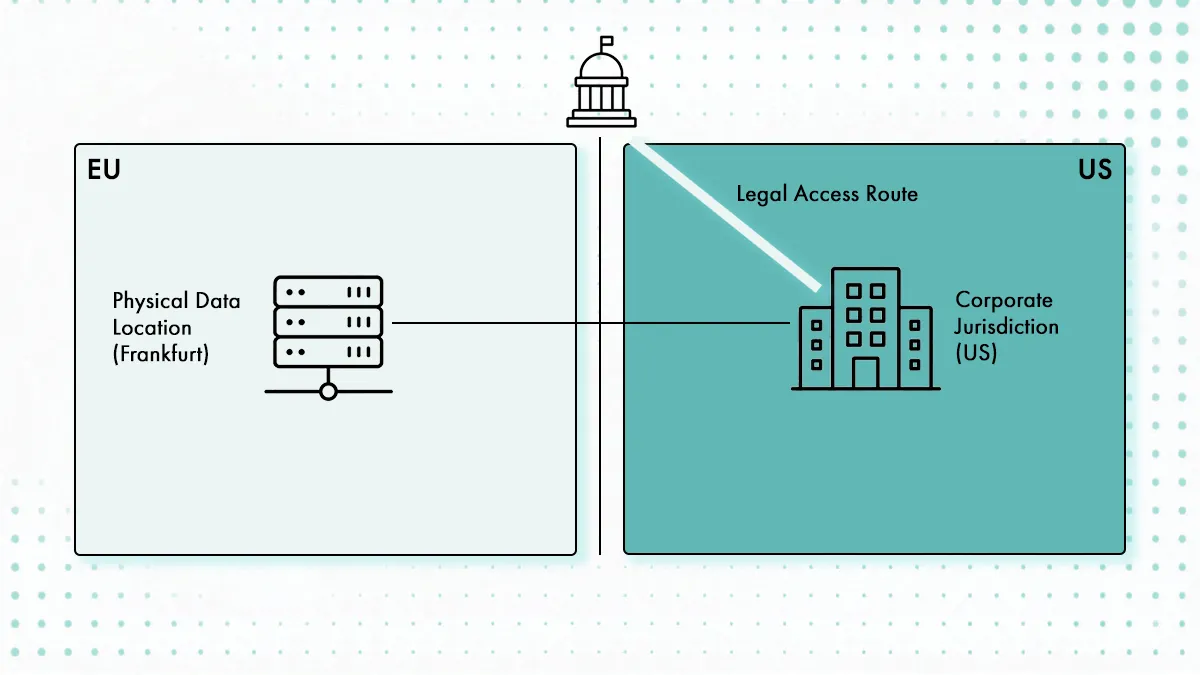
The CLOUD Act’s scope is extraterritorial: it applies regardless of where the data is physically stored, as long as the service provider is based in the United States. It grants US authorities the power to access personal, corporate, or even classified data with a warrant, without prior notice to affected users or European regulators. In short, the CLOUD Act shifts jurisdiction from where the data sits to who controls it.
A legal opinion commissioned by the German Federal Ministry of the Interior, prepared by legal scholars at the University of Cologne and released under the Freedom of Information Act, reached the same conclusion: the decisive factor is not the physical location of the data but whether the cloud provider or its parent company is subject to US jurisdiction. AWS, Azure, and GCP all qualify.
This is the legal entity attribute in IDC’s archetype framework, and it’s the dimension platform teams most commonly overlook. An engineer configuring a deployment to eu-central-1 on AWS has satisfied a geography requirement. The organization’s CLOUD Act exposure remains unchanged.
What Platform Teams Are Asked to Deliver Under Sovereignty Requirements
The translation from regulation to execution typically produces five concrete obligations handed to platform teams:
1. Region pinning for all regulated workloads: no resource in a classified data tier may be provisioned into a non-approved region, regardless of cost or availability.
2. Encryption with jurisdiction-scoped key management: KMS keys must be held and managed by an entity subject to the customer’s jurisdiction, not the provider’s. For the highest-sensitivity workloads, hardware security modules (HSMs) held on-premises are the only acceptable option.
3. Access controls scoped to cleared personnel: some regulated contexts (defense, certain healthcare tiers, classified government) require that operations personnel meet nationality screening requirements. The platform must capture and enforce those constraints, not just log them.
4. Audit trails meeting legal evidentiary standards: GDPR Article 30 requires records of processing activities. NIS2 requires incident reporting documentation. DORA requires ICT risk management records. Each standard has different field requirements, and a single generic audit log won’t satisfy all of them.
5. Documented vendor dependencies with exit provisions: the ability to migrate workloads away from a given provider is increasingly a contractual and regulatory requirement, not just a technical preference. Infrastructure as Code and GitOps-first platforms produce the artifact needed to exercise that option.
IDC’s 2026 framework organizes these obligations across five sovereignty dimensions: data, technical, operational, assurance, and supply chain. Each maps to a specific layer of the platform stack. Cycloid’s self-hosted and dedicated SaaS deployment options directly address the data, operational, and assurance dimensions by ensuring Cycloid itself has zero access to customer infrastructure post-deployment in the self-hosted model.
The Ten Sovereign Deployment Archetypes and Their Engineering Tradeoffs
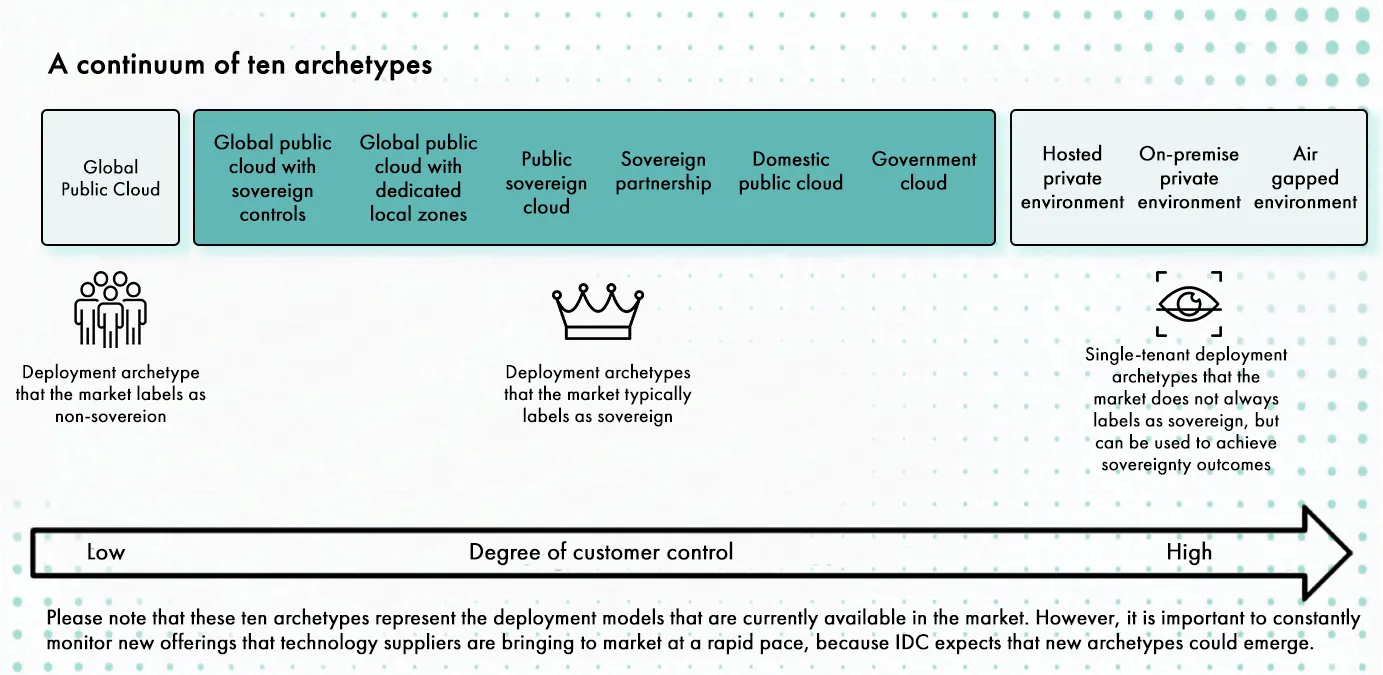
IDC’s February 2026 report defines a continuum of ten archetypes spanning from global public cloud to fully air-gapped environments. The continuum maps to increasing customer control, but the tradeoffs aren’t just operational. Each archetype has a different legal entity structure, and that determines extraterritorial exposure more than the physical location of servers does.
The following sections translate each archetype into engineering terms and explain where the five evaluation dimensions produce different outcomes.
Categorizing the Deployment Spectrum: From Public Clouds to Air-Gapped Systems
The ten archetypes and their defining engineering characteristics:
1. Global public cloud (AWS commercial, Azure commercial, GCP commercial, OCI commercial): The CSP controls legal entities, data center selection, hardware stack, and operational personnel. No sovereignty controls exist by default. Suitable for non-regulated workloads where innovation velocity and elastic capacity are the primary requirements.
2. Global public cloud with sovereign controls (AWS Key Management Service, AWS Nitro, Google Cloud Data Boundary, Microsoft Cloud for Sovereignty, OCI Key Management): The CSP adds optional controls, including customer-managed encryption keys, virtual instance separation preventing data center personnel from accessing certain data types, and configurable data boundaries. The legal entity remains the international CSP, so CLOUD Act exposure is unchanged. These are compliance add-ons, not sovereignty architectures.
3. Global public cloud with dedicated local zones (AWS Local Zones, Microsoft Sovereign Landing Zones): The CSP offers dedicated infrastructure in a specific country or region, combining physical and virtual separation. Data location is constrained, but the technical stack and legal entity remain under CSP control. Useful for latency-sensitive workloads that need geographic proximity without full data center isolation.
4. Public sovereign cloud (AWS European Sovereign Cloud, OCI EU Sovereign Cloud, SAP NS2 for US national security use): The CSP creates a local legal entity to operate dedicated regional infrastructure, with physical separation from global CSP infrastructure. All data including metadata, billing, and account management stays within the region. The local legal entity structure is the critical differentiator: it reduces extraterritorial exposure if the local entity is not a subsidiary subject to the parent’s home jurisdiction laws. SAP NS2 is notable because it is exclusively for US national security, defense, and intelligence, making it operationally separate from SAP’s commercial global infrastructure.
5. Sovereign partnership (S3NS/Thales-Google, Bleu/Capgemini-Orange-Microsoft, Core42/UAE-Microsoft, Delos/SAP-Microsoft, Proximus-NXT/Google in Benelux, Gulf-Edge/Google in Thailand): A local managed service provider (MSP) operates infrastructure in exclusive partnership with an international CSP. The local MSP owns the legal entity. The international CSP provides technology. Contractual agreements may allow the local MSP to continue using technical components as open source if the CSP exits the partnership, providing a meaningful continuity provision. This is the archetype that most directly addresses the CLOUD Act problem by placing a non-US legal entity between the data and US-law-bound technology providers.
6. Domestic public cloud (OVH in France, StackIT in Germany, T-Systems Open Sovereign Cloud, Scaleway, Aruba in Italy, SAP Cloud Infrastructure): Fully local CSP ownership, in-country data center, in-country legal entity. No US parent company. The strongest protection against extraterritorial government requests under the CLOUD Act framework, at the cost of a smaller service catalog and typically less mature managed services than hyperscalers provide.
7. Government cloud (AWS GovCloud US, Azure Government, Oracle Government Cloud, Polo Strategico Nazionale Italy as a public-private partnership, Crown Hosting UK): Dedicated to public sector customers only, with in-country infrastructure and operations personnel meeting public sector security requirements. The government cloud provider aligns operational controls and certifications with public sector regulatory compliance. Notably, government clouds are still CSP-operated, meaning the legal entity and technical sovereignty controls remain with the provider.
8. Hosted private environment: A local managed service provider operates single-tenant infrastructure using hardware from global OEMs and software from commercial or open-source stacks. The MSP co-defines the hardware and software architecture with the customer. Cycloid fits directly into this archetype as the platform layer: customers use Cycloid’s IDP running on their own or MSP-hosted infrastructure with no vendor access post-deployment.
9. On-premise private environment: The enterprise or public sector organization owns and operates all infrastructure. Full control over hardware acquisition, software stack, operations, and personnel. The organization absorbs 100% of operational burden including patching, capacity, and disaster recovery. Maximum technical and operational sovereignty at maximum operational cost.
10. Air-gapped environment (AWS Top Secret Cloud Australia, Google Cloud Air-Gapped): In-country infrastructure physically or virtually separated from public networks. Built with hardened engineering meeting the stringent requirements of classified workloads. The operational model requires the organization to handle all changes through controlled processes with no external network connectivity. The only archetype appropriate for truly classified or national security workloads.
The Five Attributes That Determine Archetype Fitness for a Workload
IDC’s five evaluation dimensions function as engineering checklists for workload-archetype matching:
Legal entity: Where is the operating company incorporated, and do subsidiaries create regulatory conflicts? A US-parented subsidiary operating in the EU can receive CLOUD Act orders. A locally incorporated MSP cannot, unless it has separate US jurisdictional contacts.
Data center infrastructure: Does the workload require physical separation (separate racks, separate facilities), or is virtual separation (instance isolation, network segmentation) sufficient under applicable regulation? Most GDPR workloads can use virtual separation. Defense and classified workloads typically cannot.
Data sovereignty controls: Does the customer control where metadata, billing data, account management data, and metering data flows, not just the workload data itself? Several archetypes that advertise “data residency” still route billing and telemetry to global CSP infrastructure. For regulated industries, metering data can itself constitute personal data under GDPR.
Technical sovereignty controls: Can the customer specify the hardware, software stack, and AI models used? At the domestic public cloud or on-premise archetypes, the customer has full control. At the global public cloud end, the CSP controls everything from chips to services. For organizations building AI systems, this dimension determines whether model training and inferencing can be kept on approved hardware in approved jurisdictions.
Operational sovereignty controls: Can the customer specify nationality requirements for operations personnel? Can SLAs be independently audited, not just reported by the CSP? Can incident response responsibilities be contractually scoped? These controls exist fully only at the on-premise and air-gapped archetypes. Sovereign partnerships and domestic public clouds offer them partially, with contractual provisions.
Scoring Workloads Against the Archetype Spectrum
IDC’s scoring model uses eleven variables rated 1–5: data sensitivity, use case regulation (including EU AI Act high-risk designation), IP competitive value, innovation priority, scalability requirements, system architecture independence, organizational risk mindset, technical competencies, economics model (OPEX vs. CAPEX), industry regulation, and national policy/geopolitical context.
A weighted average across those variables maps to three archetype bands:
- Score 1–2: Global public cloud family. Innovation velocity and elastic capacity are the primary requirements. Regulatory exposure is low.
- Score 2–4: Public sovereign cloud, sovereign partnership, domestic public cloud. Balances control and access to managed services. Appropriate for GDPR-regulated workloads, financial services under DORA, and healthcare data under HIPAA or EU health data space regulations.
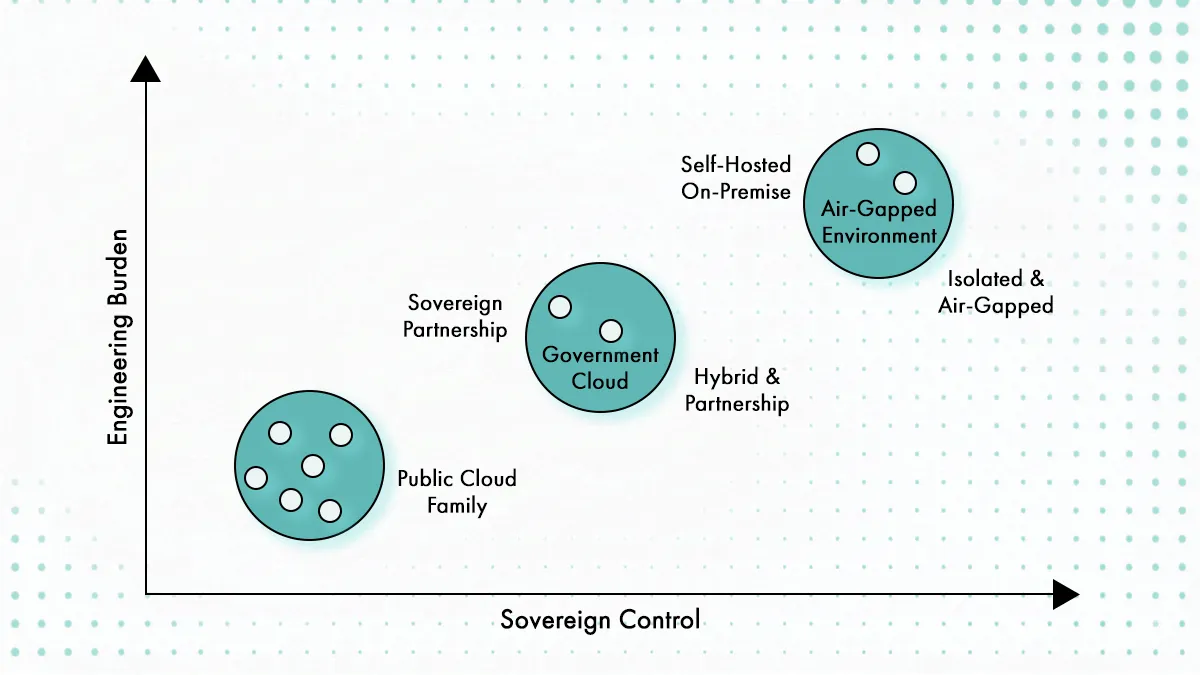
- Score 4–5: Government cloud, hosted private environment, on-premise, air-gapped. Maximum control, maximum operational overhead. Required for classified workloads, critical national infrastructure, and defense-sector AI systems.
The scoring is workload-specific. A single organization supporting a customer-facing analytics platform, internal DevOps tooling, and a classified government contract will likely produce three different scores and land across three different archetype bands. That outcome is precisely the argument for hybrid sovereign architecture over a single-archetype mandate.
Enforcing Data Sovereignty Controls Inside an Internal Developer Platform
Selecting the right archetype is a sourcing decision. Operationalizing sovereignty so that developers can’t accidentally violate it is a platform engineering problem. The gap between those two activities is where most compliance failures occur.
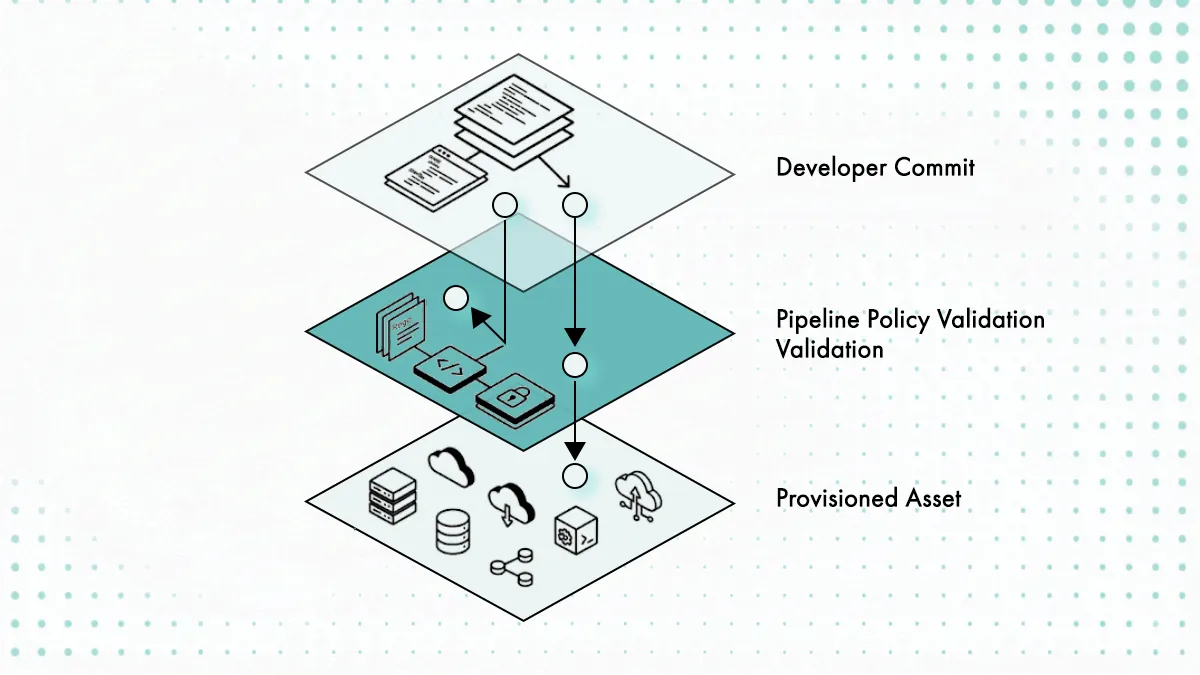
The manual approval model treats every deployment as a compliance event requiring human review. Region selection, encryption configuration, and access controls get checked by a security reviewer who interprets the rules based on current institutional knowledge. The embedded controls model encodes those rules directly into infrastructure templates and validates them automatically at every commit, plan, and apply stage.
Why Reactive Compliance Gates Kill Developer Throughput
The reactive model’s problem isn’t just latency, though the latency is significant. A developer working on a GDPR-scoped microservice submits a deployment request on Tuesday. A reviewer approves it on Thursday with a note that us-east-1 is blocked for this data class. The developer re-submits with eu-west-1. A different reviewer on Friday flags the same deployment because the KMS key reference hasn’t been updated to the EU-managed key alias. Two reviewers, four days, zero infrastructure provisioned. By the time the workload is running, the sprint is over.
This failure mode is what IDC frames as dependency on “institutional memory” for governance. When rules live in documents and reviewers’ heads rather than code, enforcement is inconsistent by design. Policy-as-code removes the interpretation variable entirely. A Rego rule that rejects any Terraform plan targeting a non-approved region for a sensitive workload behaves identically across every deployment, every environment, and every reviewer. It also gives developers something the ticket queue never could: a specific error message, returned at the plan stage, before anything is applied.
Cycloid’s InfraPolicies validate every deployment against governance rules at submission time, before infrastructure is provisioned. Untagged or non-compliant resources never get created. RBAC scopes access by team and role. Approval workflows route only the changes that genuinely require human judgment, rather than routing everything through the same queue. The developer who ran into that Tuesday-to-Friday cycle instead sees this at plan:
Error: InfraPolicy violation -- sovereignty-check-eu
  Rule:    data_classification=sensitive requires region in [eu-west-1, eu-central-1]
  Got:     us-east-1
  Fix:     Update region in stack configuration or reclassify workload
  Policy:  git.company.internal/infra-policies/sovereignty.rego @ commit a3f91c2
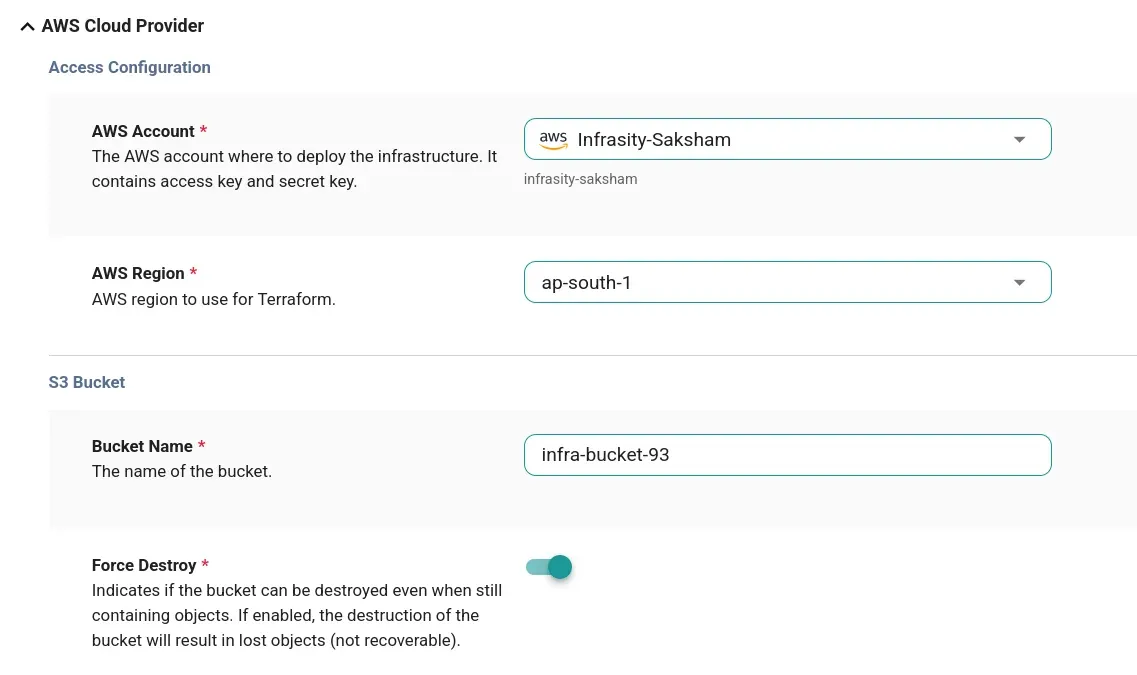
Building Region-Bound Stacks and Enforcing Classification at Scaffolding
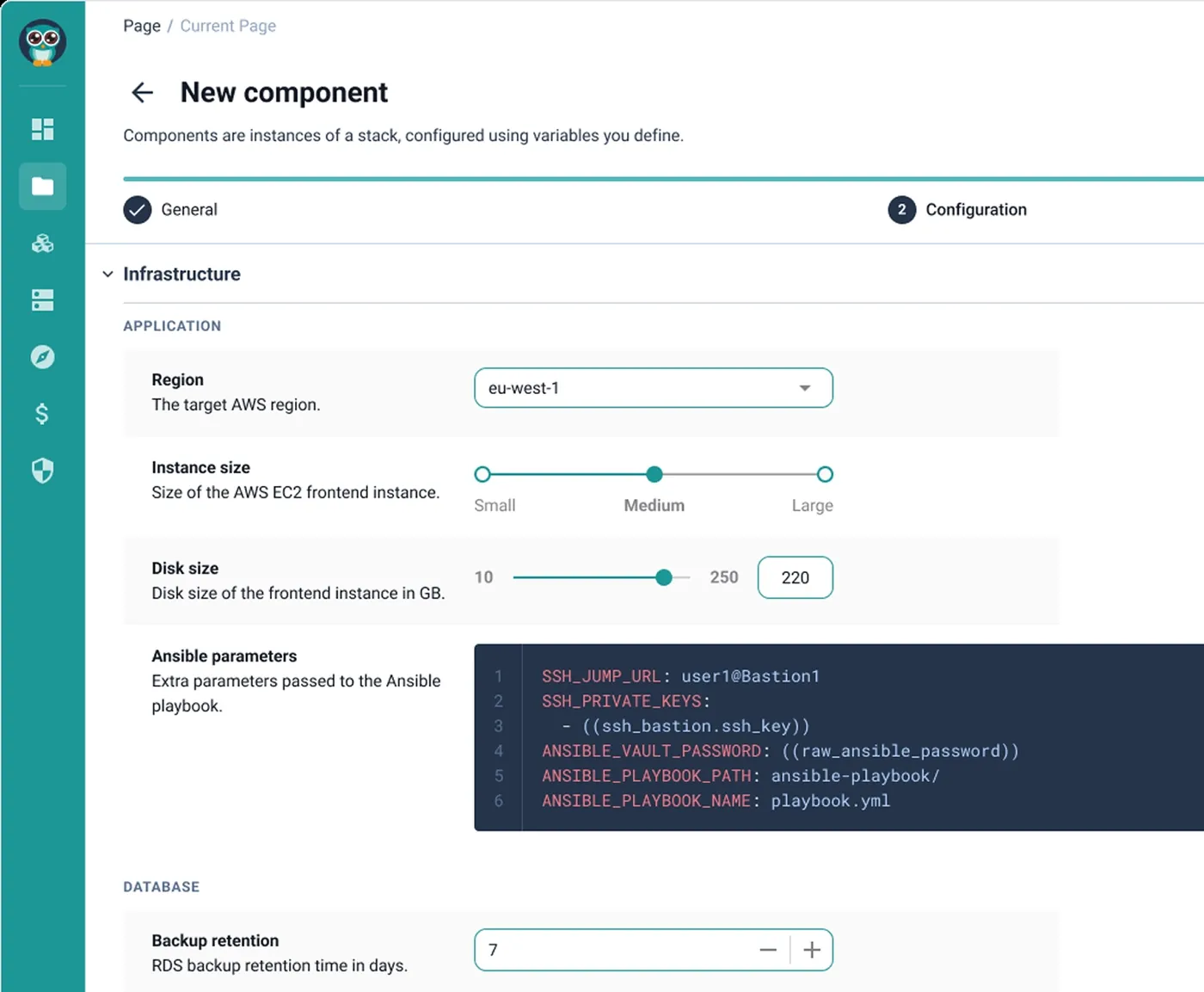
Sovereignty begins at the first commit. Cycloid’s Stacks and StackForms implement region-bound templates where the data_classification field is mandatory and the region dropdown only surfaces residency-compliant options based on that classification. When a developer opens a new project in the self-service portal, they see a form pre-scoped to their team’s approved regions. The fields for KMS key alias, encryption rotation, and cross-region backup are already populated with non-editable defaults. The developer doesn’t configure sovereignty. They configure the workload, and sovereignty is already encoded in the template they’re filling out.
A minimal StackForms template for a sovereignty-aware workload looks like this:
# stack.forms.yml
variables:
  - name: data_classification
    label: "Data Classification"
    type: dropdown
    required: true
    options:
      - value: internal
        label: "Internal (non-regulated)"
      - value: sensitive
        label: "Sensitive (GDPR / PII)"
      - value: restricted
        label: "Restricted (classified)"

  - name: region
    label: "Deployment Region"
    type: dropdown
    required: true
    # Options filtered server-side based on data_classification value
    depends_on: data_classification
    options_source: approved_regions_by_classification

  - name: kms_key_alias
    label: "KMS Key"
    type: text
    read_only: true
    default_from: region_key_map[region]

  - name: cross_region_backup
    label: "Cross-Region Backup"
    type: boolean
    default: false
    locked: true   # non-editable for sensitive and restricted tiers
    condition: data_classification in ["sensitive", "restricted"]
When data_classification is set to sensitive, the region dropdown filters to [eu-west-1, eu-central-1]. The kms_key_alias field auto-fills with the EU-scoped key reference. cross_region_backup is locked to false and greyed out. The developer sees only the decisions that are theirs to make.
Pipeline validation runs a second enforcement pass. Using Open Policy Agent, the following Rego rule rejects any Terraform plan that attempts to route a sensitive workload outside approved regions, even if someone constructs a plan outside the StackForms interface:
# sovereignty.rego
package cycloid.sovereignty

import future.keywords.in

approved_regions := {
  "sensitive":   {"eu-west-1", "eu-central-1"},
  "restricted":  {"eu-central-1"},
  "internal":    {"eu-west-1", "eu-central-1", "us-east-1", "ap-southeast-1"},
}

deny[msg] {
  resource := input.planned_values.root_module.resources[_]
  classification := resource.values.tags.data_classification
  region := resource.values.region
  not region in approved_regions[classification]
  msg := sprintf(
    "Resource '%s' (classification: %s) cannot be deployed to region '%s'. Approved: %v",
    [resource.address, classification, region, approved_regions[classification]]
  )
}

deny[msg] {
  resource := input.planned_values.root_module.resources[_]
  resource.values.tags.data_classification == "sensitive"
  not resource.values.encrypt
  msg := sprintf(
    "Resource '%s' is classified sensitive but encryption is not enabled.",
    [resource.address]
  )
}
The developer receives immediate, specific feedback at the plan stage. The change doesn’t reach apply; No ticket is filed and no reviewer is needed. And because the policy lives in version control with a commit hash in the error message, the developer can read exactly which rule was fired and why.
Audit Trails, State Binding, and the Evidence Layer Regulators Expect
Preventing sovereignty violations is half the requirement. Generating the evidentiary record that satisfies regulators is the other half, and it’s the half most platforms underinvest in.
Cycloid’s GitOps-first architecture binds infrastructure state directly to pipeline and commit history. Every stack version that deployed a resource is recorded alongside the region, encryption configuration, and classification tag at the time of deployment. The lineage runs from the policy rule in version control through the plan output to the provisioned resource in the asset inventory.
A complete audit trail for regulatory purposes contains: the identity of the requester, the stack version and configuration used, the Terraform plan output, the applied changes, the target region and key management reference, any policy violations raised during the run, and how those violations were resolved or overridden. For GDPR Article 30, the record of processing activities requirement maps directly to the stack configuration and deployment log. For NIS2 and DORA, the access log and incident response documentation map to pipeline execution history and RBAC audit events.
Cycloid’s Asset Inventory tracks all resources across public and private clouds, and InfraView provides a visual map of the infrastructure topology. Together, they give compliance teams the cross-sectional view that regulatory auditors ask for: which resources exist, where they are, who provisioned them, and under what policy constraints.
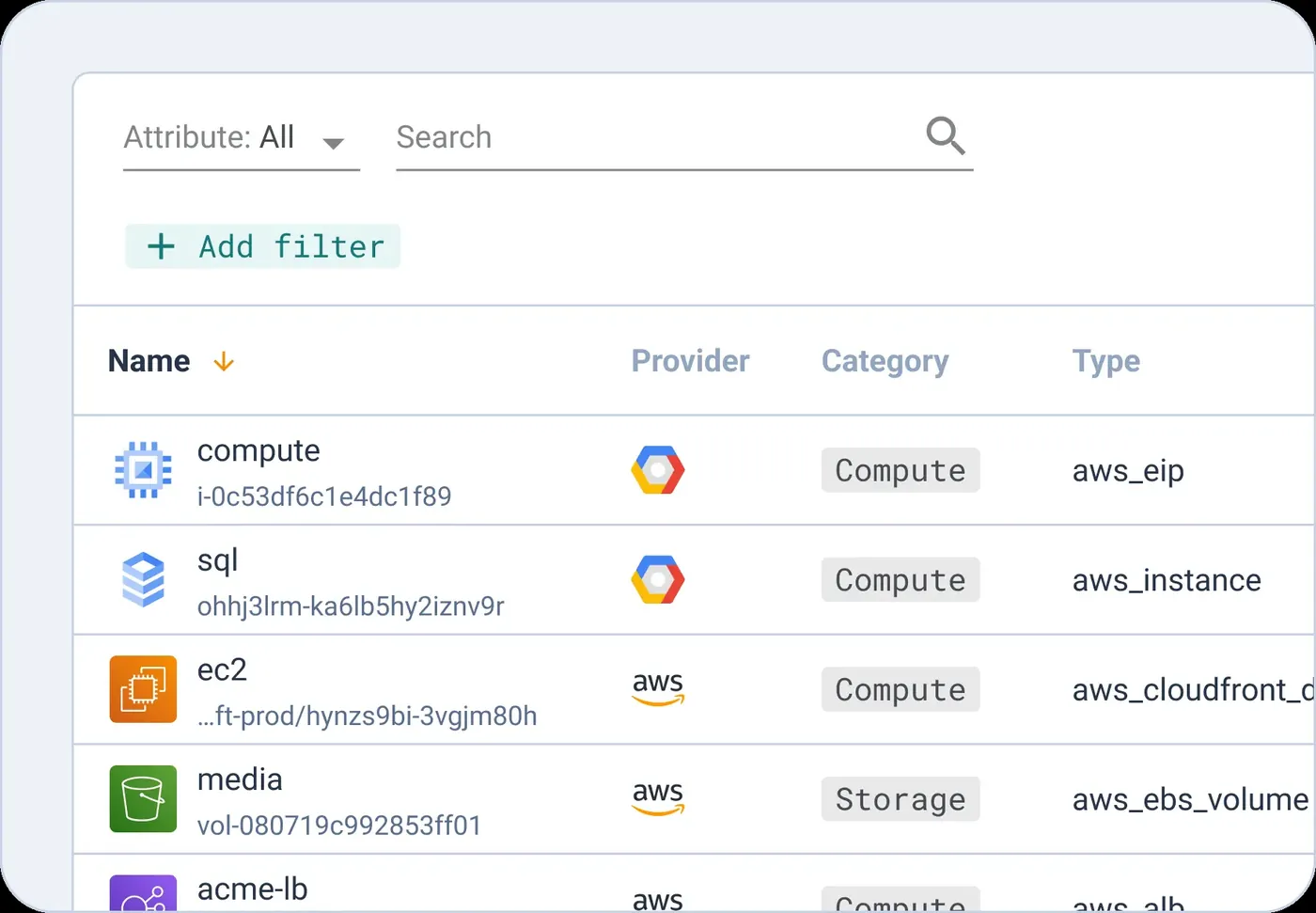
Get a single-panel view of all your private and public cloud resources.
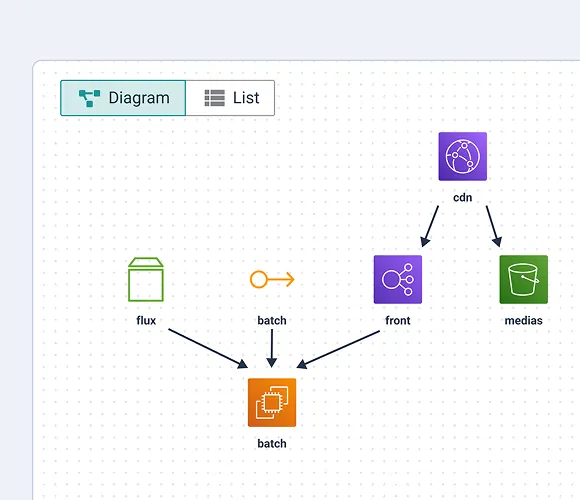
Up-to-date diagram based on your Terraform file that you don’t have to maintain, and that you can share with others to accelerate your cloud and DevOps adoption.
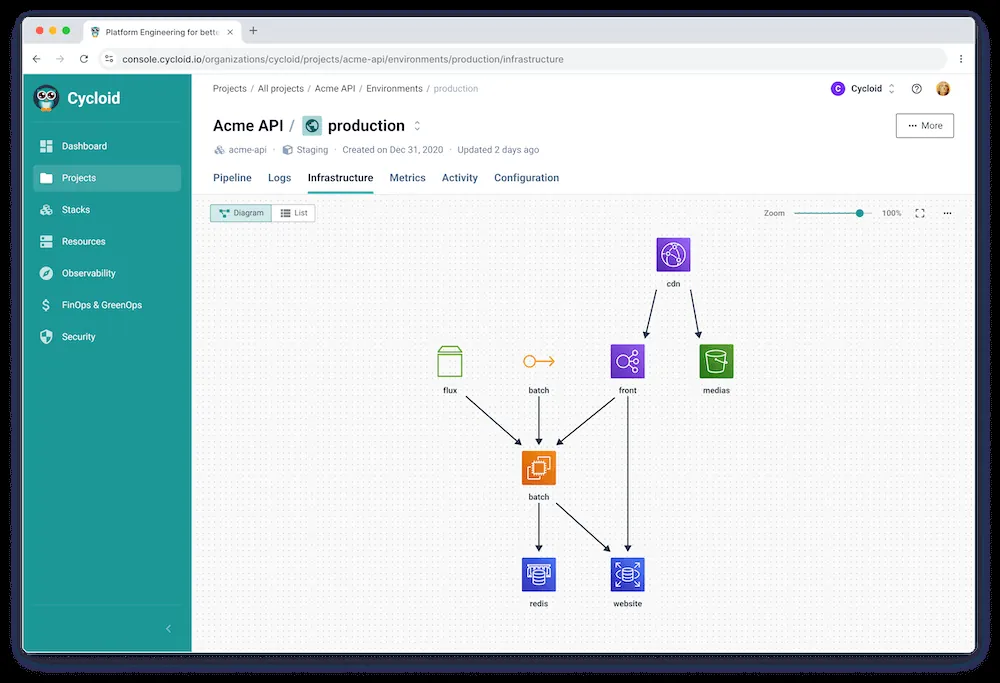
See connections between resources per environment such as Dev / Staging / Prod.
Hybrid Sovereign Architecture: Managing Multiple Archetypes Across One Platform
The reality most platform teams face is not a single archetype but a portfolio. Payment data, internal developer tooling, citizen-facing digital services, and a machine learning pipeline for aggregated analytics don’t share the same regulatory profile. Forcing them into the same deployment model either over-constrains low-sensitivity workloads or under-protects high-sensitivity ones.
Managing multiple archetypes without creating an unmanageable sprawl of disconnected environments requires both an architectural pattern and a governance model that works across all of them.
Federated Control Planes and Why They’re the Dominant Pattern for Multi-Jurisdiction Enterprises
The federated model keeps policy enforcement, identity, and governance in a central control plane while workload execution happens in region-local environments. Policy updates propagate from the central layer without requiring manual updates to every regional cluster. An update to the Rego rule blocking cross-region backup for sensitive workloads applies simultaneously across all regions once merged to the policy bundle.
The failure mode is trust boundary complexity. Regional components must validate tokens issued by a central identity provider. If that central IdP is hosted in a jurisdiction subject to the CLOUD Act, the federated model partially reintroduces the extraterritorial exposure it was meant to address. Open standards reduce this risk: OIDC for user identity federation and SPIFFE/SPIRE for workload identity allow regional components to validate cryptographic attestations without calling home to a centrally-hosted endpoint.
A working implementation pattern for a two-region sovereign setup looks like this:
Central Control Plane (EU-hosted, non-US legal entity)
  ├── Cycloid IDP (StackForms, InfraPolicies, Asset Inventory)
  ├── OPA bundle server  →  distributes sovereignty.rego to all clusters
  ├── SPIFFE/SPIRE root CA  →  issues SVIDs to regional workload agents
  └── Git (policy + stack definitions)

EU West Cluster (eu-west-1)
  ├── OPA sidecar  ←  pulls bundle from central OPA server
  ├── SPIRE agent  ←  attests to central SPIRE server
  ├── Namespace: payments (data_classification=sensitive)
  └── Namespace: analytics (data_classification=internal)

EU Central Cluster (eu-central-1)
  ├── OPA sidecar  ←  pulls bundle from central OPA server
  ├── SPIRE agent  ←  attests to central SPIRE server
  └── Namespace: restricted-gov (data_classification=restricted)
Developers submit a single build. The Cycloid pipeline determines which cluster the workload targets based on the data_classification tag in the stack configuration. Policy evaluation runs in the destination cluster before scheduling. The developer doesn’t manage region routing. The stack definition encodes it.
When Isolated Stacks Are the Only Legally Defensible Option
Some workloads cannot share a control plane, regardless of how well identity and policy boundaries are drawn. Classified government workloads, defense-sector AI systems with national security designations, and healthcare data under jurisdictions that prohibit any third-party access to the management plane fall into this category.
For these, the air-gapped or on-premise private environment archetype is the only compliant option. Cycloid’s self-hosted deployment model deploys all modules on customer infrastructure with zero Cycloid access post-deployment. Governance capabilities, including StackForms, InfraPolicies, RBAC, approval workflows, Asset Inventory, and InfraView, operate fully within the isolated environment. Nothing needs to be called out to external infrastructure.
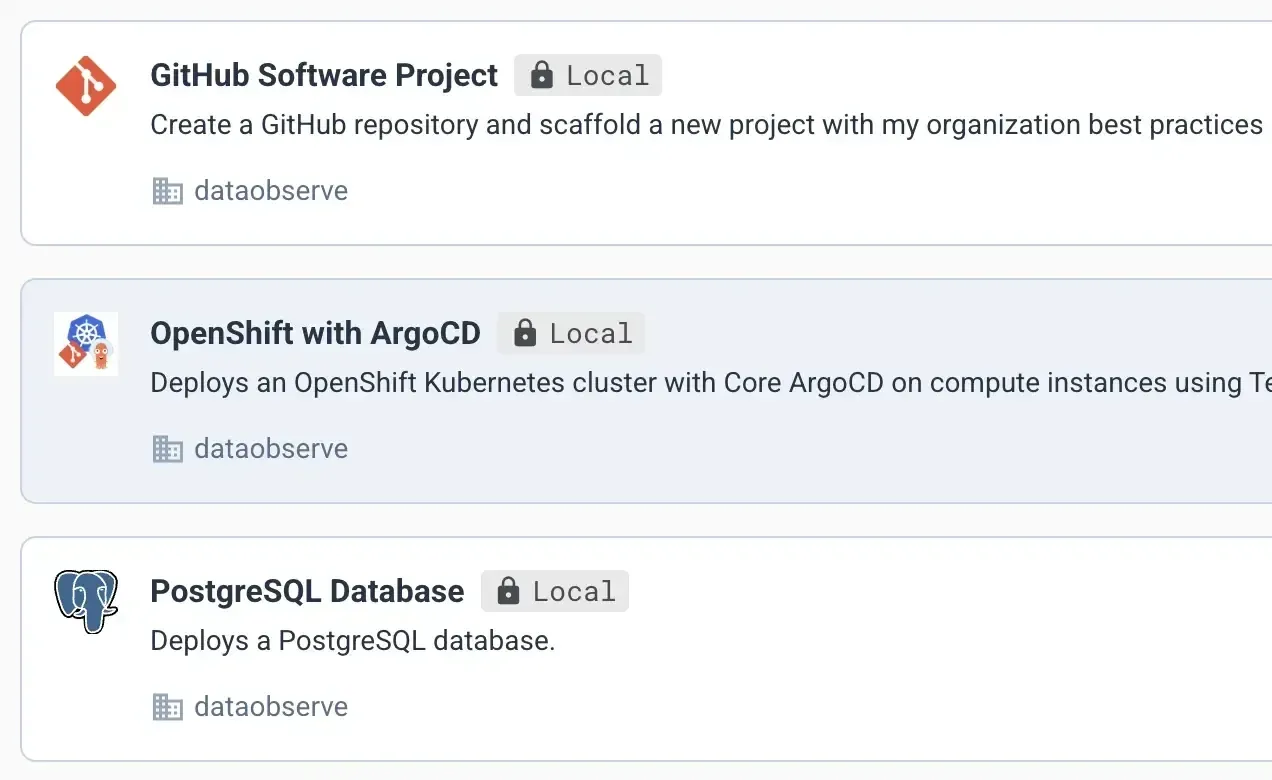
Developers browse the catalog and deploy infrastructure in minutes, while platform teams maintain governance through versioned, auditable stacks stored in Git.
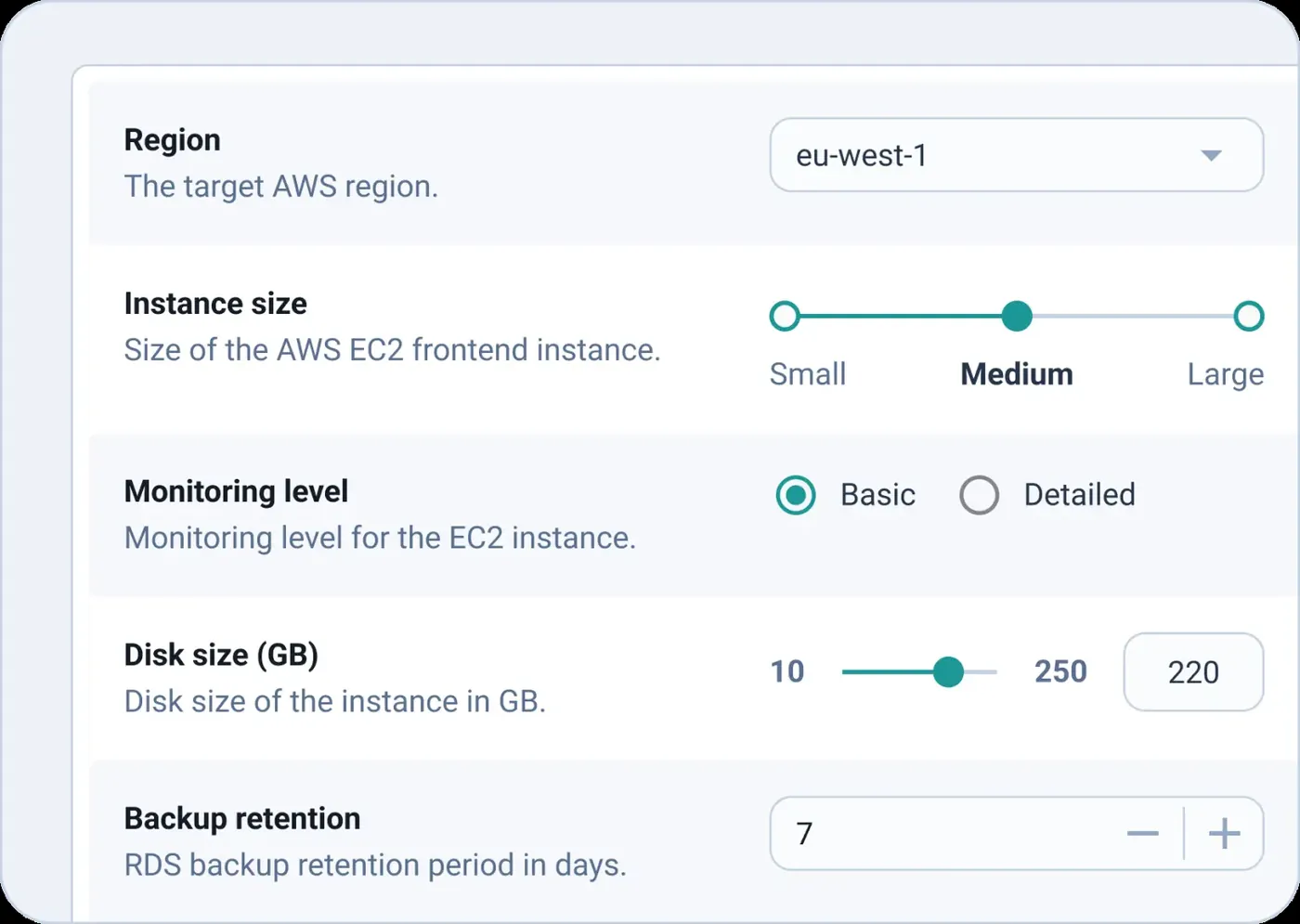
Developers complete intuitive forms with dropdowns, conditional fields, and asset inventory widgets. The platform automatically provisions resources, enforces guardrails, and saves configurations back to Git.
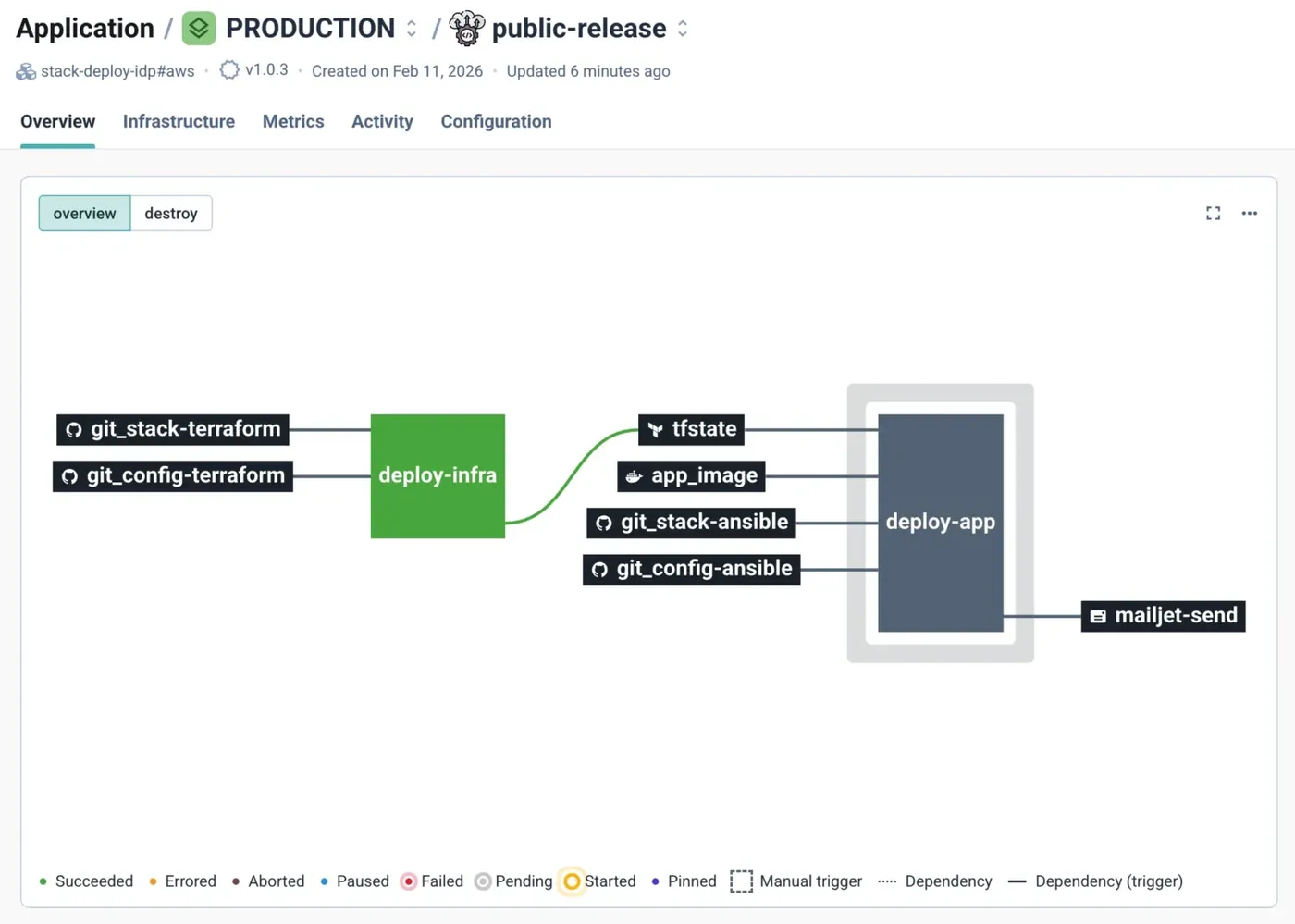
Developers trigger deployments through the portal interface while the platform executes standardized pipelines with proper approvals, testing, and rollback capabilities.
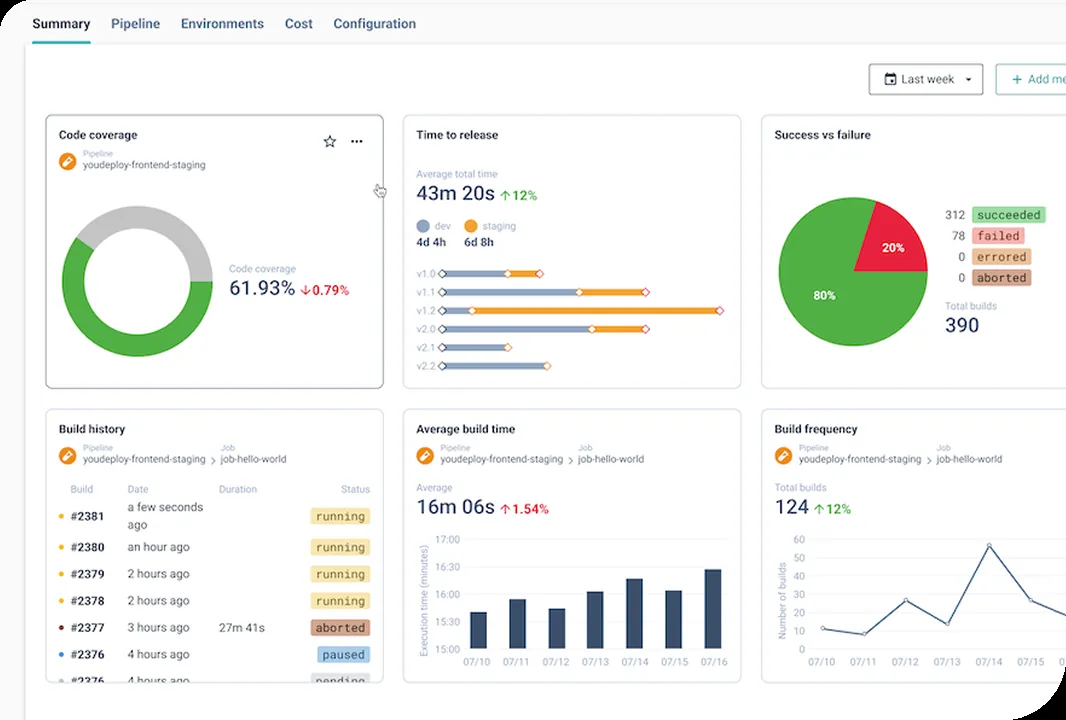
Governance that helps delivery. Platform teams configure policies that are automatically enforced during provisioning, while developers get clear feedback when requests violate standards.
The operational trade-off is straightforward: isolation means the organization absorbs all platform operational responsibilities, including patching, scaling, backup, and disaster recovery. Governance doesn’t degrade with isolation. Operational complexity increases.
Classifying Workloads Before Deploying Them: The Governance Step Teams Skip
IDC flags workload classification as a prerequisite to archetype selection. In practice, most organizations defer it until a compliance audit forces the issue, at which point the classification exercise happens retroactively against a live environment where workloads have already been deployed into potentially incorrect archetypes.
The spreadsheet trap: a static document mapping data types to regions (PII stays in EU, telemetry is global, logs are restricted per retention window) can’t stop a developer from deploying a PII-heavy database to us-east-1. The document describes the rule and the developer’s terminal executes a different one.
Classification becomes enforceable only when it exists as a mandatory attribute in the developer workflow. Developers are not passengers in the classification process. They’re often the only people who know what data a service touches, because they wrote the data access layer. The cross-functional review that produces the classification tier should include the developer who owns the service, not just the DPO and legal team. That input changes the outcome: a developer who knows their notification service passes through mobile device identifiers will flag a classification requirement that a legal review of the API contract alone would miss.
The four-step staged rollout that avoids a hard cutover and the chaos that comes with one:
First, inventory: catalog all workloads, map each to a data sensitivity tier (public, internal, confidential, restricted), and record the classification in the stack configuration. Developers review the classification for their own services before it’s finalized.
Second, classify: cross-functional review involving the platform team, data protection officer, legal, the workload’s business owner, and the developer who owns the service. Document the outcome as a data_classification attribute in the stack definition file, committed to the service’s Git repository.
Third, report-only enforcement: configure pipelines to surface residency and encryption violations as warnings without blocking deployments. Violations appear in Cycloid’s project-level views. Developers see the warnings inline in their pipeline output. No deployments are blocked, no friction is created, and the signal is clear about where templates need adjustment.
Fourth, hard enforcement: once the violation rate drops, switch rules to enforce mode. Start with highest-sensitivity workloads. Roll blocking policies to lower-risk tiers as templates mature.
Measuring Whether Sovereignty Controls Are Working
Sovereignty governance is only as good as the signal you have on whether it’s functioning. Governance controls that can’t be measured can’t be improved, and the platform teams enforcing them can’t demonstrate to regulators that the controls are consistently applied.
Four operational metrics reveal governance quality at the platform level.
The Operational Metrics That Reveal Governance Quality
1. Mean-time-to-approval measures the elapsed time between a deployment request submission and provisioning completion. Before policy-as-code, the metric includes human review time and is variable. After embedding sovereignty controls in templates, approval time becomes deterministic for compliant deployments and immediate for non-compliant ones (the pipeline rejects them before a reviewer sees them).
2. Audit accuracy rate measures the percentage of deployments where residency and classification rules were applied correctly without human correction or retrospective remediation. A declining audit accuracy rate signals that templates are drifting from current regulatory requirements, usually because a regulatory update wasn’t translated into a policy change.
3. Policy violation rate per deployment should decrease monotonically as templates mature. A spike indicates either new regulations that haven’t been encoded yet, new workload types outside existing template coverage, or manual bypasses of the template layer.
4. Deployment throughput per developer is the litmus test for whether sovereignty controls are embedded correctly or are still a bottleneck. Throughput that drops after policy-as-code introduction indicates the controls are too broad or the templates too restrictive. Throughput that holds or improves confirms the embedded model is working.
IDC’s scoring model can also function as a periodic reassessment tool, not just an initial archetype selection aid. Geopolitical tensions are actively reshaping how organizations select cloud providers in 2026. What scored a 2 on the national policy variable in 2023 may score a 4 today, particularly across EMEA and APAC where IDC data shows 61% and 65% sovereign solution interest among telecoms and software/IT services firms respectively. A workload previously appropriate for the domestic public cloud archetype may need to move to a government cloud or hosted private environment as national policy shifts.
What a Sovereignty Audit Trail Must Contain to Satisfy Current Regulatory Standards
GDPR Article 30 requires records of processing activities including: the name of the data controller, the categories of data subjects and personal data, the purposes of processing, the categories of recipients, transfers to third countries, and retention periods. A GitOps-first platform generates most of this automatically if pipeline and state management are configured to capture classification tags, region, and transfer events.
NIS2 (the EU Network and Information Systems Directive, in force from October 2024) requires that entities in scope document supply chain security measures, incident detection and response procedures, and business continuity arrangements. The deployment audit trail maps directly to supply chain documentation: which stack version, which dependencies, which providers, and which encryption standards were in use at the time of any incident.
DORA (the Digital Operational Resilience Act, applying to EU financial entities from January 2025) requires ICT risk management documentation covering ICT asset identification, risk assessment, resilience testing, and third-party ICT provider monitoring. The asset inventory and InfraView topology outputs from Cycloid satisfy the asset identification requirement without manual extraction.
US Executive Order 14306 imposes requirements on AI governance for federal agencies including documentation of AI system provenance, data sourcing, and deployment controls. For organizations supporting US federal customers, the technical sovereignty controls dimension (who controls the AI model and training infrastructure) becomes a procurement qualifier, not just an architectural preference.
A complete audit record for any sovereignty-sensitive deployment should contain: requester identity and role at time of request, stack name and version, target region and account, KMS key reference, data classification, Terraform plan hash, policy evaluation result with timestamp, any violations raised and their disposition, and the applied resource IDs in the asset inventory. A correctly configured Cycloid deployment produces all of these without manual collection.
Conclusion
Data sovereignty is a workload-level engineering problem that platform teams now own. IDC’s ten-archetype continuum gives a structured framework for matching each workload’s regulatory profile to the right deployment model, from global public cloud through sovereign partnerships and domestic providers to air-gapped environments. The legal entity attribute, not the geography of the data center, is the dimension that determines extraterritorial exposure, and it’s the dimension most platform teams haven’t formally evaluated.
Embedding sovereignty controls into the IDP layer through region-bound stacks, mandatory classification fields, policy-as-code validation, and GitOps state binding keeps delivery predictable while ensuring governance is consistent across every deployment. The audit evidence emerges from the platform by design, not through retrospective collection. Sovereignty done at the platform layer doesn’t slow teams down. It removes the variable that causes the slowdown: the human reviewer who interprets the same rule differently on different days.
FAQs
1. What Is the Difference Between Data Sovereignty and Data Residency in Cloud Architecture?
Data residency specifies where data is physically stored. Data sovereignty specifies who has legal jurisdiction over it, including the right to access, modify, or compel disclosure. A workload stored in a Frankfurt data center operated by a US-incorporated provider satisfies residency requirements but not sovereignty requirements, because the provider remains subject to US law regardless of server location.
2. Which Sovereign Cloud Deployment Archetype Is Appropriate for a Government Workload Classified as Restricted or Secret?
Restricted workloads typically require government cloud, hosted private, or on-premise private archetypes, depending on whether third-party operational access is permitted. Secret and above classifications require air-gapped environments with physical separation from public networks and vetted operations personnel.
3. How Does Policy-as-Code Enforce Data Sovereignty in a Multi-Region Kubernetes Environment?
An OPA policy bundle distributed to each regional cluster evaluates every admission request against residency and classification rules before workloads are scheduled. Namespaces are labeled with their data classification tier. Admission webhooks reject pods that attempt to reference cross-region storage, non-approved secret backends, or resources outside the cluster’s designated jurisdiction.
4. Can an Internal Developer Platform Be Deployed in an Air-Gapped Environment Without Losing Governance Capabilities?
Yes, if the IDP supports a fully self-hosted deployment model with no external network dependencies. Cycloid’s self-hosted deployment runs all modules on customer infrastructure with zero vendor access post-deployment. StackForms, InfraPolicies, RBAC, approval workflows, Asset Inventory, and InfraView all function within the isolated environment.
Check our Comparisons: Cycloid vs Backstage / Cycloid vs Port / Cycloid vs Humanitec