

Blueprints
Golden paths, built once. Deployed without a ticket.
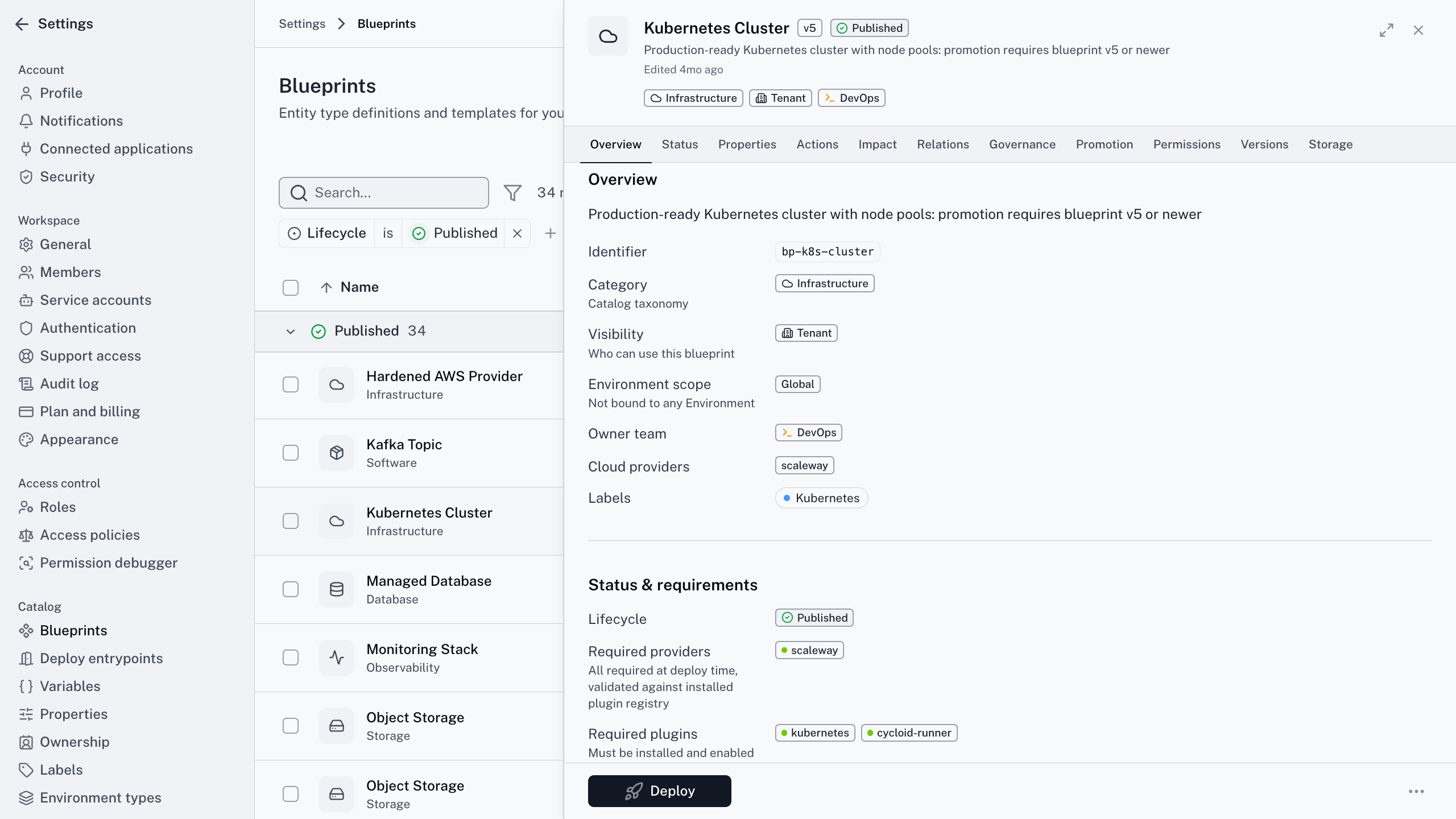
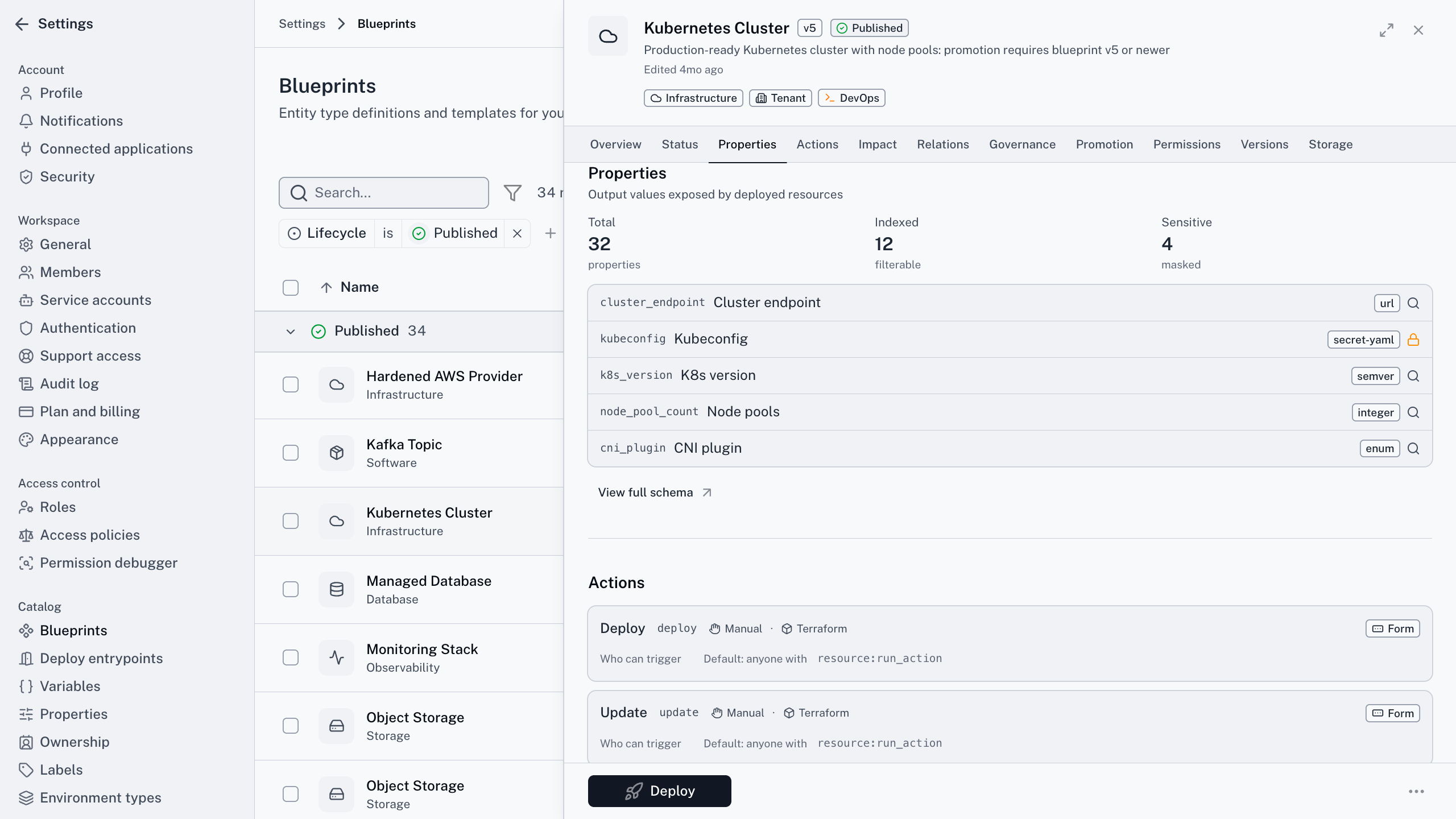
A Blueprint carries the architecture, the self-service form, the rules and the day-2 actions in one object. Your platform team builds it, and developers deploy it from the catalog.
Blueprint catalog
The object
What a Blueprint is
Most golden paths fail the same way. They exist as a wiki page and a good intention, and developers route around them. A Blueprint is the golden path as a working object. What a developer is offered is what’s permitted, so self-service doesn’t mean unlimited. It means fast, inside the lines. Build the platform you need, one Blueprint at a time, without starting from scratch.
The architecture
Built from a module you already have, in Terraform, OpenTofu, Ansible or Helm. Your IaC stays in formats you own.
The interface
Forms turns the module’s variables into a web form that shows a developer only the fields that apply to them.
The day-2 actions
Rotate credentials, extend a TTL, run a plan. All declared on the Blueprint and run from the resource page.
One platform, three views
Blueprints for your team
Author once, deployed
by everyone
The problem
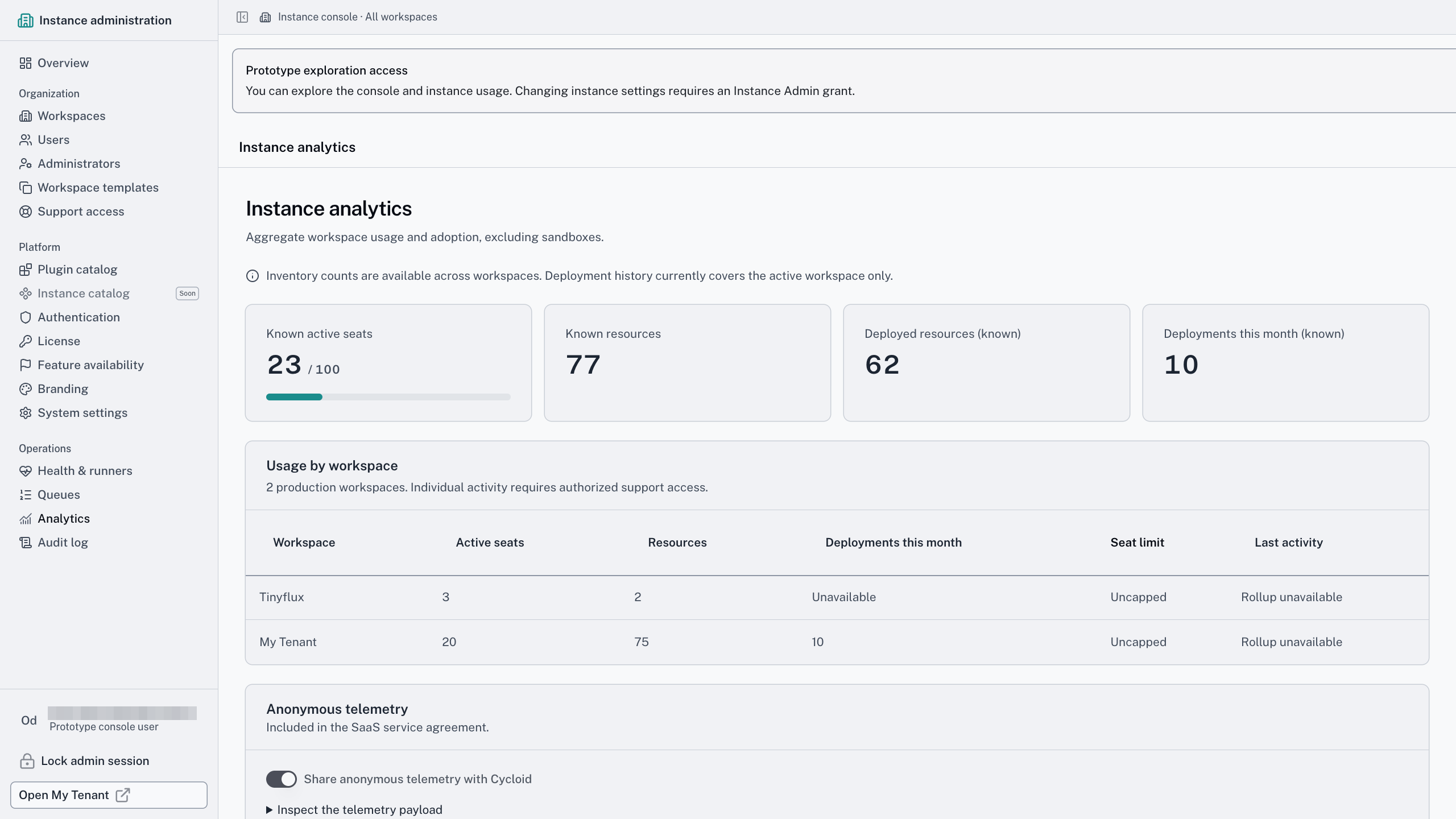
Every deploy and Day-2 change waits on your team.
With Cycloid
One Blueprint carries architecture, policy and Day-2 actions.
The outcome
The team self-serves inside your guardrails, and you stop being the queue.
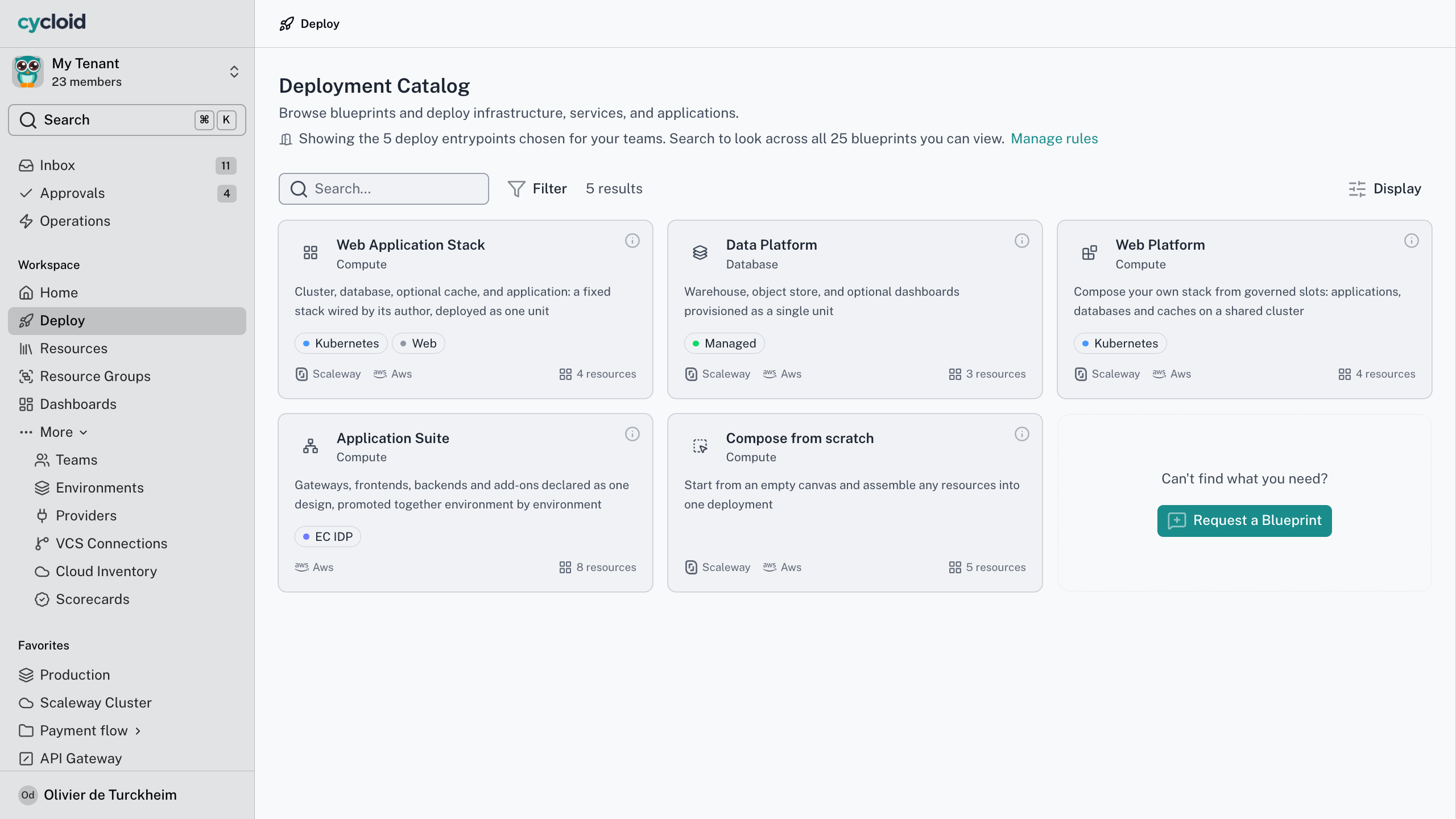
Browse, fill, deploy
The problem
A ticket sits between you and every environment.
With Cycloid
Deploy a Blueprint from the catalog through a web form.
The outcome
Environments in minutes. Zero tickets after a Blueprint goes live.
Delivery you can prove
The problem
Scaling delivery usually means losing control.
With Cycloid
Every Blueprint action shares one audit trail, Day-1 and Day-2.
The outcome
Speed and governance from one object, not a tool stack.
How it works
From the catalog to a running environment
01 · Pick from the catalog
A developer chooses a Blueprint, a landing zone, some infrastructure or an application, from the catalog of things they’re allowed to deploy.
02 · Fill in the Form
Region, size and owner are fields on a web form, not a Terraform file to edit.
03 · It gets checked
The Form validates on client and server, then the request passes the four-layer authorisation chain. An unresolved check is a denial.
04 · It deploys
On the Native Runner or the CI you already use, GitHub Actions, GitLab CI, Jenkins or Azure DevOps. No rip-and-replace.
05 · It keeps running the same way
Day-2 actions live on the Blueprint. A credential rotation months later goes through the same chain and audit trail as the first deploy.
Teams weighing an internal developer platform often start by assembling one from Backstage. Then they own everything they built, and governance turns up in the audit instead of at the source. Cycloid brings the golden paths, the rules and the day-2 actions already wired together, on open formats like Terraform, OpenTofu, GraphQL, JSON Schema and OpenFGA. Your existing IaC keeps running.
From the catalog to a running environment
The short version
What a golden path holds
1
object: architecture, form, rules, day-2
4
IaC formats, brought as they are
4
authorisation layers on every submission
4x
faster delivery at Orange Business
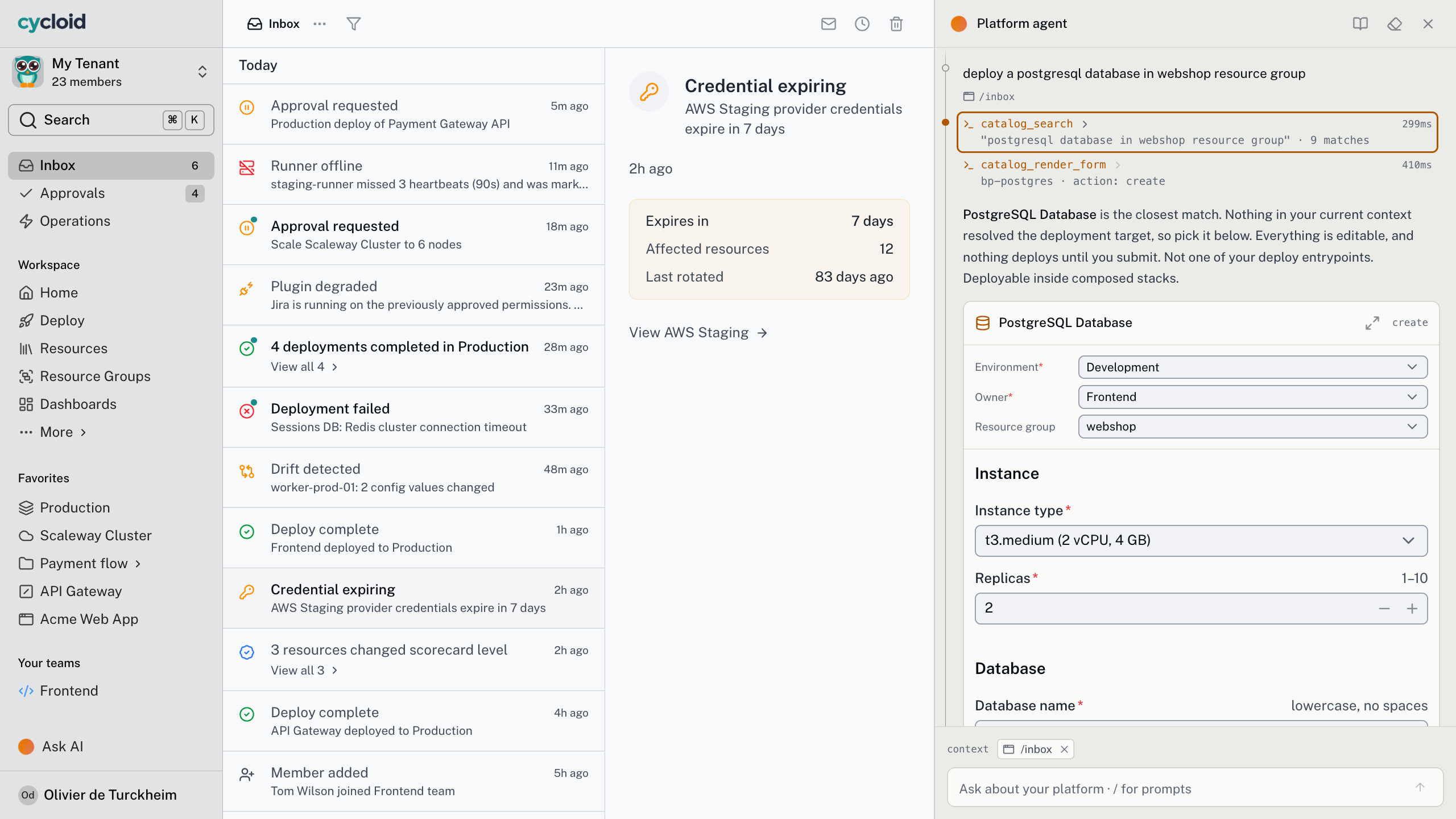
I need a golden path for a Node service with a Postgres database.

Two published Blueprints match. Node service + managed Postgres, owned by Team Platform, and Node service, database optional, owned by Team Payments. Nothing outside your catalog is on offer.
Working with your assistant
Your assistant can use a golden path, not invent one
Does the assistant get its own permissions?
No. There’s no service account and no elevated assistant role. If you can’t deploy to production, neither can the assistant you’re talking to, in Cycloid’s own assistant or any compliant MCP host.
Your assistant can only offer what you published. It searches your Blueprints, renders the Form a Blueprint declares and calls the day-2 actions it declares. No tool writes a Blueprint, so no conversation can invent a golden path your platform team never approved.
In the conversation, the Form is the same Form. Same fields, same validation, same defaults, pinned to the Blueprint version the resource will keep running on.
Frequently asked questions
A Blueprint is the whole golden path: the module, the Form, the rules and the day-2 actions in one object. A Form is one part of it, turning the module’s variables into a web form.
No. Bring your Terraform, OpenTofu, Ansible and Helm as they are. A Blueprint wraps the module you already have, so what works today keeps working with a Form and actions around it.
The Form validates every submission on client and server, then the four-layer authorisation chain checks it, conditions and approvals included. It’s fail-closed, and assistants take the same path as people.
Yes. Cycloid runs as SaaS, self-hosted on Docker Compose or Kubernetes, or fully air-gapped, and it’s the same product on every tier. The sovereign page covers how deployment works.
See a Blueprint turn into a running environment
Bring a pattern your team deploys often. In twenty minutes, watch it become a Blueprint a developer self-serves.