

Customisable portal
Your portal. Shaped by your teams.
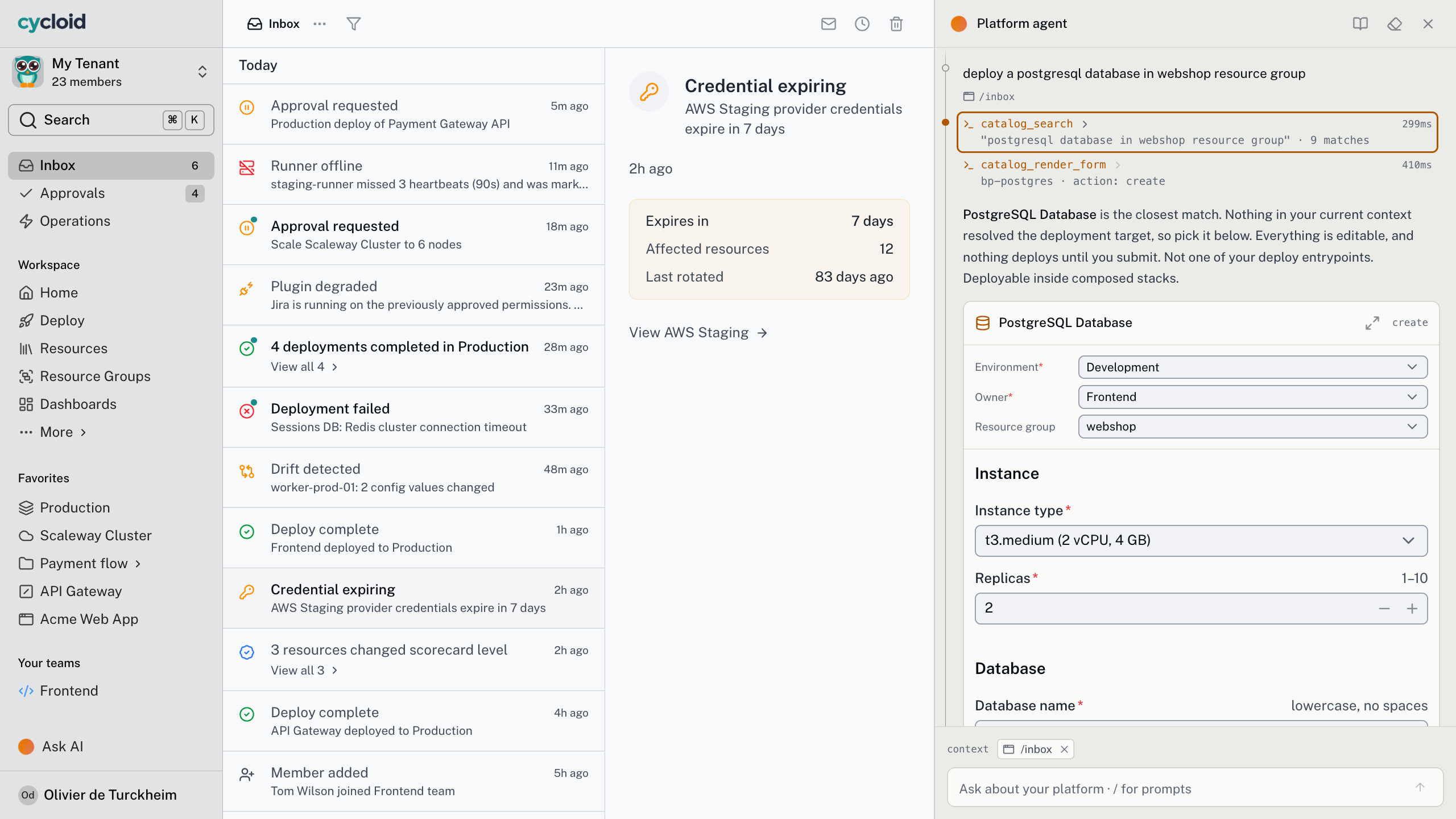
Forking an open-source portal makes every upgrade your problem. Cycloid’s portal is shaped from the inside, by the people who should change it, with no fork and no build pipeline.
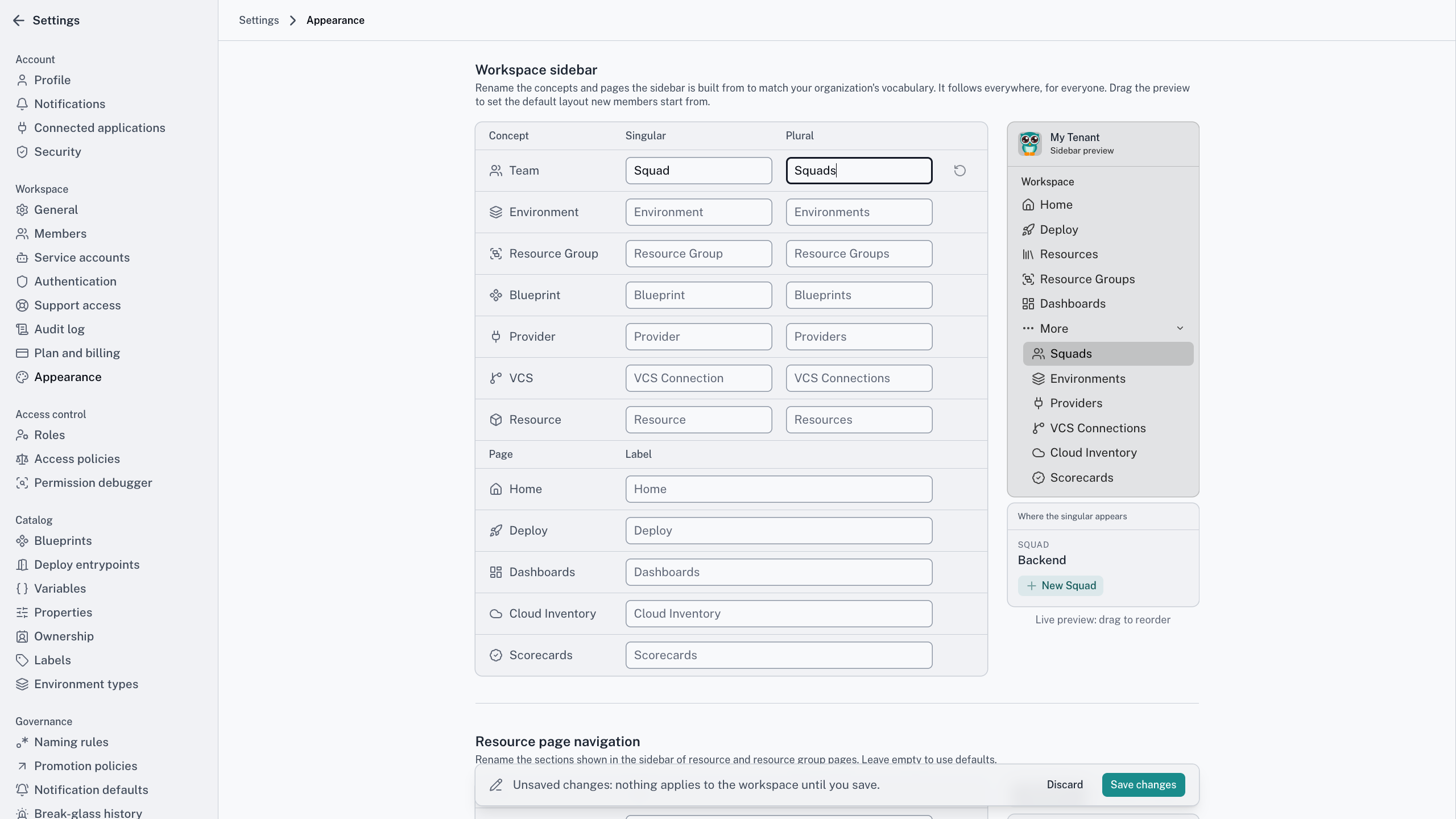
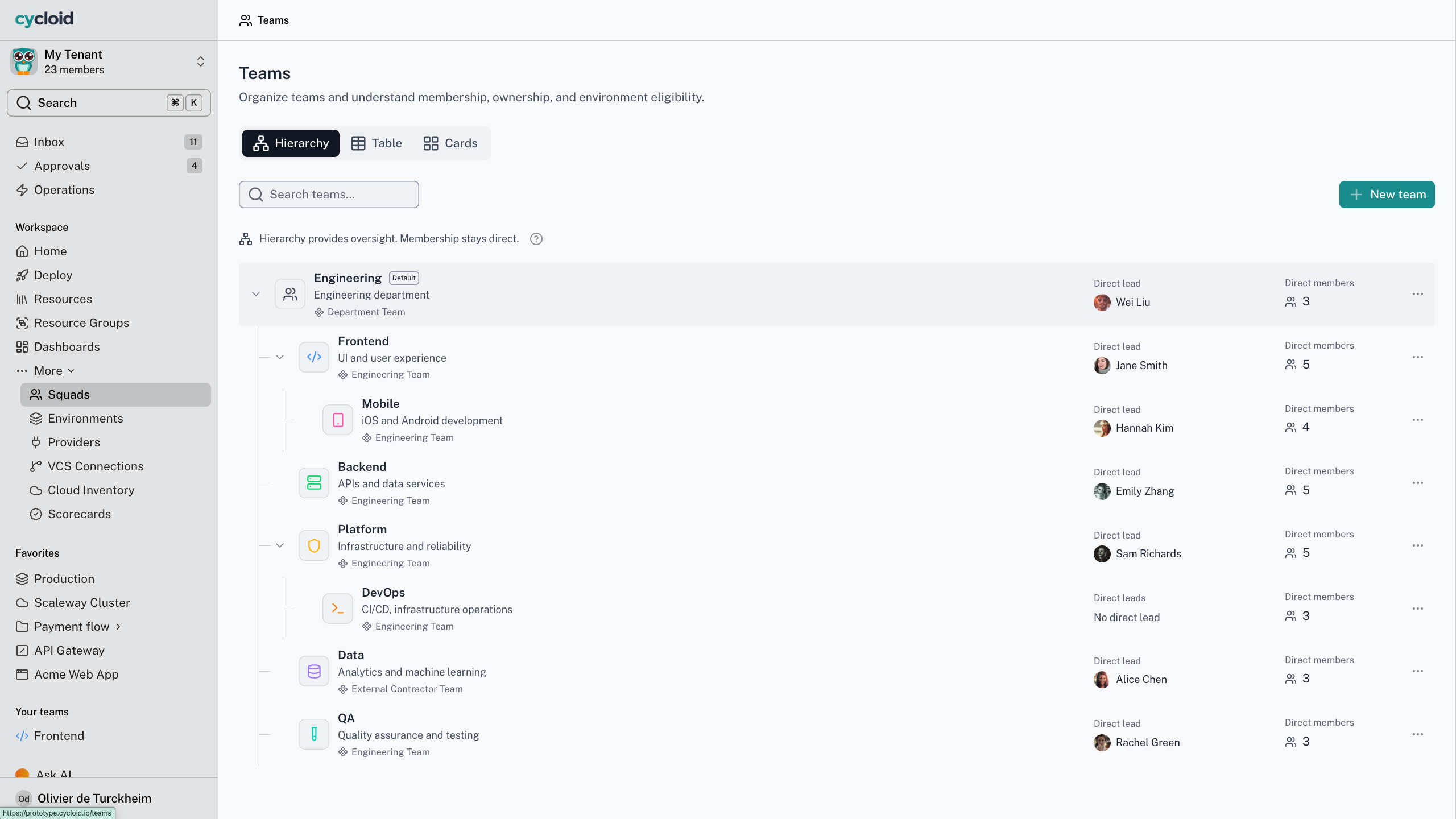
A shaped portal page
What can change
Portals only display. Cycloid does.
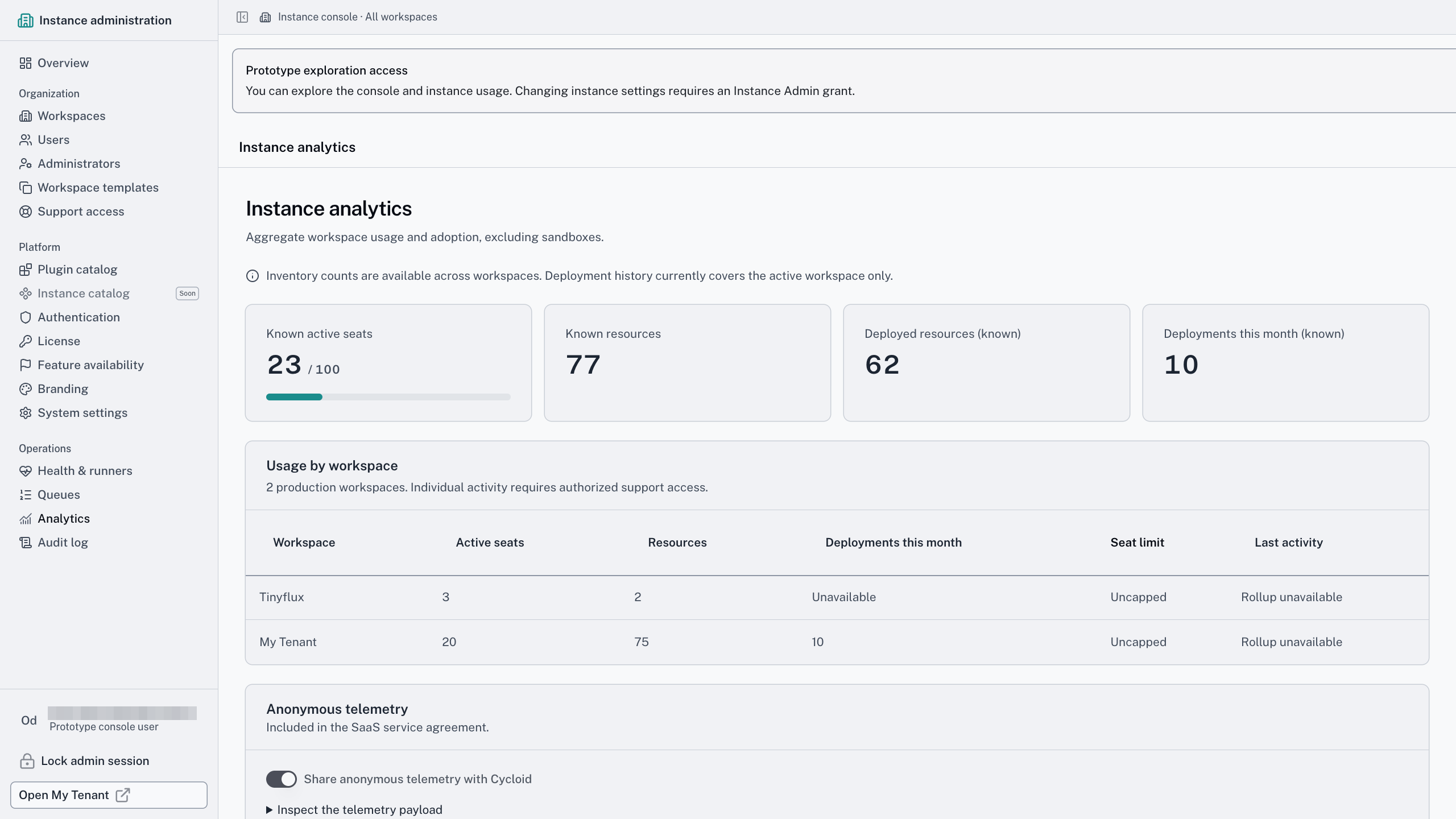
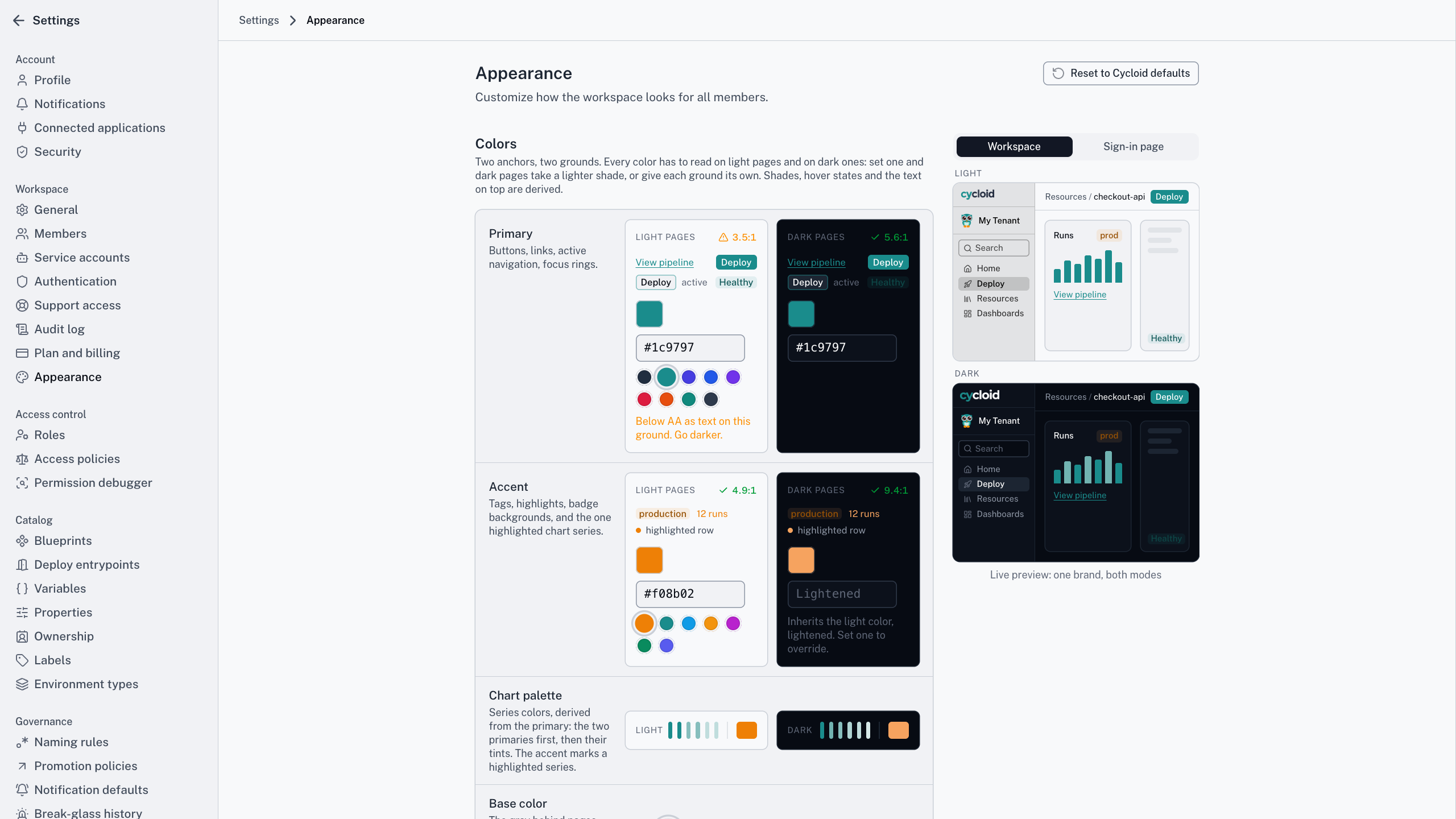
Resource pages take tabs per Blueprint, so a database shows replica lag and a service shows its open pull requests. Teams get their own dashboards. Resource Groups get their own view. Portal pages hold whole persona pages, and you arrange the sidebar around them. Everyone can override the home page. It’s the same panels in different scopes, so learn one surface and you can shape all five. Cycloid’s portal is a single pane of glass you act from.
Cycloid for your team
What a shapeable portal changes for each reader
Stop being everyone's
layout queue
The problem
The portal fits two teams out of nine, and the other seven have quietly rebuilt it in spreadsheets.
With Cycloid
Team leads shape their own pages and sidebar sections, and you shape the Blueprint views that apply to every resource of a type.
The outcome
You own the parts that should be consistent, and nothing else.
The first screen is about your work
The problem
The landing page was designed for somebody whose job is not yours, and there’s nothing to be done about it.
With Cycloid
A personal home override, personal dashboards and saved views, plus pages scoped to the responsibilities you actually hold.
The outcome
You open the portal and your own resources are already there.
No fork, and nobody
maintaining one
The problem
The portal is a project with a team on it, and the customisation somebody asked for is quoted in sprints.
With Cycloid
Customisation is configuration on a shared engine, done by the people who want the change, with editing rights derived from roles you already assigned.
The outcome
No standing cost for keeping a fork alive through upgrades.
How it works
From a template to a page your team actually uses
01 · Start from a template
Adoption, team health, a developer hub, an SRE page, DORA and more. Every resource type also gets an overview tab, useful before anyone touches it.
02 · Clone it and it's yours
Your copy is an ordinary dashboard, not a privileged one. When we improve the original, nothing overwrites your edits.
03 · Shape the surface you own
Platform engineers shape Blueprint views, tenant admins the tenant pages and sidebar, team leads their team’s pages. Anyone owns their personal home.
04 · Point it at the right people
Bind a page to a team, a role or an ownership field. A DBA page then shows only the databases where you’re the DBA.
05 · Let permissions do the rest
Panels query as the viewer, so a page never shows what somebody couldn’t open themselves.
There’s no separate dashboard permission to grant or forget. Editing rights come from relations you already assigned, so removing someone from a team removes what they could reshape too. It’s configuration, not arbitrary front-end code. If you really want a bespoke application, build it on our API. For everything else, nobody keeps a fork alive.
From a template to a page your team actually uses
The short version
What there is to shape
5
surfaces you can shape
4
kinds of owner, each with their own patch
1
permission model. Nothing extra to grant
0
forks to maintain
Clone team health, filtered to production.

Cloned with the environment filter set, saved to your team’s scope. It’s an ordinary dashboard from here.
Cloned · Team health, production
Team scope
Runs as
Whoever opens it, under their own permissions
Working with your assistant
Shape a page by describing it, within the same limits
Does the assistant get its own permissions?
No. There’s no service account and no elevated assistant role. If you can’t deploy to production, neither can the assistant you’re talking to, in Cycloid’s own assistant or any compliant MCP host.
Ask your assistant which dashboards you can edit, or to clone one with different filters for your team, and it does it as you. A team lead can get a team page this way. Someone without that relation can’t, because the assistant isn’t a route around the permission model.
What comes out is an ordinary dashboard. There’s nothing to migrate later, and nothing that stops working when the person who asked for it leaves.
“
Cycloid acts as both an umbrella for our integrated cloud services and a daily tool for DevOps and Platform Engineers users.
Alexander Höllwart
Managing Director, cloudXcelerate
Frequently asked questions
No. Customisation is configuration in the product, so there’s no build pipeline of yours, no merge on release and no upgrade that turns into a project. You trade unlimited freedom for not staffing a fork.
Whoever owns the scope. Platform engineers shape Blueprint views, tenant admins the tenant pages and sidebar, team leads their team’s pages, and everyone their own. No dashboard permission to grant or forget.
Yes. Scope a page to an ownership field and it shows each viewer only the resources where they hold it. Responsibility doesn’t follow the org chart, so one database can present six ways to six owners.
Yes, the very same one. There’s no separate page builder anywhere, and our own templates are built on it, so you can pull any of them apart like something you made yourself last week.
Bring the page your team rebuilt in a spreadsheet
Twenty minutes, one team, and the view they actually want. We’ll build it on the engine, scope it to them, and then show you what it looks like to somebody who shouldn’t see half of it.